

If someone told you how much their body ached after a day of skiing, you’d probably never want to click into a pair of bindings and hit the slopes. Do not fret. Pain and agony are not the only words you need to describe the first day of your ski vacation. With a little bit of preparation and maintenance, freedom from post-ski day soreness can be yours.
The following are a few yoga-inspired tips and techniques that will help sharpen your fitness edge and get your body tuned up for some downhill fun.
Just say no to quivering quads
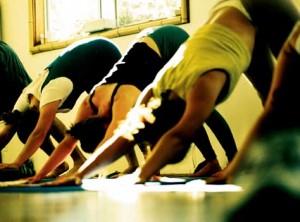
At least six weeks before a ski vacation, take every opportunity you can to strengthen your quadriceps. Perform wall sits, yoga chair pose, warrior lunges, and horse stance squats as often as you can, intermittently throughout the day. There is no need to try and fit a full yoga class into your already busy schedule. A little bit of time spent here and there will suffice. Just be sure and do it, or you will suffer the consequences of tired legs too early in the ski day.
Read Full Post >
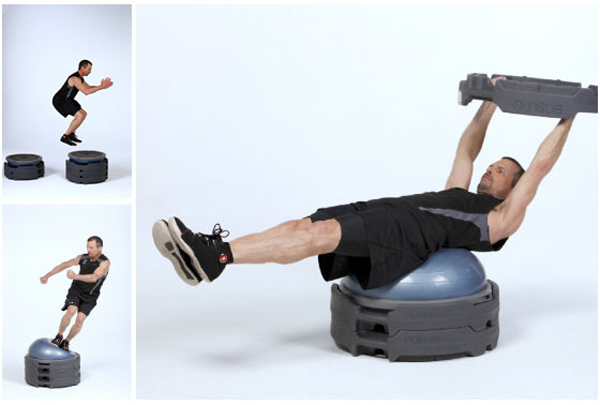
Having a strong core is more important than you realize!
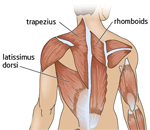
Your core includes your abs, upper legs and back. The main muscles are the obliques, abdominals, lower back and the gluteus. Having strong core muscles will help with more than giving you sizzling-looking abs. They are responsible for your posture and movement. Here is a list of some other benefits:
- It will prevent lower back pain and injury. Most lower back injuries are from weak core muscles.
- It will help improve your overall physical performance. So the stronger these babies are the easier everything else will be.
- Improves balance
- Helps you maintain your independence later in life.
I have included some simple and VERY effective exercises that you can do in less than 15 minutes right in your living room!
Read Full Post >
During this hectic time of year your yoga practice is especially helpful in reducing anxiety, but if you cannot fit in a full yoga class, practicing on your own is second best. Restorative poses like forward bends top the list to release stress and refresh the mind and body, but it is important that they are done correctly.
The following principles are categorized by body part and action to help you practice safe and effective restorative forward bending yoga poses.
Hips
Imagine your pelvis as a bowl of water and your spine as the stream of water that spills from the bowl. By placing both hands on your hips and tipping your hips forward first as if to pour the water onto your feet, you set the forward bend up from your hips rather than from your lower back. This prevents the action of lumbar lordosis (rounding out) from your lumbar spine, which can stress the discs of the lower back.
Knees
If your hamstrings are tight, simply bend your knees. This will allow your pelvis to tip forward with ease without rounding your lower back. Also, you can bend your knees if you feel tension behind them and if you feel a tugging sensation on your sitting bones. It is best to feel the stretch in the belly of the muscle, rather than at the attachment points (sit bones and backs of knees). This helps to protect your tendons and ligaments from excess strain.
Read Full Post >
Michael Gonzalez-Wallace is the author of Super Body, Super Brain. You can read more from him at www.superbodysuperbrain.com or pick up his book Super Body, Super Brain.
Use it or lose it.
If we don’t use our muscles, they will wither in atrophy and if we don’t use our brain, our brain will shrink. If the brain is not used, different brain areas will slow down leading to a faster decline in cognitive abilities such as multitasking, learning, memory or movement. A study from Harvard University concluded that lack of brain activity between different areas of the brain means faster aging.
However, what if I told you that is possible to be faster mentally or in better physical shape now than you were 5 or 10 years ago? For the last 10 years, we have being seeing a brilliant phenomena called brain plasticity. Brain plasticity is the brain’s capacity to rewire or regenerate itself, and the key is stimulation. Anytime you stimulate the brain, you are strengthening existing connections and creating new powerful networks. In other words, you are strengthening your brain like a muscle.
According to Dr John Ratey Professor of Psychiatry at Harvard University, exercise is the ultimate way to improve brain plasticity. Nice! But plasticity doesn’t only affect our brains- but affects our muscles as well. Muscle fiber plasticity refers to the capacity of our muscles to change shape, form and structure and there is no age limit, you just need to be consistent with a resistance training program.
Read Full Post >
Benjamin Goode is a Senior Fitness Consultant, medical writer and educator. Ben publishes a website called GoSeniorFitness.com and a blogs at bengoode.blog.com. The website provides older adults with practical health and fitness information. In 1972, Mr. Goode founded and published the American Journal of Sports Medicine – the first professional American journal dedicated to the diagnosis and treatment of sports-related injuries. This journal is now the official journal of The American Orthopaedic Society for Sports Medicine.
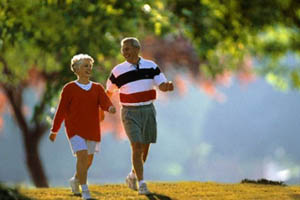
There are a lot of myths and misconceptions about the infirmities of old age. The sad result is that the oldsters themselves start to believe them. Then, they use these fallacies as excuses for not exercising and not following a sensible diet.
“I’m just too old and out of shape for that sort of thing” says a 65 year-old, retired accountant. He’s gained more than twenty-five pounds in the last few years and finds it difficult to get around. He takes medication for hypertension and he’s been told by his doctor to reduce his dietary intake of sugar, salt and fats. He complains of being tired all the time and has lapsed into a sedentary lifestyle. He’s a victim of That Ol’ Rockin’ Chair’s Got Me syndrome.
Read Full Post >