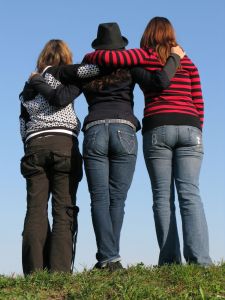
We all need emotional support and a little help from time to time, especially when undertaking any goals for life change. Important relationships provide a buffer from the negative effects of stressors, whether emotional or physical. Emotionally, relationships provide a sense of belongingness, giving one security and feelings of esteem and being accepted. The effects of social isolation have been compared to the impact of smoking cigarettes in the magnitude of physical stress. Research has shown that social isolation is linked to the development of obesity and type 2 diabetes (in mice), poor recovery after a stroke, lower immunity to disease, and a higher risk for cardiovascular problems. Most frighteningly, research has consistently shown that social isolation is linked to increased risk of death. Obviously, mental health and physical health are connected!
Friendship can have a positive impact on your health in plenty of other ways. Do you have these friends in your life?
My stylist and fabulous friend Phil is always exploring the newest health food or ingredient; more than that he takes the time to make delicious dishes from scratch all the time, introducing me to the wonders of these new discoveries.
My dear friend Roz, with her endless energy, organized her move to a new apartment over an entire week! What better way could there be to exercise muscles and friendship than to help someone move?
My enthusiastic dance partner Mike enrolled us in a competition and choreographed a routine in a new style, requiring us to put in several hours of rehearsal each week. (We even won second place!).
My marathon-running friend Mike used old fashioned peer pressure to get me to jog and purchase running shoes and my first iPod; he even physically drove me to the stores. I’m excited to run my second mini-marathon in May.
Wendy is amazing at watching what she eats and researching what should and shouldn’t be put in your body; she’s always happy to share all that she’s learned and makes every meal a learning experience.
Nick encourages me to try something new and crazy like RollerDerby! Maybe one of these days….
Jill’s son loves to get me outside to play catch with a football. Who can say no to a sweet child?
I have several friends within a mile of my home. Gas is expensive and parking isn’t easy downtown, especially on game days. We walk the city instead. I can justify brunch if I’m walking a mile or so there and back.
The next time you need to catch up with a friend, workout together rather than ordering pizza, or cook together rather than going out. Don’t forget that moving, planting a garden, and other such fun tasks can build muscles and a friendships when shared. The people in your life can be essential to your success. Make sure you have positive, health-oriented people within your circle of influence.