
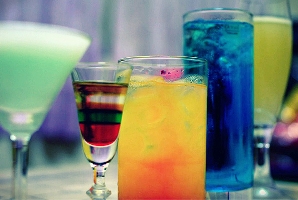
Natural grocer Whole Foods recently decided to pull the popular SkinnyGirl cocktail line from their shelves.
Whole Foods claims that the low calorie alcohol beverages contain unnatural ingredients. Lisa DeFazio, MS, RD, and Hollywood Nutrition Expert, said that Whole Foods allegedly removed the popular beverages because they contained caramel coloring, which was not within their definition of “natural.”
According to the Whole Foods blog, natural can be quite a complicated definition.
“‘Natural,’ on the other hand, doesn’t have a strong governmental definition when it comes to food, so my team (the Quality Standards Team) spends quite a lot of time defining which ingredients make up the natural foods we sell in our stores. The basic tenets of our standard require that our products are free of artificial preservatives, colors, flavors, sweeteners and hydrogenated fats,” Joe Dickson, Global Quality Standards Coordinator for Whole Foods wrote.
Read Full Post >
For many people, snacking can be part of a healthy diet that can lead to effective weight loss. However, according to research presented at the 2011 Institute of Food Technologists (IFT) Annual Meeting & Food Expo, snacking, as well as beverage consumption outside of a regular meal, continues to increase among Americans, accounting for more than 25 percent of calorie intake each day.
Between 1977 and 2006, snacking in the American diet has grown to constitute “a full eating event,” or a fourth meal consisting of about 580 calories daily, according to Dr. Richard D. Mattes, Ph.D., professor of foods and nutrition at Purdue University.
While overall, snacking has increased, “there has been a significant increase in the amount of calories consumed through beverages,” said Mattes. Beverages are estimated to account for 50 percent of all calories consumed through snacking.
According to Mattes, many Americans don’t equate beverage intake with calorie intake so they are less likely to count these calories or make up for the excess by cutting back elsewhere in their diets.
Read Full Post >
A lot of people think alcohol is such a dieting disaster because of the excess calories, but it harms your weight loss efforts in a different way, too.
The majority of the population today fails to lose weight or stick to a weight management program due to the fact that they refuse to make the simple lifestyle changes necessary to do so. Everyone knows the difference between a high fat diet, full of hamburgers and french fries, and a low fat diet full of fresh fruits and vegetables. Everyone knows the benefits of exercise and how it can impact their lives for the better.
Another big issue today is alcohol. Alcohol is a total diet killer and completely harmful to the body. Alcoholic drinks are not only diuretics, but full of empty calories, loaded with sugar and salt, hinders performance, and can lead to severe liver diseases.
Read Full Post >
In 2009 the U.S. Department of Labor reported that the average American family of four spends $8,513 per year on groceries. That’s a lot of trips to the market and probably a lot of empty calories purchased each week.
While some people can afford to splurge on premium ingredients and brand names, the grocery store is also one of the most common places where people overspend.
“Take your grocery list to the store when you shop,” said Teri Gault, CEO of TheGroceryGame.com “Don’t buy groceries that you don’t need. If you have a list of everything you’ll need for the next few weeks, you’ll gather all the ingredients you need while saving money and avoiding the panic of the last minute rush.”
Follow some of our tips to keep your grocery budget to a minimum – and your grocery list full of healthy food.
Read Full Post >
When you hear “Oktoberfest“, what comes to mind? If you are anything like me, it’s beer. Beer can be a caloric bomb, though, next bringing to mind the term “beer belly”.
Beer doesn’t contain fat; however, it does have tons of carbohydrates, protein and alcohol- and that’s it. Beer is the epitome of empty calories, giving you all the calories with no vitamins, minerals or redeeming health qualities whatsoever. A gram of carbohydrates has 4 calories, a gram of protein 4 calories, and a gram of alcohol has a little over 7 calories. This is why different beers can have higher calorie counts in relation to their alcohol content.
To keep things in perspective, I found this information online at realbeer.com: “A five-ounce glass of wine contains about 125 calories; one ounce of distilled spirits, 90 proof, 75 calories. Beyond the world of alcohol: an eight-ounce glass of milk has 160 calories, one ounce of potato chips 160 calories, a banana split 550 calories, and a Burger King Whopper 650 calories. Oh yeah, just six French fries have 12 grams of fat (about as many calories as a light beer).”
Read Full Post >