By Abra Pappa for NutritiousAmerica.com
There is a science behind food cravings, and I don’t use the word “science” lightly. It is an honest to goodness, white-lab-coat-Bunsen burner-protective-goggles science. Food “scientists” know exactly what it takes to create a food that is “crave-able.” They research and experiment and come up with specific addictive qualities or additives that food must contain in order to rank as a food that you will keep reaching for.

Salt, sugar, and fat, or chemical products that taste buds recognize as salt, sugar or fat, are key flavors that enhance a foods crave-ability.
When you eat, food residue or food particles can be left behind on your tongue. When those particles mix together with the bacteria in your mouth a coating or film is created. This coating “feeds” our craving mechanism. For instance, if you eat a fast food hamburger on a Monday, on Tuesday you may find yourself thinking about that burger again. This is not a sign of poor “willpower” or an “inability” to eat healthy food, rather it can literally be your tongue coating that is sending a signal to your brain that you want more of the food that has been left behind.
This is one of the key reasons fast food restaurants advertise to children. They know when a child “develops a taste” for their food at a young age they become life long customers.
Furthermore, when your diet is full of processed “food-like” products that are loaded with extra fat, sugar, and salt your taste buds suffer and become desensitized. Desensitized taste buds are greedy little buggers, requiring more and more food for you to feel satisfied, as satiety is signaled by flavor.
Enter the tongue scraper.
Read Full Post >
Tomorrow Dr. Oz will be discussing Ayurvedic medicine, or the concept that each individual body type should be treated with different medicines. Specifically, the doctor will be interviewing other doctors as they explain what they call “Secrets of Ayurvedic Medicine.”
Ayurvedic medicine is one of the world’s oldest medical systems. It originated in India. In the United States, Ayurvedic medicine is considered a whole medical system. That means it’s a complete system of theory and practice that has evolved over time in different cultures and separate from conventional medicine. Other whole medical systems include traditional Chinese medicine, homeopathy, and naturopathy. Many therapies used in Ayurvedic medicine include herbs, massage, and specialized diets.
Dr. Oz will be investigating the specific theory behind body types and Ayurvedic medicine. Dr. Oz will also discuss the many healing technique from around the globe. The guest will include Kulreet Chaudhary, MD, Phil Veneziano, Daniel Hsu, and Dr. Janet Tsai.
Read Full Post >
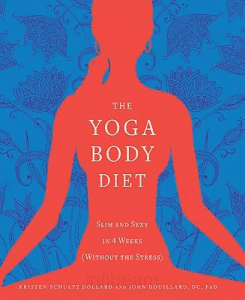
The Yoga Body Diet is a four-week plan that inspires you to eat, move, and think according to your natural rhythms. It was written by Kristen Schultz Dollard who is also the digital director of Self Magazine, the former editor of iyogalife.com and a yoga teacher in New York. She wrote The Yoga Body Diet with Dr. John Douillard, a physician who has written and produced 18 health and fitness books, and is the current director of LifeSpa, an Ayurvedic rejuvenation and detox retreat center in Boulder, Colorado.
We had an opportunity to speak with Kristen about her new book. She shares with us some of the life-changing principles of yoga and Ayurveda, and how they can support weight loss and wellness in a way that is specific for you and only you.
What was your motivation for writing The Yoga Body Diet?
I thought I was incredibly healthy; I ate healthy and competed in triathlons. But then I was diagnosed with a hereditary hernia and learned that I had health complications that could lead to fertility issues. So to stack the odds in my favor, I decided to do all I could do for my health, and I began focusing more on the inner aspects of my health and not so much on my external health.
If you take care of your health, weight loss will happen. Stress is such a big factor in our health, yoga encourages you to embrace your shape. Ayurveda teaches us to understand our bodies and that when it comes to diet and eating, one size does not fit all.
Read Full Post >
With spring knocking ever so gently on our weather-proofed windows, it is that time to get ready for longer days, sunnier skies and more time spent outdoors. According to older systems of holistic healing like Ayurveda and traditional Chinese medicine, spring is a call to do a clean sweep of our bodies and diets. The stagnant air of winter in combination with the lack of sunshine, exercise and too much time spent on the couch hibernating indoors has made us feel a little sluggish and perhaps even weightier, if you are one of the millions of Americans who puts on a minimum of one pound during November to March.

While detox products and cleansing programs line supplement shelves, you can do your own detox program at home without investing in fancy or expensive products or tonics. Yahoo Health recently posted a 5-step DIY detox regimen that includes a diet and herbal supplement regimen. The routine, which was created by Dr. Mao from the Tao of Wellness, is meant to spring clean your body and get it ready for the bright days of this celebrated season.
Read Full Post >
As a very weight-absorbed culture, we are always looking for the latest, greatest and quickest way to shed some pounds. There is no shortage of weight loss products on the market today. From hoodia to green tea, the new wave of weight loss products come from nature rather than being manufactured in a sterile lab by a team of white-coated researchers.
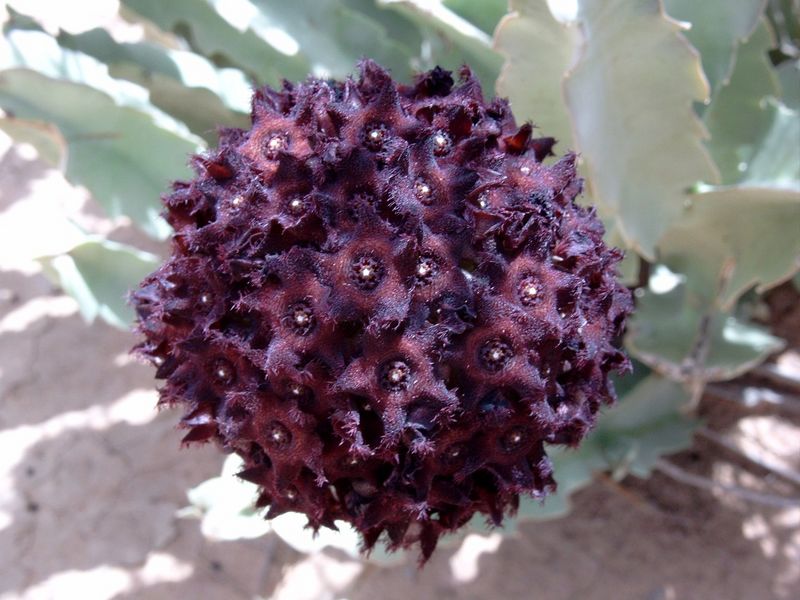
One such product that has been picking up steam is Caralluma Fimbriata. While hoodia hails from Africa, Caralluma grows in India. In fact, it shares a lot of similarities to hoodia such as also being a succulent-based plant and it has been eaten as a vegetable by natives for hundreds of years to stave off hunger on long journeys or through bouts of food shortages.
How Does it Work?
Caralluma is believed to work its magic by blocking the opportunity for fat cells to form and forcing fat stores to be used as primary fuel. It is also believed to act on the brain, particularly, the part of the brain that controls hunger. Caralluma acts like an “off” switch telling our brains that we’re full even if we’re not. Therefore, fewer calories will be consumed and the pounds will start to come off, or so it is hoped.
Read Full Post >