Melissa Spiesman, CHHC, AADP, will be the Featured Guest Blogger at DietsInReview.com for September. She is the director of Nutrition for Your Life, a nutrition program that focuses on health and wellness through whole foods. Melissa develops individual integrative nutrition plans that focus on the total health of her clients. In her private practice, she regularly counsels individuals and groups on a variety of health/nutrition issues, including: cravings, weight loss and management, healthy food preparation, coping with stress, and having more energy.
Melissa received her professional training at the Institute for Integrative Nutrition which is affiliated with Columbia University in New York City. She is certified by the American Association of Drugless Practitioners.
Melissa is a featured contributor of girlawhirl.com. Girlawhirl.com is an online magazine for busy women. It’s updated every weekday with the latest fashion and beauty news, home decorating, nutrition, fitness advice and more.

For as long as I can remember, I have loved to snack on blueberries (the whole pint), my favorite breakfast and comfort food is thick and creamy, very hot oatmeal and my side dish of choice is sweet potatoes-roasted, fried, hot or cold. There were no classifications of super foods or conversations about their health benefits, but I do believe in the power of food, good food is necessary for good health and what you eat significantly impacts how you feel.
Can eating the right foods actually help prevent disease? Scientists have identified chemicals in many nutrient dense foods that can prevent or reduce the risk of disease and many of these foods may be lacking in the standard American diet. Whole foods contain a unique combination of nutrients, vitamins and minerals which make them a better source for these compounds than supplements.
While there is a long list of SUPER FOODS, the one thing they all have in common is that they are all WHOLE FOODS. These nutritional power houses can be used as the foundation for healthy eating. Eating a diet rich in whole foods is a diet rich in super foods. These are MY 3 super foods:
Blueberries: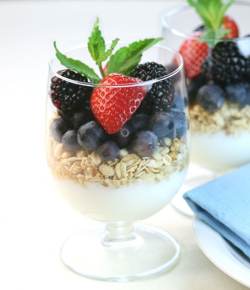
Mixed into plain yogurt, blueberries offer a sweet alternative to the over sugared commercial products available. Blueberries contain the antioxidant compound anthocyanins which reduce free radicals, improve memory and cognition and can lower cholesterol. This colorful sweet fruit is also low in calories and full of fiber.
The frozen variety is delicious blended into smoothies or in your favorite muffin mix.
Oats:
Not just for breakfast anymore, oatmeal can be enjoyed as an addition to cookies, muffins and cake batter, in your own homemade granola or to add texture to a savory loaf. Known for its cholesterol lowering effects due to its high level of soluble fiber, oatmeal is also low in fat, contains more healthy oils than any other grain and is high in protein. Oats are also low on the glycemic index, so diabetics and those with insulin resistance will benefit from their ability to stabilize blood sugar.
 Sweet Potatoes/Squash:
Pumpkins and sweet potatoes have drifted beyond their traditional place as autumn holiday staples. These hearty vegetables are an excellent source of beta carotene the antioxidant that converts to Vitamin A in the body and gives these super foods their bright color. They are rich in calcium and support healthy skin. The lutein and lycopene found in orange colored produce can also reduce the risk for macular degeneration. The sweet satisfying flavor of these rich vegetables will help curb sugar cravings. For a change in texture and color, puree these vegetables into soups or as an addition to oatmeal cookie dough for an extra boost of sweetness.
Using simple whole food nutrition you can ensure a healthy life, and by eating well you can reduce the risk of disease.
Guest Blog Series: Look for the following badge on your favorite health sites to see if they have been a featured guest blogger on DietsInReview.com.

See other posts in the Guest Blog series. If you would like to apply to be featured as a guest blogger, please contact us.
