
March marks the start of nutrition labels for raw meat and poultry. The new USDA rule states that nutrition information must be made available for most ground meat and ground poultry and for popular cuts of the two.
Previously, the USDA only required nutrition labels on meat that had added ingredients like stuffing or a marinade sauce. Now, all ground meat and poultry must carry a label. Along with ground meat 40 popular cuts will also be required to post a label either on the product or on a nearby chart. Some of those cuts include beef porterhouse steaks, chicken breasts, and pork chops.
The labels will provide the calorie and fat content of the meat. If the product shows a percentage of lean meat, it must also include the percentage of fat.
The labels do not have to include amount of trans fat though. This is not a requirement as the USDA estimated that nearly 80 percent of all nutrition labels list trans fat voluntarily.
There is an exception to the new labeling rule. Small meat grinding businesses are exempt. As long as the business provides lean and fat content information and makes no other nutrition claims on the package, they do not have to provide the other content in a label.
Read Full Post >
A four year old student in North Carolina was not allowed to eat the lunch her mother packed for her. Apparently her lunch was taken away from her because school officials claimed it was not healthy enough to eat based off of the USDA guidelines.
The young child brought a home-packed lunch to school containing a turkey sandwich, banana, potato chips, and an apple juice. A lunch inspector told the child she wasn’t allowed to eat it and provided her with a USDA-approved lunch. The approved lunches meet the USDA guidelines that require one serving of meat, one serving of grains, and two servings of fruit or vegetables. The uneaten lunch was returned home with the child. Inside, the girl’s mother found a note explaining that the lunch didn’t meet guidelines and a bill for $1.25, the cost of the school lunch.
The child’s mother took action. She anonymously wrote her local paper and called a state representative. The North Carolina rep contacted the school regarding the issue and the school issued an apology. The child’s lunch was deemed acceptable after a second review.
Read Full Post >
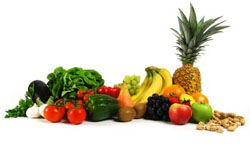
As I sat around the dinner table with my family recently, my son went into great detail about this food he had at school. He couldn’t remember the name, but he said it was kind of like a raw potato and also similar to an apple. He explained how they were given fresh lime to squeeze on it as a flavor enhancer. Totally perplexed, I got up to get the calendar from school to learn he had been sampling jicama. Jicama is just one of the many fruits and vegetables he and his peers are eating as part of the USDA Fresh Fruit and Vegetable Program.
The Fresh Fruit and Vegetable Program (FFVP) began through the Farm and Security and Rural Investment Act of 2002. The purpose was to determine the best ways to get more fruit and vegetables consumed in the schools. The program was authorized as a pilot in only 4 states, but the popularity of the program added new states almost every year and today all 50 states are participating. The FFVP is provided to select schools through grants administered through the State Departments of Education. My son’s school, College Hill Elementary in Wichita, KS was fortunate enough to receive the grant this year. They have been seeing fantastic results.
It’s no secret that a strong battle is being fought in order to increase the quality of our school lunches and to teach our children what healthy eating looks like. As the elementary students at College Hill have been introduced to these fruits and vegetables, good results have been shown.
“I think most of the staff has been pleasantly surprised at how willingly the kids have at least tasted everything. I’m sure that we are giving quite a few of these kids an experience with some types of foods that they would never have in their lifetime,” said Karla Stenzel, physical education teacher and the facilitator of the FFVP.
Read Full Post >
Five new members of the National Or
ganic Standards Board (NOSB) will be taking office this January, having won approval from the USDA earlier this month. The 15-member board is responsible for setting and upholding the national organic standards, in addition to determining what substances may be used in USDA-certified organic products.
The NOSB is comprised of four farmers, three environmentalists, three consumer interest advocates, two handlers, one retailer, one scientist and one USDA certifying agent, in order to properly represent the different interests of the organic farming community.
The new members will be:
Harold V. Austin (Handler)
Austin current is the director of Orchard Administration at Zirkle Fruit Company, an organic fruit tree grower and shipper. He is also a board member of two organic advisories, the Washington State Department of Agriculture’s Organic Advisory Board and the Northwest Horticultural Council’s Science Advisory Board.
Carmela Beck (Farmer)
Beck is the National Organic Program Supervisor and Organic Certification Grower Liaison for Driscoll’s, one of the largest organic berry producers in the country. She previously worked for a an organic certification agency, and for the American Indian Resource Center.
Read Full Post >
If you’ve ever visited another country or even enjoy a foreign cuisine chances are your eyes have been opened to many different ways of doing things. One of the major eye openers I’ve experienced as a traveler is how different the food is in other cultures. As my family dined on a Dim Sum meal in Boston’s Chinatown, my little boy was served chicken feet. He bravely accepted the feet and began chowing down. And as a good guest, so did I. I had to separate myself from what I was doing, and try to enjoy what those around me were calling a delicacy.
Chicken feet aren’t the typical American fare, however, they don’t stray too far from a familiar food. But what about bugs? Rats? Or even horses? These meats are very popular in many cultures around the world. However they seem to make us squirm. Should they?
Americans may be serving horse meat to humans in the near future. Are you ready?
Read Full Post >