Diets in Review - Find the Right Diet for You

usda


State of School Lunches: How MyPlate Will Start Making a Difference This Year

By Rachel Berman RD, Director of Nutrition at CalorieCount.com

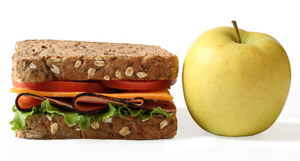
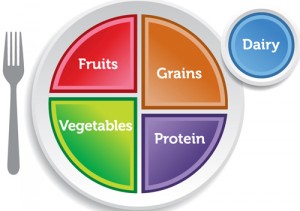
Last month, the USDA celebrated its one year anniversary of releasing MyPlate to replace the decades-old food guide pyramid in order to help Americans make healthier choices at mealtime. In case you haven’t seen it yet, MyPlate is a visual representation of what your plate should look like, sectioned off with 50% attributed for fruits and vegetables, 30% grains, 20% protein and a smaller circle next to the plate representing dairy. But is the government implementing this nutrition guide focusing on balance when it comes to the National School lunch program? With more than one-third of the nation’s children and adolescents being obese and students taking in about 20-50% of their daily food at school during the school year, is the math adding up to more nutritious school lunches?

This year, the USDA is requiring a revamp of school lunches due to first lady Michelle Obama’s initiative and as a component of the Healthy Hunger-Free Kids Act signed by the president. Beginning July 1, 2012, new school lunch and general nutrition standards started rolling out and will continue for the next five years. The main changes, which are in line with MyPlate recommendations, include ensuring:

  • Kids are offered fruits and veggies every day
  • Offered more whole grains
  • Only low fat or fat free milk
  • Monitored calorie counts based on age to limit portions
    Read Full Post >


USDA Supports Meatless Mondays? Not Anymore

If you’re plugged into the health world at all, or apparently if you work for the USDA, then you’ve likely heard the term ‘Meatless Monday‘ floating around at one point or another. The term, or movement, rather, is an initiative on behalf of the nonprofit organization Monday Campaign Inc., and the Johns Hopkins School of Public Health, to encourage people to embrace the idea of a meat-free diet on Mondays for health and environmental reasons, among others.

According to the website, “Going meatless once a week, may reduce your risk of chronic preventable conditions like cancer, cardiovascular disease, diabetes and obesity. It can also help reduce your carbon footprint and save precious resources like fresh water and fossil fuel.”

Initially, the USDA was all in favor of meat-free Mondays and even promoted the idea in a recent interoffice newsletter saying: “One simple way to reduce your environmental impact while dining at our cafeterias is to participate in the Meatless Mondays initiative,” citing the reasons of health and environmental impact as encouragement to join the cause.
Read Full Post >


Healthy Diets are Less Expensive than Unhealthy Ones, Study Says

For those who think Twinkles and Pop Tarts are the cheaper way to go when it comes to a budget-friendly diet, think again. A new study from the U.S. Department of Agriculture shows that eating a diet consisting of healthier foods doesn’t necessarily cost more than one made up of mostly unhealthy foods.

Reason for the study was motivated in part by the perception that diets that align with the USDA dietary guidelines are not affordable; and that eating a diet higher in fat, sugar and processed foods is less expensive.

The study was led by a group of economists at the USDA, one of which was Andrea Carlson who helped analyze the cost of more than 4,400 foods. In their research, she and her colleagues considered each item by price per calories, price by edible gram, and price per average portion.
Read Full Post >


Fourth Case of Mad Cow Disease Confirmed in the U.S.

The U.S. Department of Agriculture has confirmed a case of Mad Cow disease in a dairy cow in Fresno, California. The dead animal tested positive for the disease and experts are now completing an investigation to ensure no other cows have been infected. Thus far, no sign of the disease has been detected in the cow feed, which is a positive sign.

Mad Cow, also known as bovine spongiform encephalopathy or BSE – is a fatal disintegration of the brain and nervous system. Although it’s most commonly found in cows, it can also infect humans if they ingest the meat of a cow with the disease.

One such instance occurred in the U.K. close to 30 years ago, when nearly 200 hundred people were infected with the disease after an outbreak. One extreme case left one man blind, deaf and immobile from 2001 until his death in 2011.

More than 4.4 million cows were slaughtered in the 1980s to control this outbreak after close to 180,000 cows were found to have the disease.

Read Full Post >


USDA Allows Beef Trimmings into Packaged Ground Beef and School Lunches

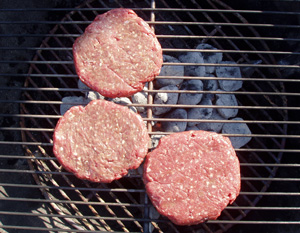
Would you like any pink slime in your hamburger, sir? I wouldn’t think so.

But the U.S. Department of Agriculture is allowing this suspicious substance into the packaged ground beef being served in school lunches across America, according to a recent article from The Daily.

Two former microbiologists for the Food Safety Inspection Service, Carl Custer and Gerald Zirnstein, believe they have reason to be concerned about this “pink slime.” Zirnstein discovered the pink matter in 2002 while touring a Beef Products Inc. production facility as part of a ground beef salmonella investigation.

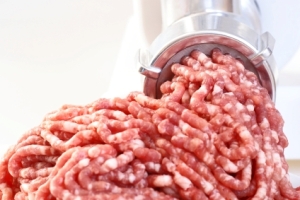
So what is exactly is the stuff? BPI’s ‘Lean Beef Trimmings’ reportedly consist of connective tissue and beef scraps that are normally produced for dog food and rendering and are treated with ammonia hydroxide to kill pathogens such as salmonella and E. coli.
Read Full Post >