
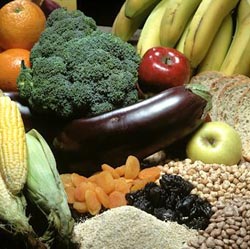
Even though the American Heart Association recommends 25-30 grams of dietary fiber daily to help prevent disease and regulate bodily functions, it has been reported that nine out of ten Americans still consume only about half that amount.
As consumers seek more ways to consume fiber, food companies are responding by reformulating products to include more whole grains and fiber supplements to soups, yogurts, granola bars, baking mixes and even Splenda, a zero-calorie sweetener made from sucralose.
While it’s certainly positive to see people consuming more fiber, Tanya Zuckerbrot, MS, RD, the author of bestselling The F-Factor Diet and SkinnyInTheCity.com cautions that as fiber becomes a nutrition trend, companies are adding fiber to foods that are inherently not healthy.
Read Full Post >
The American Dietetic Association has named March National Nutrition Month. But to help us think a bit more deeply about our eating habits, the ADA has a second message that coincides with the themed month: Nutrition From the Ground Up.
So if you’re wondering if that means eating more foods from nature, you’re right, and if you’re thinking that this message is a call to build a healthier diet, you’re also right.
One of the foundations of developing a healthy eating plan is consuming plenty of plant-based foods, or foods from the ground. And while fruits, vegetables, nuts and seeds are full of disease-fighting vitamins and minerals, they also share the common denominator of containing fiber.
We now know that most Americans don’t get enough of the 25 recommended grams of fiber a day, but rather than relying on the new line of processed foods that are added with synthetic fibers, which can cause gastrointestinal distress and may not offer the same health benefits as fiber in its natural form, we thought we would focus on a diet that is all about helping you eat more fiber: The F-Factor Diet.
Read Full Post >