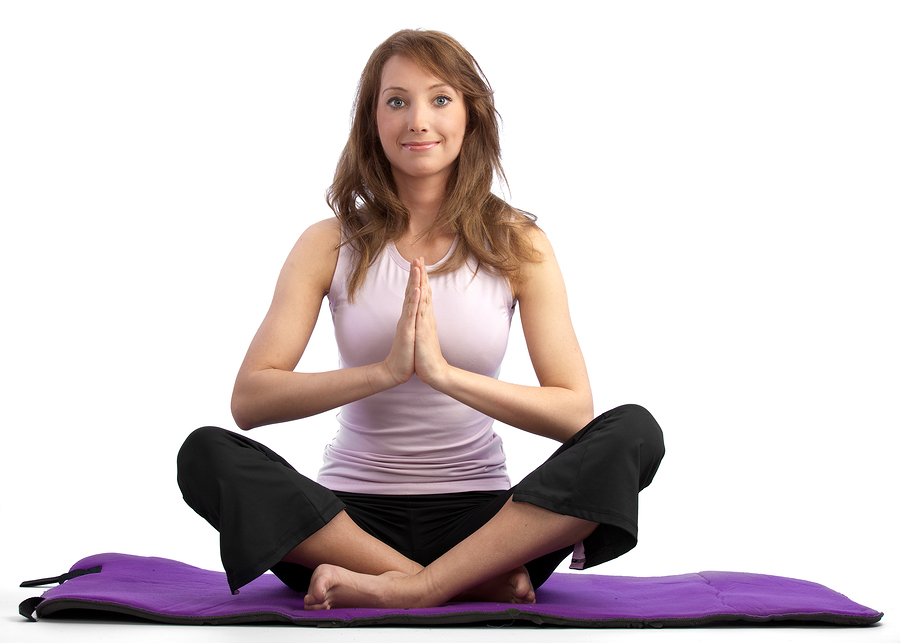

Certain people are attracted to certain styles of yoga for various reasons. Just as the color of your yoga mat can affect your practice, your favorite yoga style might say something about your personality.

The following is a fun, light-hearted list of yoga styles, and the personalities they attract.
Restorative Yoga
This style of yoga is for those in need of some serious power relaxing, and not ashamed to admit it. For restorative yoga lovers, there is no guilt in shutting out the world with a lavender eye pillow and kicking back on a fluffy pile of blankets for an hour.
Power Yoga
Active styles of yoga, such as power yoga, vinyasa yoga, Ashtanga yoga, attract the spirited sorts who are looking to improve athletically, and stretch their acrobatic skills.
Yoga in this category is seriously physical, but this is not to say there is no spiritual element to it. People who gravitate toward strength-oriented yoga classes often find spiritual inspiration through physical challenges.
Read Full Post >
Anyone who has been sick with the flu knows that the best thing to do is stay in bed and rest. When your muscles are aching and your fever is high, a lot of downtime is always the best medicine.
The following are a few extremely gentle yogic practices you can do from the comfort of your own bed when you are not feeling well. Each technique will help ease the pain and agony of having the flu this winter, and help you get some much needed, high-quality rest.
Yoga Nidra
Nidra, in Sanskrit, means sleep. Especially when you are bedbound, practicing a little yoga nidra will help your body relax and get your mind off of how horrible you feel.
Read Full Post >
We know that a regular yoga practice offers many health benefits whether you are an experienced practitioner or just starting out to try yoga for the first time, but more and more often, studies have shown yoga has many benefits that stretch way beyond having flexible hamstrings.
If you or someone close to you is the estimated one in eight women with breast cancer, please read and share this article. Yoga is scientifically proven to help in many positive ways.
Researcher Suzanne Danhauer, Ph.D. from the Wake Forest School of Medicine says, “Mind-body therapies improve mood, quality of life, and treatment related symptoms in people with cancer.”
According to a study published in an issue of Psycho-Oncology, women who participated in a ten week program of 75 minute Restorative Yoga (RY) classes gained differences in their status of mental health; specifically depression, emotions and spirituality (measured by feelings of calm and peacefulness) compared to the control group.
Read Full Post >
The following is a compilation of some of the most common misconceptions about yoga I come across, and my responses to them.
“I can’t even touch my toes, how am I supposed to do yoga?”
This is a very popular fear and misconception that keeps people from trying yoga for the first time. While flexibility is important to perform certain poses, no teacher expects a new student to be super limber. Flexibility comes with time and practice; it is not a requirement to walk in the door.
“Yoga is too hard.”
Some styles of yoga are very challenging, however other styles such as Hatha, Yin and Restorative Yoga are gentle, and offer a great starting point to build up strength and stamina for harder classes.
“Just sitting there and breathing is not my thing, I need something more active.”
If you want a hard workout that challenges every single muscle group and more, seek an Ashtanga, Power Vinyasa or Bikram Yoga class. These classes are not for the timid and do require a moderate to high level of fitness to attend.
Read Full Post >
Anyone who has taken a yoga class understands the peace of mind that follows as you roll up your mat and float out of class. And despite the mental anguish felt by women who have been diagnosed with breast cancer, yoga’s ability to lift the spirits is not at all lost on the women who are grappling with chemotherapy, radiation and surgery.
Yoga popularity and breast cancer awareness have grown exponentially in the past years. And for good reason. More and more medical professionals are looking at mind-body techniques like yoga to improve quality of life factors, reduce illness-related stress and possibly affect treatment outcomes in individuals suffering from a chronic or acute health condition.
Read Full Post >