

While the Republican race seems to shift from candidate to candidate with each primary, it seems to be a two horse race between Mitt Romney and Newt Gingrich. Here’s a brief look at how they compare on the complex issue of health care.
Mitt Romney on Healthcare
Mitt Romney has had to do a peculiar dance regarding health care. In his home state of Massachusetts, Romney has presided over a successful state-run health care plan, but since state-run health care is not a popular stance with the Republican base that will get him the party nomination. It’s probably the main sticking point as to why he hasn’t already shored up the nomination.
Read Full Post >
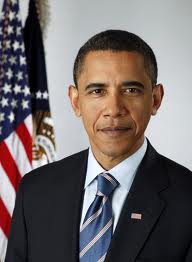
Last night’s State of the Union address from President Obama covered a lot of ground in a relatively short period of time. Nearly none of that covered health-related issues, mainly because it wasn’t politically expedient in an election year with job fears and emotions over tax fairness.
There were a few passing comments on health issues, none in any real depth. However, one really struck home with me:
“I will not back down from protecting our kids from mercury pollution, or making sure that our food is safe and our water is clean,” said the President.
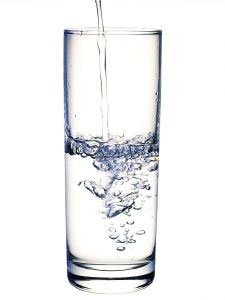
While many of us are eating too much junky processed food and not enough healthy natural food, water, the vary foundation of life on Earth is being threatened. It’s an issue that gets next to no coverage anywhere in relation to other environmental problems. But it’s the one problem that, if it got out control, would be the quickest route to our demise.
About 70 percent of the Earth’s surface is covered by water. More than 60 percent of an adult’s body is made up of it. Without it, you will die in about three days. It’s pretty important.
Read Full Post >
There’s always a bit of political grandstanding that goes on during a president’s state of the union address, but it is especially ratcheted up during an election year. This is one of the key moments for President Obama to make the case for his re-election. That means he is most likely to talk about the economy and various issues surrounding it.
Insiders say topics will include the continuing housing crisis, jobs, and fixing a tax and financial system that many think is unfairly rigged for the richest few.
What, if anything, will be said about the state of healthcare in the U.S.? It seems doubtful much of anything, other than a cursory mention, given what most people will be voting on this year.
Much of the address will be targeting the all-important voting block of the middle class. Many of them are certainly struggling with their pocketbooks… but many are also without healthcare. According to the U.S. Census Bureau, the number of people without health insurance coverage was 49.9 million in 2010.
Read Full Post >
What do you do when some of the healthiest foods on the planet, fish and shellfish, actually become dangerous to eat? Of course, the dangers of mercury exposure are much more extensive and complex than that, and for that reason the Obama Administration has announced its praise for new protective measures to reduce mercury and other toxic air emissions.
The Environmental Protection Agency (EPA) has finished our first national standards to reduce toxins. Power plants are the largest man-made source of toxic air emissions such as mercury, arsenic, acid gas, and cyanide in the United States.
When mercury is not emitted naturally from such sources as volcanoes, it comes from human activities like manufacturing or burning coal for fuel.
When mercury falls from the sky through precipitation (rain or snow) into bodies of water like lakes and streams. From here, it works its way up the food chain. Bacteria in soils and sediments convert mercury to methylmercury, at which point it is consumed by small aquatic plants and animals.
Read Full Post >
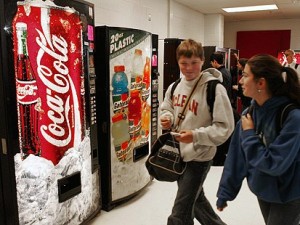
There is a lot of talk about what we need to do about the obesity epidemic we are facing in the U.S… and that’s precisely the problem, according to Jane Black, a food writer for The Atlantic.
“To make real change, reformers need to stop preaching and start forming smart political alliances to get the job done,” says Black.
As she astutely points out, it’s not enough to be right. You can be right about every point on your food policy agenda, but if you don’t have practical and political solutions for achieving results, what good is it?
The problem isn’t unlike any other political battle in our country. You can have truth on your side all you want, but if you aren’t politically savvy with how you brand your messaging, good luck with winning those battles.
Read Full Post >