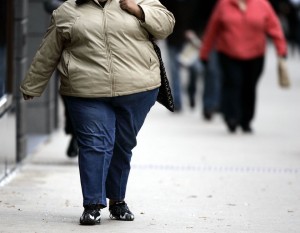
Approximately one-third of the U.S. adult population and 17 percent of children are considered obese according to CDC statistics.

NPR’s special series “Living Large: Obesity in America” takes a look at what it truly means to be obese in the United States, a country getting larger and unhealthier by the second.
Why are Americans obese? Blame it on the lifestyle. Americans are eating–everywhere. We eat in our cars on the way to kids’ soccer games, on the way to work, in-between meals, and after school. With our lackadaisical view of standard mealtimes, we are not only eating more, but are eating processed foods that are quick and adaptable to our on-the-go lifestyles and it’s rubbing off on other countries. The French are getting fatter, too, according to NPR.
Although France is typically viewed as a counterexample to America’s growing obesity problem, obesity in France is rising slightly. The French pride themselves on their love of food and traditional meal times. The French also know how to properly prepare a meal, something that is vastly disappearing in the age of globalization and urbanization.
Read Full Post >
In a study released in the June issue of the journal American Sociological Review, mothers who have had a baby while unmarried appear to be at higher risk for poor health. The study, which began in 1979, followed close to 4,000 women between the ages of 14 and 22. The young women were queried every year until 1994, and every two years thereafter until 2008.
Those women who had delivered children outside of marriage reported being less healthy as they approached their 40s than the ones who had postponed motherhood until after marriage. In addition, those who began motherhood and then married reported the same health concerns. Those who married before having children reported the highest levels of positive health.
The study allowed for prior existing health conditions.
The rate of birth in the unmarried mother category has jumped from less than 10% in 1960 to close to 40% today.
The reasons for reduced health in this group are unknown, but many surmise that the possibility of a lower income level may have something to do with it. Women who have children when they are both younger and unmarried typically have a lower level of education and this can be a deterrent to higher income.
Read Full Post >
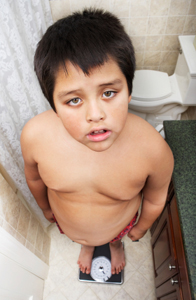
We’ve all heard that obesity is a huge crisis in America, but what many of us forget is that it’s our nation’s children who are suffering the brunt of the problem. Childhood obesity has tripled over the past thirty years with nearly one third of children or teens being overweight or at risk for becoming overweight.
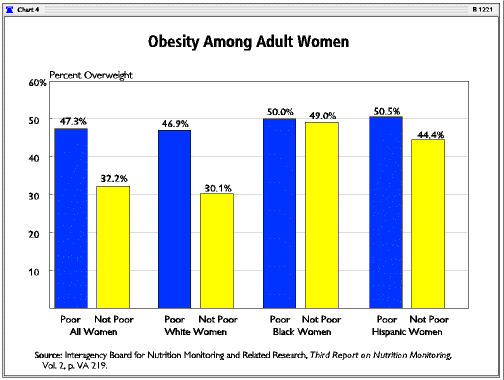
According to a report issued by First Lady Michelle Obama’s Task Force on Childhood Obesity, the number of obese Americans is growing. Nearly 75 percent of Americans will be overweight or obese by 2019, a condition that will have a negative impact on our nation’s economy. Ironically, as our nation weighs in heavier, the New York’s Food Research and Action Center reports another dilemma: families can become obese at the same time they are going hungry.
Read Full Post >
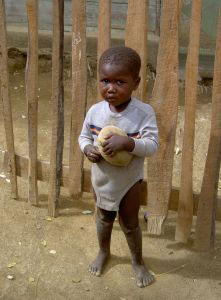
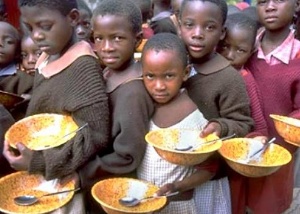
While DietsInReview’s primary focus is weight loss, disease prevention and overall health and wellness, we are also concerned about the health impact of poverty and malnutrition. Obesity may be a major problem in the United States and most of the developed world, but many developing nations struggle with nutritional deficiencies as a result of an insufficient food supply and poverty. Nutrition, health and health care, social justice, disease, and so many other concerns are wrapped up with poverty. It can be an overwhelming and cyclical problem.
The Girl Effect aims to improve poverty, disease, war, social inequality, and the world’s economy by educating girls in the developing world. It may sound idealistic, but there is much research behind the hypothesis that when girls are given any additional education, they are less likely to marry early, have children early, die from childbirth, contract HIV, and live in poverty. The Girl Effect also recognizes the different impact that women have on children and families versus men. According to The Girl Effect Fact Sheet women reinvest 90 percent of their income into their families, while men only reinvest 30 to 40 percent. That means that educating a young girl and giving her the opportunity to earn an income is at least 50 percent more likely to reduce poverty in her family than if a young boy was given additional educational opportunities. Women can make powerful changes when given the opportunity.
Read Full Post >
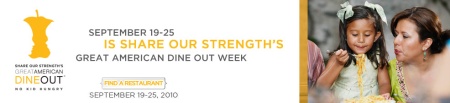
Most of us could benefit from eating out less, but if you are looking for a noble reason to hit up one of your favorite eateries, look no further than the Great American Dine Out.
From September 19 to September 25, Share Our Strength’s third annual Great American Dine Out is working with thousands of restaurants across the country. They will be offering great promotions, featuring special dishes, and donating part of their proceeds from that week to help support Share Our Strength’s work to end childhood hunger in this country. This year, Aaron McCargo Jr. from Food Network’s “Big Daddy’s House” is the Great American Dine Out’s official spokesperson and he is encouraging you take part of this special cause.
All you have to do is locate a participating restaurant via this Share Our Strength Restaurant Finder and dine in or dine out to help make the organization’s mission of “No Kid Hungry” a reality.
Read Full Post >