Diets in Review - Find the Right Diet for You

portion control


How to Follow the New Dietary Guidelines

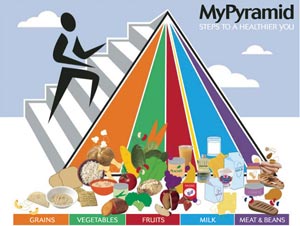
In 2005 the US Department of Agriculture’s Center for Nutrition Policy and Promotion made major changes to the Food Guide Pyramid. Vertical stripes replaced the building blocks to help represent moderation by the narrowing of each group from bottom to top, proportionality by the different widths of the stripes, variety by the new colors introduced, and the importance of physical activity and gradual improvement through the steps and slogan “Steps to a Healthier You”.

Recently, the USDA released new dietary guidelines for 2010, but the changes aren’t nearly as drastic. As Kelly said so well, “While it may be surprising that not much has changed since 2005 when our health obviously has, the new 2010 Dietary Guidelines show that how to eat healthy hasn’t changed, we just need to follow the guidelines now more than ever.” So just how do you follow the Dietary Guidelines for health and even weight loss? I have been teaching clients how to do this for the last five years with the help of the USDA and MyPyramid.gov.


Read Full Post >


400 Calorie Fix Diet Perfect for Your Resolution

It’s hard to find a practical diet that you can fit into your daily life. Oh, they’re out there but it can be difficult to sift through all the bad ones. Prevention Magazine has re-released its 400 Calorie Diet, which debuted January 2010. The book aims to provide effective weight loss in a manner that can be sustained long-term.
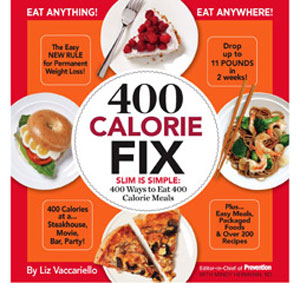
The 400 Calorie Diet is pretty clear-cut. Consume four meals a day, each containing about 400 calories. By practicing portion control, the diet advocates eating whatever you want, within reason. With 400 tips and recipes for 400-calorie meals, you’re bound to find something in there for you. Included are tips for dining out, drive-thru and coffee shop meals that, let’s face it, everyone encounters on occasion.

This is a diet that can be used regardless of your eating habits, simply reduce the number of calories you consume and eat consistently throughout the day. The responsibility of choosing those calories wisely is left to you – fresh meals prepared at home versus fast-food.

If you’re looking for more immediate results, The 400 Calorie Diet features a two-week Quick Slim. The Quick Slim jump-starts your diet by reducing your caloric intake to 1,200 calories per day. It also places greater emphasis on exercise. The classic 400 Calorie Fix also encourages exercise but it doesn’t provide samples or specific routines. You can find great fitness routines on the Prevention site Find a Workout.

(WINNER SELECTED: “PALOMA”) Win a copy of The 400 Calorie Fix! Leave a comment on this page with your New Year’s Resolution and what you’re doing to achieve it. We’ll draw one winner on January 7, 2011.

*DISCLAIMER: Only residents of the U.S. are eligible to win. DietsInReview.com will draw one winner January 7, 2011 and will notify winner via the email used in the comment form. Winner has three business days to respond and claim prize or forfeit prize. DietsInReview.com is not responsible for lost or stolen packages, nor failed shipments due to user providing incorrect address. DietsInReview.com may replace the prize with one of equal value if prize is not available. Prize value is $31.95; not redeemable for cash. Prize provided by Rodale.

Other Diets by Prevention Magazine:

400 Calorie Diet Re-Released on December 21st

Flat Belly Diet Boasts a 91 Percent Success Rate

Biggest Loser Club Gives You the Ranch Experience at Home


How Biggest Loser Shay Sorrells Stays Healthy for the Holidays

I understand that this is one of the hardest times for people to stay on track. One of the reasons is the way we think about holidays. Why oh why do we believe that as we alter or modify a tradition it will ruin everything? I promise, traditions started somewhere and making new ones is not against the law!

Last year when Thanksgiving rolled around I had just three weeks until  the Biggest Loser season 8 finale. Needless to say, there was no way I was cooking a Thanksgiving dinner and missing time in the gym or having oodles of leftovers haunting me.  So, we made a new tradition and we went to a restaurant! I ordered the kid-sized Thanksgiving plate, that had turkey breast, green beans, mashed potatoes, stuffing and a little slice of apple pie. I did ask them to hold the gravy and the roll (I picked my carb battle and had the potatoes and stuffing instead of the roll). It was the perfect portion and I was completely satisfied!
Read Full Post >


Bento Lunches are Healthy Meals in a Box

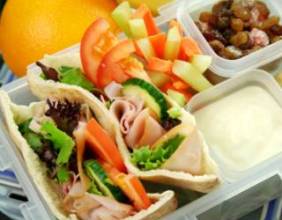
The word “bento” or “obento” is Japanese for a meal served in a box. If you’ve noticed the compact lunch boxes popping up on cafeteria tables near you, than you’d likely agree that the bento trend has officially reached Western culture.

According to Deb Hamilton’s popular bento blog Lunch in a Box, a bento lunch is a “compact, balanced, visually appealing meal packed in a box.” Hamilton, who lived in Japan for nine years and speaks fluent Japanese, began creating bento boxes as a creative meal option when her husband was diagnosed with celiac disease.


Read Full Post >


Simplify Portion Distortion Without Gadgets

Guest blogger, Monique Muro earned a bachelor’s degree in English with a Creative Writing emphasis from Cal State Long Beach. She currently assists with the PR and Social Media marketing for the revolutionary supplement AllDaySlim, and works as a freelance writer on the side. An avid reader and writer, her articles can be found at Suite101, eHow, Ezinearticles.com, Demand Studios, CNN iReport, and Examiner.com. She writes on a variety of topics including fitness, books, movies, and current events.

Portion control will make or break your diet, without question. Eat more than your body can burn off, and in due time, the results will make themselves known in that subtle pinch at the waistline when you pull up your favorite jeans.

Most of this is due to a little known thing called “portion distortion”, a catchphrase that describes how we determine which portion sizes are “normal”. Take a bagel, for example: Twenty years ago, a bagel three inches in diameter, about the size of a compact disc, was an adequate size for breakfast, clocking in at 140 calories. Today bagel sizes average a whopping six inches in diameter, and upwards of 350 calories. Bigger sizes are now considered the “norm”, as the food industry recognizes the nation’s ever increasing demand for more food.

But the devil is in the details when it comes to carving out the right portion size. How much money do you have to spend on specially marked cups and scales to accurately diminish your portions?

Here are some tips to follow that make it easier to eyeball your serving sizes without having to spend money on extra gadgets.
Read Full Post >