




By Chrissa Hardy
Do you find traditional yoga intimidating? Are the Sanskrit names of poses and the chanting keeping you away from your local studio? Or, maybe the whole “just you and your mat” thing is getting stale. If you’re interested in trying yoga, but want to add a unique twist to your workout, these trendy yoga hybrids might be just the ticket!
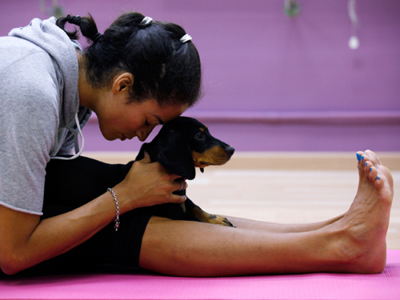
Doga
Fitness level: Great for beginners as this style involves a lot of massaging and light stretching.
Doga is yoga with your dog. In a Doga class, you move through a series of poses while trying to maintain yogic breath and calming of the mind. You involve your canine companion by positioning him/her in certain “dog versions” of yoga poses while also gently massaging them throughout the class. Your dog will alternate between acting as your partner in certain poses and as a prop in others. For example, in a resting pose, the person reclines, with legs slightly bent over the dog’s torso, bolster-style, to relieve pressure on the spine.
Read Full Post >
When it comes to exercise and eating healthy, it isn’t only important for us but also for our pets. A survey done by Association for Pet Obesity found that 53% of our dogs are overweight or obese!
Overweight or obese pets also run the risk of getting diabetes and cancer as well as other conditions. Not to mention that they probably don’t feel as well. What may seem like only a couple of pounds overweight to us is actually a larger percentage for our dogs. For example, a chihuahua that weighs 7 pounds means that it’s 17% overweight. That’s equivalent to a 5 foot 4 inch tall female weighing 167 pounds. A 15 pound dachshund would be 25% overweight and is equal to a 5 foot 4 inch female weighing 181 pounds!
Keeping your pet active is a great way to keep them at a healthy weight. The following slideshow includes four exercises that will get you both on the right path to a healthier future. So instead of parking it in front of the TV, head to your park and have fun!

Also Read:
Quick Fat Blasting Tips For an Amazing Summer Body
5 High-Fiber Foods You Should be Eating More Often
Lose 7 Pounds a Year from Drinking Cold Water
From wellness centers to workplace massages, employers are constantly searching for new and effective ways to keep their employees calm, relaxed and healthy. When sick days cut in to the annual budget, and production is low due to stressed out workers, businesses can be greatly affected. In this highly competitive world in which we live, that does not bode well for companies striving to be the best.
According to a recent study in the International Journal of Workplace Health Management, having a dog in the workplace might be a key ingredient to reducing stress on the job. Researchers found that having a dog (or dogs) at work instilled higher employee satisfaction, kept people calm and less tense, and made a generally positive difference to workers. In addition, the researchers discovered that having a dog at work allowed for more social interaction between employees, therefore increasing communication and collaboration on projects.
Read Full Post >
February is American Heart Month. There have been many public service announcements, ads, and campaigns to bring awareness about the things you can do to improve your heart health. Eating right and getting exercise top the lists of heart healthy choices however, a new addition to the lists may be to get a pet.
A recent Japanese study found that pet owners with chronic diseases appeared to have healthier hearts than those without pets. These findings were published in the American Journal of Cardiology and specifically noted that pet owners in this study had a higher heart rate variability verses non-pet owners.
Heart rate variability refers to the patient’s heart’s response to change, such as beating faster in stressful situations. Reduced heart rate variability has been linked to a higher heart disease mortality risk. The study specifically monitored 191 people between the ages of 60-80 years old. All were afflicted with conditions such as diabetes, high blood pressure, or high cholesterol. They were monitored for a 24 hour period and wore heart monitors for the entire study. About four out of every ten people owned a pet.
The study concluded that for pet owners, nearly 5 percent of their heartbeats differed by 50 milliseconds in length. Only 2.5 percent of the non-pet owners had differing heart rates, meaning that non-pet owner’s heart rates changed less or responded to change less.
Read Full Post >