


DietsInReview.com had an opportunity to take part in a webcast organized by the International Food Information Council Foundation and hosted Brian Wansink Ph.D, Director of the Cornell Food and Brand Lab and bestselling author of the eye-opening book, Mindless Eating: Why We Eat More than We Think.
In 2009, the International Food Information Council Foundation conducted the fourth annual, Food & Health Survey, a analysis of Americans’ attitudes towards food, nutrition and health. Before Dr. Wansink presented us his sage advice for how to navigate our way through the food-filled holidays, he discussed a few of his key findings from the 2009 survey. Below are the most salient highlights:

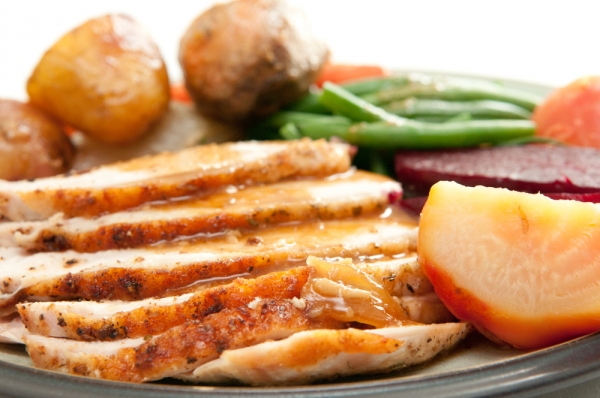
Most people overeat at Thanksgiving, it’s a matter of fact. According to the American Council on Exercise (ACE), the average “Turkey Day” plate is 3,000 calories. That’s not counting “seconds” or any snacks people have before the big meal. One way to cut back on the calorie damage is to make healthier versions of your favorites. (Do you really need four sticks of butter in that stuffing?) One of my personal faves is making an apple pie with 1/2 cup of fresh cranberries and instead of a high fat top crust, use thinly sliced apples that get crispy with baking.
But could there be something else going on that has nothing to do with how the food is prepared or the portion size you choose? Heck yeah. Is your diet diva going to tell you? Absolutely.
It’s called food “complexity” and “taste satiety.” Basically, you overeat at Thanksgiving because you are eating mindlessly. You’re not taking the time to intentionally slow down, serve yourself a small amount of food, and enjoy and savor each bite. If you did this, you’d get full well before you hit the 1,500 calorie mark, maybe even before hitting 1,000 calories.

Overeating has become a huge problem these days and I know we are all guilty of it every now and then. The majority of Americans eat due to boredom or depression. By keeping ourselves busy, active, and out of stressful/depressing situations, we can beat this phenomenon.
Overeating not only causes rapid weight gain, but high blood pressure, diabetes, kidney disease, or even a ruptured stomach can be result. Serving sizes have been blow out of proportion these days and can actually be rather scary. Below are the recommended serving sizes as well as a few helpful tips to prevent overeating.

One of the main reasons I recommend having two meals, one of which being a small meal such as an appetizer, is to help avoid overeating. This may sound counter intuitive, but with busy schedules we can tend to eat late or not have much time and therefore end up gobbling up as much food as we can in one sitting. Shortly thereafter we are left having over consumed calories, feeling stuffed and lethargic.
It can take up to 15 minutes for your brain to register with your stomach that food is in your system, a large proponent for overeating. Many times we will keep eating the food that is on our plate waiting for that “feeling of full,” only to have completely surpassed it. Eating a snack or appetizer prior to eating your main meal will help start that communication between your stomach and your brain, so by the time you go to eat your main course you will only need to eat a portion of it to fulfill your bodies’ needs.

If you’ve ever thought that your favorite food was “calling your name,” irresistibly drawing you to the refrigerator, it’s not just all in your head. Well, actually it is in your head. But, it’s very real. Let me explain…
A study at the University of Texas Southwestern Medical Center at Dallas has found that fat from certain foods goes to the brain and triggers the brain to send messages to the cells in the body, telling them to ignore the appetite-suppressing signals from leptin and insulin.
The interference with the leptin and insulin hormones, which are involved in regulating your weight, goes on for up to three days.
