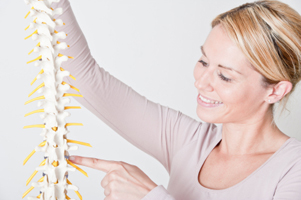
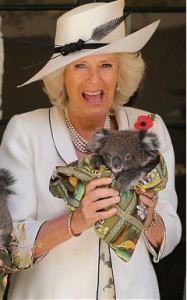
Camilla Parker Bowles, the Duchess of Cornwall, is championing a new cause these days: Her concern for teens and the path they’re heading down with their diets, which could lead them to a life of suffering from Osteoporosis.
Osteoporosis is a disease that affects the bones, making them fragile and easily breakable. Currently nearly 3 million people in the UK are suffering from the disease, and more than 250,000 fractures occur every year as a result.
Some suspect it’s the non-dairy and wheat-free fad diets that are putting these teens at risk. If they fail to build their bone strength up prior to reaching the age of 35, their chances of developing the disease are much higher.
“To unite with all of you today is so important, to get the message worldwide to people that it can be prevented,” said Bowles.
The Duchess has such as strong opinion regarding this topic as both her grandmother and mother have been affected by the disease. She watched her mother lose 8 inches in height and suffer from serious digestion issues as a result, which eventually led to hear death at the young age of 72. Her personal experience with the disease in her family led to her become the President of the National Osteoporosis Society in the UK.
Read Full Post >
If you’ve been in the running world for some time, you’ve surely noticed what the typical road race winner looks like, right? Tall, toned, and thin. It’s fair to assume that this is what it takes to be fast. Unfortunately, many of us, and especially females, go about improving our performance based on looking like these elites. Many female athletes are under nourished in relation to the amount of energy they expend. Truth is, this common behavior is actually very dangerous and can cause serious damage to a female athlete’s body.
I have been running since 2006. In 2010, after my sixth marathon, my doctor raised his concerns about my weight, my bone health, and something called the female athlete triad. I had never heard this term before, but I was quickly learning that I was in serious danger of falling into this condition.
Loyola University defines the female athlete triad as being characterized by disordered eating, irregular periods, and osteoporosis. I sat listening to my doctor explain the condition and knew that my periods were not regular, however, surely the other issues didn’t apply to me, or so I thought. He proceeded to perform a dual-energy X-ray absorptiometry, or DEXA scan, to check my bone density. He didn’t like what he saw for a female in her late twenties. But then he got to the eating. I was in complete denial. I was thin, but I was a runner and I needed to keep my calories low so I could stay light for performance. So I thought.
Read Full Post >
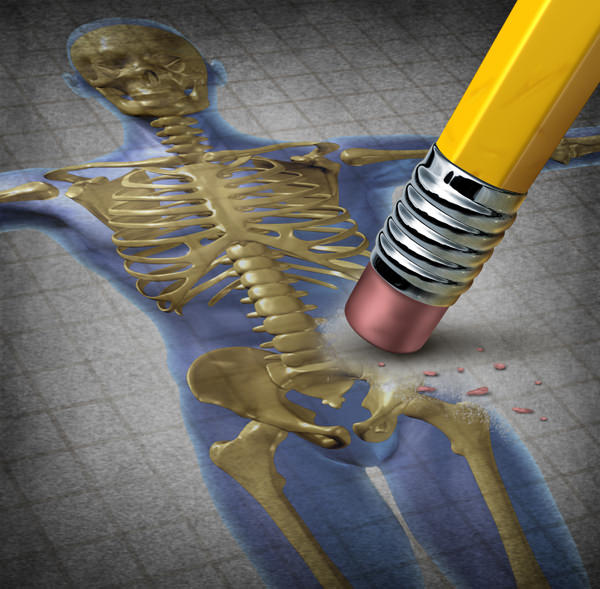
Osteoporosis is the thinning of bone tissue and loss of bone density over time. In light of May being National Osteoporosis Month, it seems appropriate to take a look at some of the causes and consider some of the foods that can help strengthen your bones. Some of the leading causes of osteoporosis are lack of vitamin D, sedentary lifestyle, estrogen deficiencies in women, and low testosterone in men.
According to Dr. Linda Russell, a Rheumatologist at the Hospital for Special Surgery, there are certain factors that can put you at higher risk for osteoporosis including being Caucasian or Asian, having a petite body, going through menopause before age 45, tobacco use, family history of osteoporosis, and taking medications like glucocorticoids, aromatase inhibitors and anticonvulsants. For those who may be at risk, you can get tested.
Dr. Russell stated, “A DEXA (dual x-ray absorptiometry) can detect osteoporosis. Medicare allows this test to be done every two years and every year if the patient is on glucocorticoids or has primary hyperparathyroidism. The National Osteoporosis Foundation recommends a DEXA in women at menopause and men at 70. The US Preventative Task Force recommends a baseline for women at age 65, but earlier if risk factors are present.”
Read Full Post >
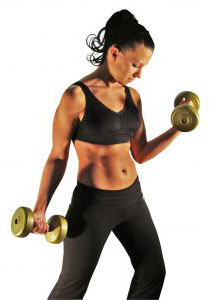
I will never forget the day I saw an elderly woman fall on the sidewalk in front of me. She fractured her wrist and I saw where the bone had punctured the skin. I vowed, then and there, to always, always take care of my bones. I take my calcium every day, along with Vitamin D and Magnesium. In addition to those supplements, though, bones need weight bearing exercise in order to stay strong.
“The exercise must place a load on the bone that’s heavy enough and different enough to stimulate a bone response,” says Robyn Stuhr, American Council on Exercise spokesperson and clinical exercise physiologist. Osteoporosis, or weakening of the bones, most commonly afflicts elderly women, but 20 percent of diagnosed cases are in males and osteoporosis occurs in people in every age. The most commonly affected bones are the spine, hip and wrist and thankfully, those are areas that can easily be strengthened.
Read Full Post >
Attention all Diet Coke and Diet Dr. Pepper lovers: Soda has been linked to osteoporosis, a condition that is marked by bone loss and puts you at risk for fractures, splints and breaks.
We all know by now that the sugar in soda is linked to a host of health conditions, from obesity to dental cavities. Now soda is earning demerits for its association with degrading the skeletal system.
The problem though is not with all sodas, but with the colas. So drinks like Sprite, 7-Up and Mountain Dew don’t appear to have the same bone-weakening effect as dark sodas do.
Researchers at Tufts University found that women who regularly drank cola-based sodas (three or more a day) had almost four percent lower bone mineral density in the hip, even when calcium and vitamin D intake were accounted for.
So what exactly is in dark sodas that is putting your bones at risk?
Read Full Post >