
There are many ways that we identify ourselves, and one of our deepest set chosen identities tends to be political beliefs. Self-identified liberals and conservatives (rather than those that identify as “middle of the road”) tend to disagree strongly on a variety of subjects, from the size of government to taxation to gay marriage. A survey of 347, 949 Hunch.com users has identified that those who tend to support liberal or conservative politicians also disagree on what to eat.
Those who identified as liberal seem to be more likely to agree with what they read at DietsInReview. While conservatives were 65 percent more likely to eat fast food a few times per week, liberals were 92 percent more likely to eat fast food rarely or never. When it comes to french fries, conservatives consider McDonald’s the best of the best, while liberals are 64 percent more likely to prefer bistro-type fries.
Similar to their fast food choices, those who identify as conservative were 50 percent more likely to believe there is no significant difference between organic and processed food, while identifying yourself as a liberal makes you 28 percent more likely to disagree. Liberals are 29 percent more likely than conservatives to avoid soda and 27 percent as likely to drink only diet soda when they do. Those who identify as liberal are 28 percent more likely to eat fresh fruit daily, while those who identify as conservative are 35 percent more likely to eat fresh fruit less than once per week.
Read Full Post >
In our fifty nifty states, some are shining above others in the area of sustainability and organic food production.
When a food is titled organic, that means that it was produced using methods that avoided synthetic pesticides and chemical fertilizers. The food does not contain genetically modified organisms and it was not involved in radiation, industrial solvents, or chemical food additives while being processed. If livestock or meat products are labeled organic that means the animal was raised without the use of antibiotics or growth hormones.
Obviously this is how farming used to always take place. Synthetic inputs are a creation of more modern times. All of these organic practices have been linked to sustainability in that they foster the cycling of resources, contribute to ecological balance, and protect biodiversity.
The health benefits of eating organic products come from the simple fact that one is consuming food, not chemicals. While the jury is still out on what impact these chemicals and artificial elements exactly cause, if you’re like me, I’d prefer not to eat a bug spray or an artificial flavor if I can avoid it. Even if it may not be “that bad” for me.
Read Full Post >
The LA Times recently reported a dangerous food myth that has been circulating throughout the health-conscious community as of late: cookies and chips are tastier, have fewer calories, less fat and more fiber when they are organic.
Organic food labeling has been a hot button issue lately as the nutritional and medical communities often find themselves at odds with food manufacturers that market foods in such a way that consumers perceive organic products as healthier choices.
“There are a lot of myths and misconceptions out there when it comes to food marketing,” said Lisa Moskovitz, RD, CDN, of Halevy Life. “For example, Twizzlers are labeled as ‘low-fat’ but they have the same amount of carbohydrates as the average loaf of bread. And that is just one example of how [consumers] are being misled by labeling.”
Read Full Post >
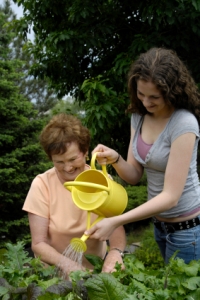
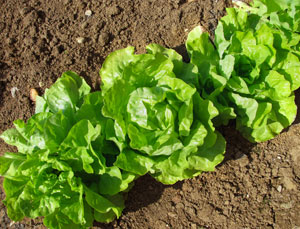
Tune in Friday morning on April 15 to Live with Regis & Kelly for the first of a two-part segment on how to grow your own spring salad. Matthew Benson, a contributing editor at Organic Gardening magazine, will show you everything you need to know about starting your own organic garden. He will discuss fertilizers, planting seeds and protecting them from unexpected frost. Plus, Benson will discuss cool weather vegetables that you can take pride in serving as part of a home-grown salad.
This segment combines two of my passions: sustainable food and healthy eating. Not only are organic vegetables good for your health, they’re also good for the planet’s health. Check your local listings for exact show times.
Organic Gardening magazine is a valuable resource to gardening enthusiasts who are interested in cultivating their own food.
Subscribe to Organic Gardening here.
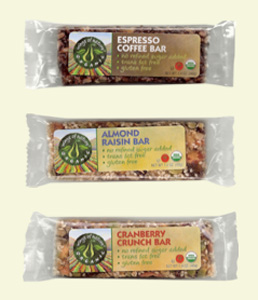
On Friday around 3:30 in the afternoon, I was sitting at my desk, starting to feel pretty hungry. Then I received a lovely package: samples of Wings of Nature Organic bars. I promptly devoured one and stopped feeling sorry for myself that dinner was still several hours away.
There is a lot to love about these bars. First off, they are certified organic by both the USDA and OC/PRO Canada. Although many feel that the USDA standards for packaged organic foods are not strict enough, all the individual ingredients in the Wings of Nature Organic bars are also organic. They come in three flavors: Almond Raisin, Cranberry Crunch and Espresso Coffee. Personally, the Cranberry Crunch is my favorite, but they all taste great.
Read Full Post >