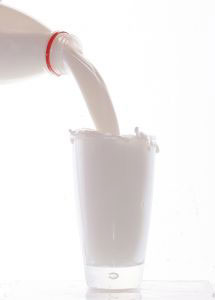
I’d never given much thought to milk. It’s just milk after all. When my daughter turned one last year and started drinking it, suddenly milk wasn’t just milk. In my mind there was milk that I wouldn’t dare let her drink, and there was the best milk I could possibly give to her. I didn’t want her tiny body being exposed to unnecessary hormones, chemicals, or anything else that milk has been getting a bad rap for. I just wanted her to simply have a cup of the protein-rich food that would help her grow to be the big girl that she now thinks she is, on the cusp of a second birthday.
 Standing at the grocery cooler inspecting the dozens of options before me, in the end I had a package and price to go off of. I had to weigh the two and make my selection. However, if I were researching my milk purchase today, I might be able to consider the product’s HowGood score. Horizon would have no “globes,” Stonyfield would have a “good” score with one globe, and Organic Valley would have a “very good” score with two globes.
You have no idea what I’m talking about, but Alexander Gillett is working really hard to change that. He and his brother, Arthur, launched HowGood four months ago. They’ve scored more than 100,000 products and awarded each of them zero to three globes. The more globes, the more sustainable the product is.
Alexander explained that with the HowGood sustainability rating displayed right on the price tag at the point of purchase people can expand their decision based on more than price and package claims. He says they’ve found that people are willing to pay a little more for a “greener” product. “The reality is a product that is sustainable costs a little bit more,” he told us.
This is why the “best milk” isn’t always going to be determined by a price or marketing. He explained that the “best milk” may cost even 15 cents more than its seemingly similar competitor, but customers are willing to pay that. “The best-rated milk product saw an increase in sales of 36 percent in one month, and continued over the next four months,” Alexander told us of actual stores sales where the HowGood label was used. (more…)