
Diets in Review - Find the Right Diet for You

mercury


Your Red Snapper May Actually be a Mercury-Filled Tilefish

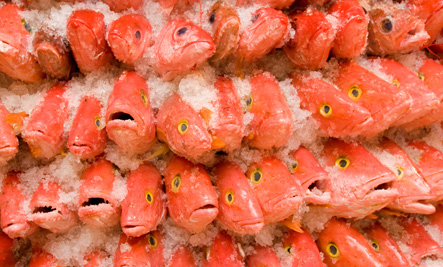
The nonprofit ocean protection group called Oceana has been performing a study, the results of which were released last week. The question – whether or not we’re being sold, and therefore eating, the fish we think we are.

Oceana took a sum of around 1,215 fish from 12 different parts of the country and examined them to see if they matched their labels or not. Listed below are the study’s findings.

  • About one-third of the 1,215 fish samples bought from 2010-2012 were mislabeled.
  • In a collection of 120 samples that were marked as red snapper fish, 28 different species of fish were discovered. Of those, 17 were not even within the snapper fish family.
  • Southern California was the region most likely to be misinformed with 52 percent of the samples bought there actually being something different.
    Read Full Post >


Obama Backs New EPA Mercury Reduction Plan

What do you do when some of the healthiest foods on the planet, fish and shellfish, actually become dangerous to eat? Of course, the dangers of mercury exposure are much more extensive and complex than that, and for that reason the Obama Administration has announced its praise for new protective measures to reduce mercury and other toxic air emissions.

The Environmental Protection Agency (EPA) has finished our first national standards to reduce toxins. Power plants are the largest man-made source of toxic air emissions such as mercury, arsenic, acid gas, and cyanide in the United States.

When mercury is not emitted naturally from such sources as volcanoes, it comes from human activities like manufacturing or burning coal for fuel.

When mercury falls from the sky through precipitation (rain or snow) into bodies of water like lakes and streams. From here, it works its way up the food chain. Bacteria in soils and sediments convert mercury to methylmercury, at which point it is consumed by small aquatic plants and animals.
Read Full Post >


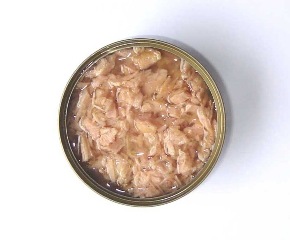
The Truth About Canned Tuna: Is it a Healthy Choice?

Formerly “weight challenged,” Denis Faye dropped 50 pounds following a 5-year jaunt through Australia, a trip that helped him become the extreme sports and fitness enthusiast he is today. His sports include swimming, scuba, rock climbing, spelunking, mountain biking, trekking, and—most importantly—surfing. He’s been a professional journalist for 20 years, writing for Outside, the New York Times, the Los Angeles Times, Los Angeles Magazine, Wired, Men’s Health, Men’s Journal, GQ, Surfer, and Pacific Longboarder. Denis now writes for Beachbody, which provides effective home workout dvds such as the very popular P90x program and the cardio workout dvd, TurboFire.

If ever a food confused health conscious eaters, it’s canned tuna. On one side, there’s the ascetic dieter, who eats the stuff right from the tin along side his single celery stick. On the other side, there’s your mom’s awesome cream-of-mushroom soup-drenched tuna casserole, which is trumped anti-nutritionally only by that greasy diner mainstay, the tuna melt. (True fact: in many restaurants, the tuna melt outdoes the hamburger for both calories and fat.)

And then there are the questions of mercury and overfishing and omega-3 fatty acids. Is this a healthy food or not? What’s a fish eater to do?

Fortunately, once you break it down, it’s not that complicated. As it turns out, a can of tuna can be healthy, ethical, and yummy – as long as your get your hands on the right can.


Read Full Post >


Beware High Mercury Fish

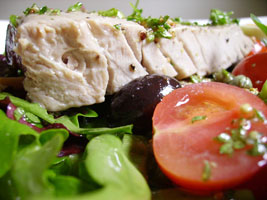
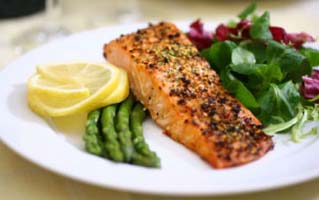
fish and saladFish have been recommended as an important part of a healthy diet because of their high-quality protein, are low in saturated fat, and contain omega-3 fatty acids, particularly eicosapentaenoic acid (EPA) and docosahexaenoic acid (DHA). Incorporating a variety of fish can contribute to heart health.

However, nearly all fish contain traces of mercury. Some researchers believe consuming fish with high mercury levels will diminish all potential health benefits. Some studies have actually suggested an increased risk of cardiovascular disease associated with mercury levels in fish, whereas other studies could not find any relationship between elevated mercury and risk of heart disease. This controversy has caused much discussion on what amount of fish is safe to eat without having harmful effects in the body.
Read Full Post >


U.S. Government Reconsiders Fish and Mercury Warnings

There’s a squabble brewing in U.S. governmental agencies over the recommendations for fish consumption by children and pregnant women. The Food and Drug Administration wants to reconsider the government recommendation for expecting moms and children to limit their fish intake, due to harmful levels of mercury.

But now there’s a proposal to encourage eating fish for its health benefits, and that has some folks with the Environmental Protection Agency challenging the validity of these new recommendations.
Read Full Post >