Have you ever been on a diet? How many have you pursued? In case you haven’t noticed, there are a few out there. At DietsInReview.com alone we’ve reviewed more than 400 weight loss programs and products- and we’re no where near finished. What if you couldn’t make up your mind, and decided to try them all, or at least 12? That’s what Joel Gates is doing this year, and you can follow along at DozenDiets.com.
With 2026 about to begin, and a desire to beat his long-time fight with being overweight, Joel began searching for the right diet to begin the year with (just as so many do). “When I started, I didn’t know what to start,” explains Joel, “I’ve done several in the past with varying degrees of success. I picked out those that I thought might be the most successful. I had some criteria- be able to cheat occasionally, stick with it on a daily basis, that I have confidence in and not too off the wall.” Joel also mentions that his health is important and he does take that into consideration when choosing a diet. Before starting he met with his doctor and just recently had a mid-year check-up to ensure he’s being safe about it.
Each month in 2026, Joel will follow a different diet. Half-way through the year, he’s lost about 43 pounds and 10% of his body fat. (Beginning stats were 234 pounds, 30% body fat) He keeps a daily journal at DozenDiets.com, displaying weight changes, body fat changes, food diary, exercise diary, cheats, successes and everything else that plays into his diet each day. Each month concludes with a summary, where he scores the diet on a 40-point scale, for ease of understanding, forgiveness of a cheat, ease of execution and results.
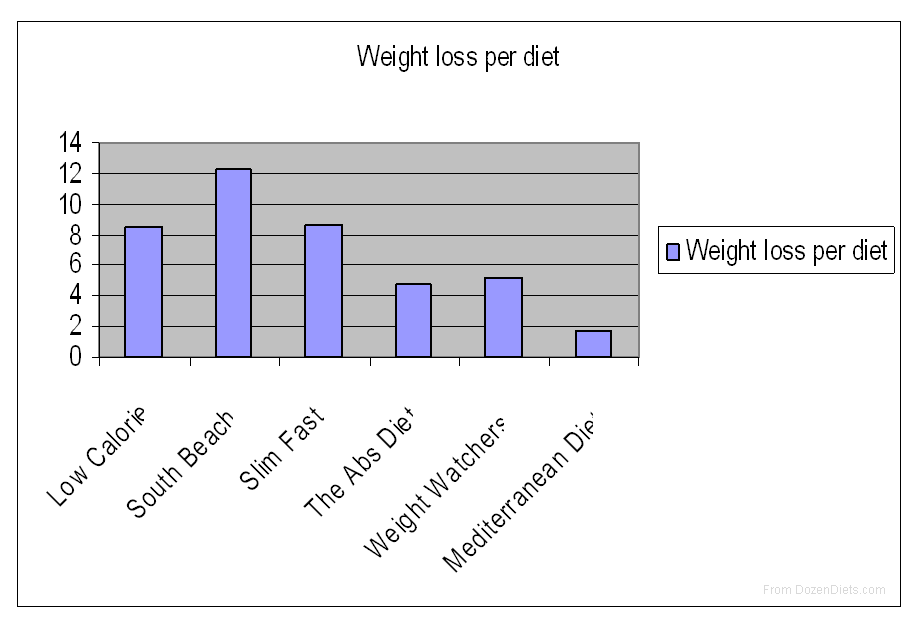
To date, he’s completed:
Jan: Low-Calorie Diet
Lost 8.5 pounds
Score 30/40
Feb: South Beach Diet
Lost 11.3 pounds
Score 28/40
Mar: Slim-Fast (tied for first place so far)
Lost 8.6 pounds
Score 34/40
Apr: The Abs Diet (in last place)
Lost 6 pounds
Score 23/40
May: Weight Watchers (tied for first place so far)
Lost 8 pounds
Score 34/40
June: Advanced Mediterranean Diet
Lost 6 pounds to date
Anticipates a high score
July: NutriSystem
Hear my interview with Joel in its entirety below. He discusses his experiences with each diet, which seem to be more male-friendly and which are definitely built for women, and how he plans to continue the rest of the year, considering he’s been far more successful than anticipated.