


Many who have struggled with their weight for a lifetime look to weight loss surgery methods like gastric bypass or the lap-band procedure to solve their weight problems. While these types of surgeries are successful for some people, many others still struggle after their operation.
For those with underlying psychological food issues, weight loss surgery can trigger other eating disorders. According to a 2007 Harvard study, 60 percent of all individuals seeking surgical treatment for obesity suffer from an eating disorder, usually binge eating. Those that have a previously unhealthy relationship with food and their body are at a higher risk of succumbing to other eating disorders after their operation.
Lap band and gastric bypass surgeries don’t typically create an eating disorder if there wasn’t previously one there. The major problem is that some who have these unhealthy food relationships have either left them untreated, or been unsuccessful in treatment prior to surgery. For binge eaters, the body cannot physically handle binge eating after surgery.
Read Full Post >
LAP-Band surgery is not a guarantee of weight loss, but new research shows that the number of post-operative adjustments can greatly impact a patient’s success. Conducted by David A. Nguyen, B.A., Grace J. Kim, B.A. and Carson D. Liu, M.D. of Skylex Advanced Surgical practice in California, the study analyzed the medical records of over 600 LAP-Band patients.
“For the patients who are able to make it back to their surgeon’s office, the adjustments are the key answer to continuing weight loss,” Dr. Carson Liu told DietsInReview in an interview.
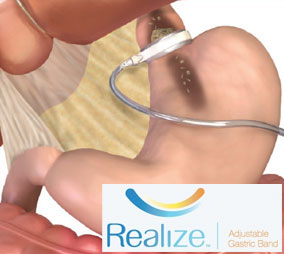
The LAP-Band creates a small pouch at the top of the stomach, which allows patients to feel full after eating a small amount, roughly a half cup of food. The contents of this upper compartment then slowly pass through the band’s opening and are digested normally. “Once patients start to lose 30 to 40 pounds, a lot of the fat that is around the stomach and within the stomach wall is burned off, and they need to have that band filled,” said Dr. Liu. Each time the band is adjusted, it’s filled with a saline solution of isotonic salt water, tightening the opening.
Read Full Post >
Tune in today, April 3rd to Dr. Oz for an in-depth look at Lap-Band surgery. In February, the FDA approved the use of lap-band weight loss surgery for people with a lower BMI, making in an option that’s available for many more Americans.
Dr. Oz talks to other experts in weight loss surgery about who should consider this procedure. Studies have show that Lap-Band surgery can help patients lose 18 percent of their starting body weight. Dr. Oz also talks to patients after they’ve had the surgery, to learn what it’s really like to live with the device.
Read Full Post >
A new study examined the two of the most popular weight loss surgeries, Lap-Band and gastric bypass, has come to the conclusion that gastric bypass is the better option. While the rate of complications in both procedures was about the same, gastric bypass surgery patients lost 64 percent of their excess weight after a year, while those who had the Lap-Band device placed only lost 36 percent of their excess weight.
“It’s a dramatic difference,” said Dr. Guilherme Campos of the University of Wisconsin School of Medicine in Madison.
Interestingly, previous studies have shown that gastric banding was safer than gastric bypass surgery.
Read Full Post >

Lap Band
The Food and Drug Administration officially approved use of gastric bands, also known as Lap-Bands, for people with a BMI of 30 or higher and have an obesity-related health problem. The previous regulations only approved the device for people with a BMI of 40 and no additional health problems or a BMI of 35 with health complications. The new regulation is in accordance with recommendations made by an FDA panel in December.
Allergan, the maker of the Lap-Band, originally applied to lower the threshold to anyone with a BMI of 35, regardless of other health complications. However, the new provision only includes people with conditions such as diabetes or hypertension, the threshold for otherwise healthy people remains at a BMI of 40. “In order to target this therapy to patients who will benefit the most, the approved indication is limited to patients at the highest risk of obesity-related complications,” said Karen Riley, a spokeswoman for the FDA. According to The New York Times, an estimated 26 million Americans are now eligible for the surgery.
Read Full Post >