

By Abra Pappa for Nutritious America
We all know what a fuel efficient car is, well at least the basic idea behind it. I mean, I couldn’t point one out to you on the street’ and if you wanted to tell me to look for one you would have to say something like, “Abra, the red one, the small red car” then I would get it. A fuel efficient car reserves energy so as not to gobble up fuel, it saves money, it’s better for the environment, and overall makes a lot of logical sense.
But when I tell people that in the winter our bodies are looking for ways to conserve energy, to be more fuel efficient, I am met with resistance. Slow down? Conserve energy?
Traditional Chinese Medicine (TCM) believes that people should live in harmony with their environment, to honor the seasons and their affect on our bodies.
In winter nature slows down, hibernates, the energy of the earth goes inward and internally begins the process of renewal for spring. To live in harmony with your environment during the season of winter means to honor the same principle: slow down, calm down, conserve energy allowing your body to prepare for renewal in the spring. Winter health in TCM is focused on the kidneys. Kidney health is the core of vitality, the source of strength throughout the body. When the kidneys are weak we age faster than we should, we feel more tired, our sex drive is decreased and their is an overall lethargy throughout the body.
To embrace winter and all the glorious peaceful qualities that come along with it align your food and exercise regimen with the season.
Read Full Post >
If you have kidney disease, a new study has some great news for you. Evidently, a vegetarian diet can help patients who suffer from kidney disease avoid accumulating high phosphorous levels in their bodies.
High levels of phosphorous in the body can lead to heart disease and death, so it is important for patients with chronic kidney disease to know how much phosphorous they are consuming because it could help save their lives. However, most food labels do not list the phosphorous amount.
Led by Sharon Moe, a group of researchers at Indiana University School of Medicine and Roudebush Veterans’ Affairs Medical Center studied nine patients who followed either a vegetarian or meat-based diet plan for one week. Afterwards, the patients swapped diets to compare the effects each diet had on the various patients. Although the patients consumed equal amounts of protein and phosphorus concentrations in both diets, they had decreased amounts of phosphorus exertion when they were following the vegetarian diet. The researches concluded that the source of protein was the important factor in determining the patients’ phosphorus levels.
Read Full Post >
By Delia Quigley for Care2.com
While it is more men who tend to develop kidney stones, women have the higher rates of urinary tract infections. Bladder infections affect one million Americans, 90 percent of these women, and are the most common cause of women seeking medical attention. Bladder incontinence affects 13 million American adults each year.
Your urinary tract includes the kidneys, ureters, bladder, and urethra. Of these organs, infections of the bladder are the most common problem. You pretty much know you have a bladder infection when you experience
- A burning sensation when you urinate.
- A feeling to urinate constantly.
- The urge to urinate but cannot.
- Leaking urine.
- Urine that is cloudy, dark, or bloody.
A women’s urethra is shorter than a man’s, giving bacteria a shorter distance to reach the bladder. Another problem is that the urethra is located close to a woman’s rectum, where bacteria can easily move up the urethra and enter the bladder. Not the most pleasant experience, although not as painful as kidney stones, bladder infections can be treated holistically with herbs and tinctures.
Read Full Post >
The folks over at Modeled Behavior have presented an interesting, if not profound, point about obesity in modern society, and how perception of obesity has changed over the last 100 years.
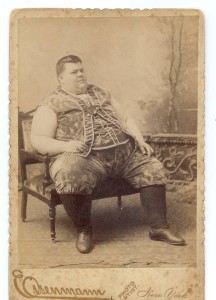
At the turn of the 20th century, Chauncey Morlan traveled in a circus sideshow as a “freak.” Referred to as the “Human Freight Car,” people came from all around (and paid money) to see him. You see, Chauncey’s obesity was considered a spectacle at the time. But today, we see people like him on a regular basis.
Morlan passed away at 43 years old of Bright’s disease, a term for kidney disease that is no longer used.
Read Full Post >
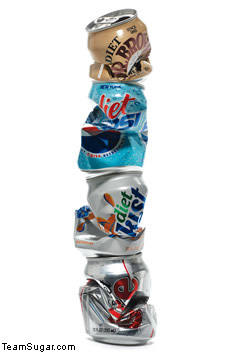
While diet soda is a better choice than full-sugar drinks, they aren’t free of health risks. A new study has found that anything more than one diet soda a day may increase one’s risk of decreased kidney function.
The study was conducted by researchers from Brigham and Women’s Hospital in Boston, Massachusetts. They examined the effects of sodium and artificial sweeteners on kidney function among 3,256 women with a median age of 67. The women filled out a questionnaire about their soda drinking habits.
When the researchers compared the women’s kidney function, they found that 372 had a decline of 30 percent or more in kidney function. Further analysis revealed that the decline was associated with drinking two or more artificially sweetened soft drinks a day.
Read Full Post >