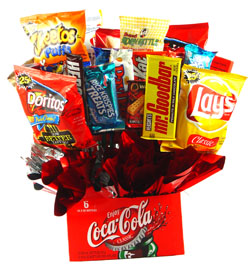
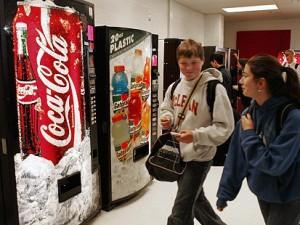





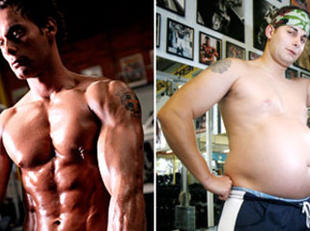
“It’s time for the food industry to clean up its act and not advertise junk food to young children. Just by banning ads for fast food…we could decrease obesity and overweight by 17 percent.” This is the statement that Dr. Victor Strasburger made this week on behalf of the American Academy of Pediatrics as reported in the Huffington Post.
Strasburger and the other 65,000 physicians that make up the American Academy of Pediatrics (AAP) are calling for a ban against fast food and junk food companies’ ads that air during children’s programming.
Whether the ads are to blame or not, the fact that the childhood obesity rates are going up is indisputable. The U.S. Centers for Disease Control and Prevention have concluded that more than one in six children and teenagers are obese. This is a 300% increase from one generation ago.
The doctors are obviously responding to a very serious problem, but could the ads really be that influential on kids’ habits?
The AAP reported that the nation spends more than $110 billion on fast food every year. That’s “more than is spent on higher education, computers, or cars,” Dr. Strasburger pointed out. Obviously our spending patterns are reflecting the effectiveness of marketing, but is it the ads that are making our kids fat? No, it’s not fair to say that they ads alone are the culprit.
Read Full Post >

UPDATE: This episode will air again on June 21, 2011.
Tune in to The Doctors on Tuesday, April 26th for tips on making the best of the worst situations. Learn which junk foods are the least of all evils, how to pick alcoholic drinks that won’t ruin your diet, and how to choose healthier snack foods.
Not all junk foods are created equal! Several guests have their decision making skills put to the test at a breakfast buffet. See if they stack up the calories or manage to avoid the worst nutritional pitfalls.
Read Full Post >
In public health policy, you can’t get much more divisive or controversial than the topic of taxes on high calorie foods. It doesn’t help put out the fire when researchers say that the tax actually works.
Researchers used nearly 200 college students in an experiment to see how their food purchases would change, if at all, when there is a substantial tax on high-calorie foods.
“The most important finding of our study is that a tax of 25 percent or more on (high-calorie) foods makes nearly everyone buy fewer calories,” says lead researcher Janneke Giesen of Maastricht University in the Netherlands.
The only exception was people who were already calorie-conscious in the first place – their decisions were not swayed either way with the food tax.
Read Full Post >
The brain grows most rapidly during the first three years of a child’s life, and so it stands to reason that the foods a child eats during that time are of utmost importance. A recent study confirms this. The long term health and well being of around 14,000 children born in 1991 and 1992 is being followed by a group known as ALSPAC, or Avon Longitudinal Study of Parents and Children. All together, data was compiled for just over 4,000 children.
Parents were given questionnaires to complete, requesting documentation of the types and frequency of the food and drink their children consumed when they were 3, 4, 7 and 8.5 years old. Overall, three basic dietary patterns were identified: “processed” (high in fats and sugar intake), “traditional” (high in meat and vegetable intake), and “health conscious” (high in salad, fruit and vegetables, rice and pasta). The I.Q. of all participants was measured using the standard Wechsler Intelligence Scale for Children when they were 8 years old. Numerical scores were calculated for each child.
Read Full Post >
Mark Haub, a professor of nutrition at Kansas State wanted to make a point: calorie count matters more than nutritional content when it comes to weight-loss. To argue his case, he embarked on a 10-week Twinkie diet and shed 27 pounds. He ate a snack cake or bag of chips every three hours, but only consumed a total of 1,800 calories total per day. Before the diet, he has a body mass index of 28.8, and continued his diet until he reached a BMI of 24.9, which is considered a normal weight.
However, about a third of Haub’s diet did consist of more nutritional foods. He drank a protein shake daily and took a multivitamin. He also ate vegetables, like canned green beans or several sticks of celery.
Haub deemed his super-unhealthy diet a “convenience store diet,” and does not recommend that anyone follow his example. Although his diet may have lacked many nutritional sources, many other health indicators actually improved for Haub after following the diet. His “bad” cholesterol, or LDL, dropped 20 percent and his “good” cholesterol, or HDL, increased by 20 percent. Haub reduced his level of triglycerides, another form of fat, by 39 percent.
Read Full Post >