

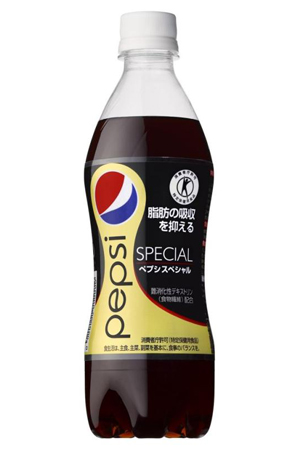


Pepsi-Cola isn’t exactly in a healthy industry. Over the past years, big soda companies like Pepsi and Coke have been scrutinized for contributing to the obesity epidemic. In light of this, Pepsi just announced a new fiber-infused flavor, “Pepsi Special,” that claims to reduce fat levels in the body. The product is only sold in Japan.
Pepsi Special contains dextrin, “a type of ‘functional fiber,’” explained our resident dietitian, Mary Hartley, RD. “This is a fiber isolated or extracted from a plant (or, in some cases, manufactured) added to a food. Dextrins are true soluble fibers that can help improve digestion. They act as ‘prebiotics,’ undigested fibers that feed the friendly bacteria in the colon.”
Benefits of dextrin include stabilizing blood glucose, regulating insulin, reducing risk of heart disease, and reducing cholesterol and fat cell levels in the body. Dextrin can be found in glue products as well, but it’s not safe to consume in that form. There are a number of foods and medications that contain dextrin and have for about half a century, notes Hartley. “Most people eat some dextrins every day without noticing a change in weight,” she said.
Will drinking the new Pepsi product make you skinnier? Probably not.
“Pepsi Special is a gimmick. It is just another product to increase market share,” calls out Hartley.
Read Full Post >
Nike has launched “Donate Japan,” a campaign designed to encourage people to log the kilometers they are running to raise money for the relief efforts in Japan after the March earthquake and tsunami devastated the country.
The way the campaign works is runners make a small donation between $5-25 to the American Red Cross and then use Nike Plus to log as many kilometers of running as you can over the course of 30 days. Many companies and individuals have teamed up with Nike and will donate money for each kilometer you run.
Nike Plus is advanced technology that makes cardiovascular training more enjoyable, competitive, and motivating. The program keeps track of your distance, best times, calories burned, and length of trainings, and also offers integrated online challenges, like “Donate Japan,” where you can compete with friends, family, or strangers all over the world.
Read Full Post >

Damaged Fukushima Daiichi nuclear power plant in Japan
Besides the immediate health effects that the Japanese nuclear disaster may have on people within close proximity of the plant, there are concerns as to how the radiation could spread beyond the borders of Japan. While much of the worries have been assuaged by experts, there is one that is being watched closely: the food supply in Japan.
Hong Kong has suspended all imported food from five prefectures in Japan (prefectures in Japan are governed jurisdictions that are larger than cities, towns, and villages.).
India has ordered radiation tests at its ports and airports of all Japanese food originating after March 11 when the earthquake occurred.
So, how does all this play into the food imported to the U.S.? First off, less than four percent of all food imported into the U.S. comes from Japan. Even so, that is enough to concern anyone if that food is contaminated with radiation.
Read Full Post >

McDonald's Texas 2 Burger
Although Japan is often associated with long lives and a healthy diet, McDonald’s is fattening its menu with burgers named after places in America. The burgers are topped with unconventional ingredients and clock in with extremely high calorie counts.
The Texas 2 burger features chili, three buns, cheese, bacon and totals 645 calories. The Miami burger has 557 calories and contains tortilla chips. The Manhattan burger consists of pastrami and mozzarella cheese stacked on top of the beef patty.
Although McDonald’s has tried to give customers healthier options in the United States, the chain restaurant is trying to capitalize on image of “Big America” in Japan. The burgers are only available for a limited time, and many Japanese want to try them before they’re gone.
Read Full Post >

By Alicia Rose
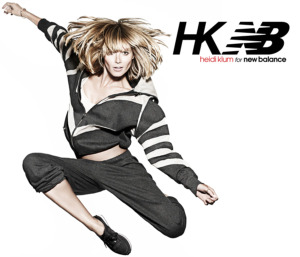
The newest trend to hit lifestyle branding comes from supermodel and established fashion designer Heidi Klum, who has partnered with New Balance to launch her new fashion line Heidi Klum for New Balance. The active wear collection launched on October 7, 2010 on Amazon.com and not only includes standard pants, hoodies and sweatshirts, but versatile sweaters, leggings, tunics, woven and knit tops, and dresses.
“Heidi Klum for New Balance combines New Balance’s expertise in fit and form with Heidi’s commitment to sophisticated style to create a versatile collection for women that is both everyday wearable and luxurious,” said Kerry Kligerman, Executive Vice President of Apparel for New Balance.
Ranging in price from $32-$168 (US dollars) the collection pieces are available in America, Japan, United Kingdom and Klum’s home country of Germany, and she says she is excited to launch a collection that is easy to shop and stylish to wear.
Read Full Post >