Diets in Review - Find the Right Diet for You

Interviews


7 Questions About Denise Austin’s 7 Skinny Strategies

Fad diets or exercise products seem to come and go every year. However, there are a few names that have lasted the test of time. Denise Austin is one of those names. She has been in the fitness business for decades. This decade is no exception as she recently released a new book titled, “Side Effect: Skinny.”

Her new book deals with what she calls a “fat blast diet,” and seven “Skinny Strategies.” Since Austin provides seven strategies, we asked her seven questions about her new book.

Calorie Confusion

One step instructs dieters to change up their caloric intake on various days to create calorie confusion and trick the metabolism. While many diets refer to cycling or varying intake on certain days of the week, is this how Austin has seen such long-term success? She said she’s eaten this way for the last 20 years and her work with professionals has convinced her to promote it. As she says, “variety is key.”

Fat-Blast Workout

A second strategy is the “Fat-Blast Workout.” We were curious if it was necessary to follow Austin’s unique workout if one was already on an exercise routine. Would results still be felt without the “Fat-Blast Workout?”

“[It] is divided into two types of workouts: one is the fat-blast walk, which is an interval walking routine that can be very well integrated into any cardio workout that someone may already have established. Again, this interval program is all about changing up the routine and surprising your muscles,” said Austin.
Read Full Post >


Biggest Loser Teen Contestants Will Never Step on a Scale, says Host Alison Sweeney

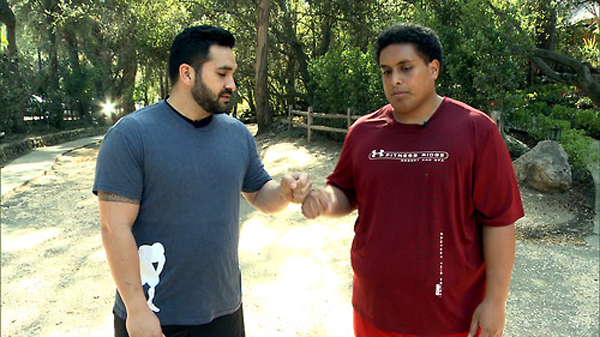
“The trainers expect the kids to change their fitness level in a kid-friendly way,” Alison Sweeney told us about three teens on the new Biggest Loser season. For the first time ever, the cast of 15 contestants is joined by three teens in an effort to highlight the rampant childhood obesity afflicting our youth.

In an interview with DietsInReview, Alison defended that the health and safety of these teens was of utmost importance from day one. “The first thing we considered was their age, the best way to help them, and best guide them,” she said.

To do so, she explains that these teens, two girls and a boy, will never step on the scale, they do not workout in the Biggest Loser gym, and they don’t even live on the ranch.

“These kids aren’t on an island,” she said, contrasting their stay on the ranch to the adults who are completely isolated from outside life. Alison explained that the idea in sending these kids home was for them to “learn to care for themselves in their own environments.” Therefore, not only the kids but the families as a whole are being encouraged to make these healthy changes so that the ultimately support one another in this journey.
Read Full Post >


Danny Boome’s Recipe Rehab is Making Over America’s Favorite Recipes on Network TV

My husband’s grandmother Polly makes the best chocolate cake I’ve ever had. I won’t say that’s why I married him, but it’s certainly one of the perks of joining his family! The headache I get after eating it is sometimes worth it – it’s that good. But, deep down I know it’s not good for me at all. With more than a pound of sugar between the cake and icing, butter, and white flour, I could really use some Recipe Rehab.

Families like mine across the country are having their favorite traditional recipes madeover on ABC’s new Recipe Rehab, a network cooking show hosted by celebrity chef Danny Boome. He told me it’s the first show to really bring cooking back to network TV since Julia Child. It’s also the first show to have started on YouTube and made the jump to network TV!

On the show, sponsored by Everyday Health, families submit recipes that they love but aren’t loving them back. So far, since the show’s premiere on October 6, they’ve fixed macaroni and cheese, fried chicken, and spaghetti and meatballs. Maybe Danny will hear my cries for chocolate cake help this Thanksgiving!

During the 30-minute show, we see two chefs makeover the recipes with healthier ingredients. The goal is to lower the fat, calories, and sugar while maintaining the flavor, texture, and even ease that the families love. Then, each family receives the two recipes and prepares them in their own home. Of course, no cook off would be complete without a tasting, at which point they reveal a winner.

“The idea of the show is to try to give people choices, open their minds up,” said Danny in our interview. On the phone he is enthusiastic about the work they’re doing and points out the real value the show offers its American viewers.
Read Full Post >


Dana Vollmer Stays Fit after Olympics with a Gluten-Free Diet and Hip Hop Workouts

By Chrissa Hardy for HelloGiggles.com

Dana Vollmer spent her summer training for London Olympic Games, competing in London and celebrating her gold-medal-winning, record-breaking time in London. Would any of these things have happened, had she not discovered her gluten allergy in the spring of 2011? She’s not so sure. After years of daily stomach aches brought on by her food choices, Dana feels better than ever before and could not imagine returning to a life with gluten.

Gluten-free has become a trend, a buzz word that has taken up prime real estate on food labels everywhere. What does it mean exactly? Gluten is a protein found in wheat, rye and barley. Those who are intolerant of it, allergic or sensitive to it, need to adopt a lifestyle of paying close attention to food labels. I sat down with Dana at the Gluten-Free Pizza Event, put on by The Venice Bakery in Los Angeles, CA, to discuss her new life and how going gluten-free changed everything.


Chrissa Hardy: First of all, congrats on your gold medal win! Has your life returned to normal or is it still pretty hectic?

Dana Vollmer: It’s still pretty hectic. I’m enjoying it a lot. Initially, I was planning to go back to my hometown in Texas to visit with my family and sort of relax, but I’ve just been traveling non stop and I love it. It’s been really great. It’s one thing to have the excitement of the Olympics but, now it’s so great to see the kids and how their faces light up when they get to wear the gold medal. I remember when I was 12 and I saw my first gold medal, that’s when I decided that I wanted to become an Olympian.
Read Full Post >


Meet Mr. Honeycrisp, the Man Behind Fall’s Most Popular (and Most Expensive) Apple

I walked in to the grocery store a couple of weeks ago to grab a few things and ended up grabbing a few things not on my list. Who doesn’t? I stopped dead in my tracks when I saw the front fruit display had traded peaches for Honeycrisp apples. After months and months without eating any apples, I was beside myself with excitement as I loaded up four softball-sized apples at $2.99 per pound.

Yep. I paid a three dollar per-pound price for a piece of fruit. And so have millions of other people. I am part of the reason the Honeycrisp craze has grown in to a full blown obsession rivaling only those who camp out for the first pumpkin spiced coffee of the season. I don’t eat any other kind of apple, and until a few years ago it had been several years since I’d even touched one. Honeycrisps are unlike any apple you’ve ever tried.

The Honeycrisp was developed at the University of Minnesota’s apple breeding program in 1960. It was a cross of the Macoun and Honeygold, a hybrid of the two apples that took more than 30 years to move to market. Between 1960 and 1991, the apple that is now known as the Honeycrisp was identified, tested, and introduced to market in 1991. That was 20 years ago. So where has this divine piece of fruit been hiding? I asked David Bedford, a research scientist and lead apple breeder at the University of Minnesota. This is Mr. Honeycrisp.

Once the Honeycrisp was released in 1991, Bedford explained it was a very grassroots effort to get the apple out there. They had to sell the seeds to the nurseries, who then sold saplings to the orchardists, who then had to plant and grow the trees. These aren’t like tomato vines, they take time, years in fact. Once the Honeycrisp trees were planted they had three to five years before they were fruit bearing.

An apple with no marketing budget and just some excitable word of mouth has grown to be the fifth most grown apple in the U.S, according to Bedford. “It’s a hometown kid without much promotion.” The apple really took off and joined the mainstream, Bedford explained, after Washington state growers got a hold of it. “Sixty percent of apples in the country are grown in Washington,” he said. “When they get behind something, you see it go mainstream.”
Read Full Post >