A recent article published by the New York Times suggested the many ways yoga can wreck your body. While this is true, it is important to understand that injuries can be avoided. Without knowing much about yoga, especially the myriad ways yoga is practiced in our modern day society, one might read that article and take it as a reason to toss out their New Year’s resolution of trying a yoga class for the first time. But the reality is, yoga doesn’t do the body wrecking, you do, and it happens when you neither honor your limits nor trust in your abilities. Having a qualified yoga teacher also helps prevent needless wrecking and wrenching of our fragile bodies, but ultimately, we are our best teachers.
The bottom line is that with any type of physical activity we all must trust ourselves, our own inner teacher. There are times when it is appropriate to dig in a little deeper to move past self imposed limitations of movement, and there are times when it is completely acceptable to bow out of a pose or an exercise if it hurts. Also, no two styles of yoga are exactly the same. It is best to find one that fits your body type, rather than try to fit your body into a style that does not suit you.
While some yoga poses will be extremely inappropriate for you, some yoga poses are necessary to counter other poses in an effort to avoid muscle imbalance and instability. A qualified instructor will lead you in such a way that you have no choice but to listen to your body’s needs. You will know when too much is too much, and you will understand why some poses are needed to keep you aligned.
Read Full Post >
By Elizabeth Magill
Dealing with an injury that requires rest–no matter for how long–can seem like an eternity. If you’re fitness-conscious as well, you’ll be concerned about staying in shape during your recovery. According to the International Association of Athletics Federations you can do it by focusing on strength, balance, flexibility, and endurance during your downtime.
Here are 10 tips to help you stay fit while recovering.
1. Start with R.I.C.E.
If your injury is sports-related, a sprain, strain, knee injury, fracture, dislocation, or an injury of the Achilles tendon, treatment should begin with the R.I.C.E. method, an acronym for rest, ice, compression and elevation. R.I.C.E helps to reduce swelling and relieve pain, especially during the early phase of the injury. The R.I.C.E. treatment also helps your injury heal faster, enabling you to get back to your previous fitness regime more quickly.
2. Communicate with your doctor
Whatever exercise you do, do it under your doctor’s supervision. Your physician will keep you apprised of what you’re ready for, and what you need to hold off on, so that you don’t re-injure yourself.
3. Listen to your body
In addition to listening to your doctor, listen to your body. It will let you know when you’re exercising too much or pushing too hard. Overdoing it can hinder your ability to stay in shape while recovering from an injury.
Read Full Post >
By Sandra Hume
If you were asked to make a list of the muscles that were most important to take care of, your shins might not even make the top five, especially if they’ve never given you trouble. 
But anyone who’s experienced shin pain knows all too well the importance of the bones between the knee and the ankle — the fibula and tibia — and specifically the muscles that attach to them.
In everyday life, shins play a pretty crucial role, says Robert Steigerwald, M.A., exercise physiologist and personal trainer in Huntington, NY. (Find him on Twitter as @metabolicbob.) The muscles surrounded by the tibia and fibula bones of the shin help with basic balance and make walking over anything uneven possible. Thank your shins when you can navigate up the stairs, down a hill and onto a sidewalk.
Once we incorporate exercise into life — even something as simple as walking — we ask more of these muscles. Shins can easily be overexerted and result in shin pain, which is commonly known as “shin splints.”
Read Full Post >
There are lots of “rules” when it comes to running. “You have to stretch.” “You have to wear proper shoes.” “You have to cross train.”
I’ve heard all of these and more. I’ve also heard every one of these rules debunked at one point or another. It can be confusing at times to know exactly what we are supposed to do to ensure optimal running performance and health.
Recently another long standing “rule” of running was challenged in the news. The New York Times reported that the 10% rule was put under the microscope to see if its tenure still holds true or if it ever deserved its position as valid advice in the first place.
The 10% rule states that a runner should not increase their mileage more than 10% each week. The idea is that this gradual increase will prevent the body from succumbing to injury. This rule was put to the test, and studies found that it didn’t hold up: Just as many runners sustained injuries who followed the rule as those who did not.
So, what does this mean? Can a runner start out at a 10 mile total one week, and then jump up to 30 the next week? Will this increased distance and stress play no role in promoting an injury?
Read Full Post >
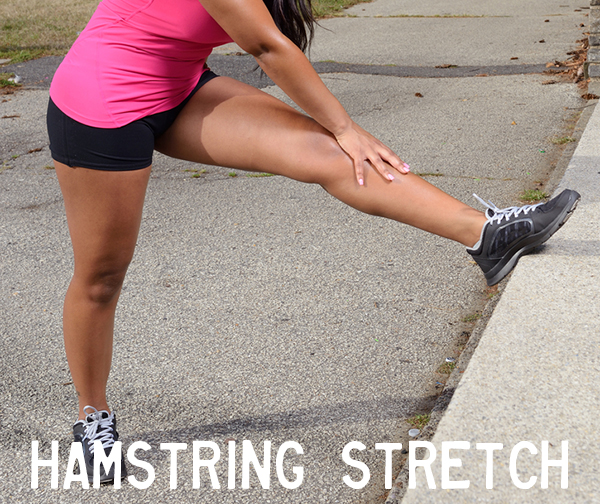
To stretch or not to stretch, that really isn’t a valid question for the runner. Perhaps the runner can ask “When should I stretch?” or “How do I stretch?” but, in my opinion, contemplating whether or not to stretch is a recipe for pain and injury.
The task of running is tremendous for the body. The heart works hard, the muscles work hard, the lungs get one of the best workouts possible during a run. While running is so great for a person’s health, it must be noted that all that work really stresses the body as well. After long runs, my muscles get very tight and sore, proving that they need some extra attention before you run on them again.
Stretching can help loosen up tight muscles and allow for more range of motion. Motion on loose muscle verses tight muscles seems to paint an obvious enough picture as to why runners should stretch. A well stretched and flexible runner has the potential to run faster with less effort or training verses the naughty, non-stretcher who knocks out several intense workouts in a week. That fact alone has inspired me to up my stretching game!
Read Full Post >