Scientists from the U.S. Johns Hopkins team have managed to turn bad white fat into good brown fat in recent experiments on rodents. This breakthrough could be a huge step in treating obesity if it were able to yield the same results in humans.
Brown fat is present in all humans during the infant years, but disappears as we age. Brown fat has been called the key to burning fat and could be a helpful way to control weight. When brown fat is lost in the body, it is replaced by white fat which has been called “bad fat” because it just sits. In their experiment, scientists were able to suppress an appetite stimulating protein called NPY. Through this suppression, the rodent’s appetite and caloric intake was reduced. This was the case even when they were fed a diet high in fat. An even more interesting development with this experiment was that the rodent’s bad white fat stores turned into good brown fat.
Read Full Post >
Every five years, the Dietary Guidelines for Americans is reviewed and updated by the U.S. Department of Agriculture and the U.S. Department of Health. The 2010 guidelines were published today, and not only outline what foods are best for us, but also for the first time give advice on what foods to avoid.
In the introductory summary of the document, the Dietary Approaches to Stop Hypertension (DASH diet) is singled out as an eating plan that embodies the these updated dietary guidelines.
The DASH Diet is a way of eating that’s been proven to reduce blood pressure, and has also been recommended by the American Heart Association and the National Institute of Health. On this diet, you will eat lots of fruits, vegetables, low fat dairy products, lean meats, fish, poultry, nuts, beans and whole grains. This eating plan will not only help to lower your blood pressure, it’s also a safe and effective weight-loss diet.
Read Full Post >
By Jessie Gorges
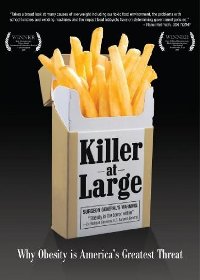
Picture this: A world where the majority of the population has to take insulin shots, and the life expectancy of children is lower than their parents’. That’s exactly where we’re headed, according to the documentary Killer at Large: Why Obesity is America’s Greatest Threat.
The film opens with an obese 12-year-old child. Brooke Bates and her parents list reasons for her weight gain and explain that diet and exercise didn’t work for her. So, instead of seeing a dietitian or personal trainer, they choose liposuction surgery to resolve the problem.
The creator of the film, Bryan Young, lists stress-induced cortisol, junk-food advertising to children, unhealthy school lunches and increased production of high-fructose corn syrup as the obesity epidemic’s main catalysts.
Read Full Post >
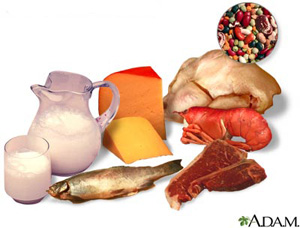
Protein is essential for normal body functioning and crucial to help build and repair muscle tissue after strenuous workout sessions. Protein is defined as organic compounds made of amino acids that are arranged in a linear chain, typically found in meat, fish, nuts, eggs, dairy products, legumes, and protein supplements. They are considered to be the building blocks for your muscles and immune system. Protein can also be used as a form of fuel to provide the body with energy if you are not getting enough fat or carbohydrates, which are the primary energy sources.
The recommended daily value (DV) of protein based on a 2,000 calorie diet is 50 grams. For those who exercise frequently, it is recommended to get .8 to 1.2 grams of protein per kilogram of body weight. For instance, a 200 pound (90.9 kilogram) male is recommended to intake 72 to 108 grams of protein per day. If you don’t get enough protein in your diet, your immune system may become weakened, you can lose muscle mass, experience growth failure, and even weaken the heart and respiratory system. So, please make sure you are getting enough protein in your daily diet.
Read Full Post >
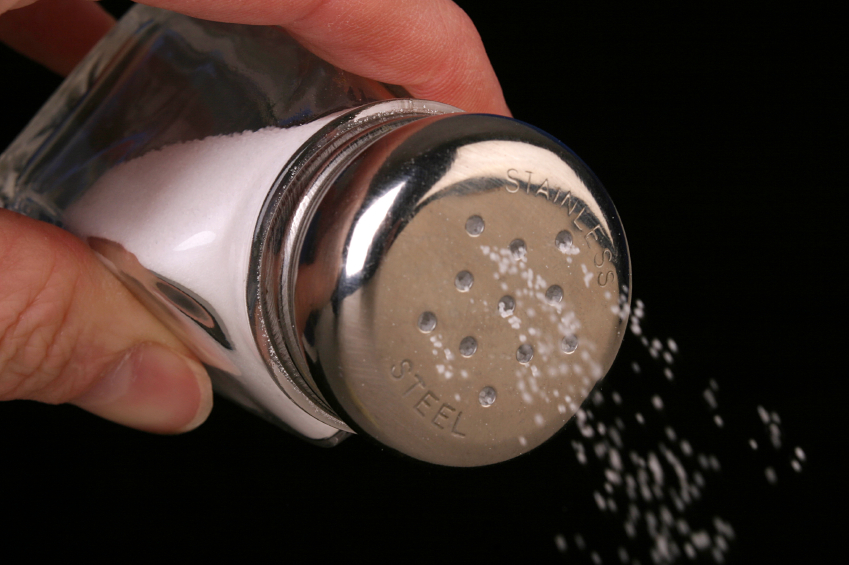
Tune in this Wednesday, November 24 to The Doctors when the lid is blown off of America’s silent killer – salt.
On the show, you will learn how to take action and join the nationwide movement to Halt the Salt. Plus, The Doctors will reveal what store bought foods contain the greatest amounts of sodium and you will also learn which of your favorite foods contain too much salt on restaurant menus.
Read Full Post >