
By Lise Turner for Care2.com
It has been a sleepless several nights for me, mainly because of troubling events. But it made me start thinking about food, and how it’s intimately connected to our patterns of sleep. If you can’t sleep, and life is calm and happy, maybe it’s something you ate–or didn’t. The foods we eat can dramatically affect how much, and how well, we snooze. Some foods calm and relax, some wake up the nervous system, and some just downright wire you for the night.
What you should eat for deeper sleep depends partly on your patterns. If you toss and turn before drifting off but then doze soundly for the rest of the night, you might benefit from adding slow-burning carbs (beans, sweet potatoes, berries) to your evening meal to prompt the production of serotonin, a brain chemical that promotes calm. If you zonk out quickly but wake up a few hours later, you might be suffering from blood sugar fluctuations. I’ve tried a high-protein snack before bed–a handful of walnuts, a spoonful of almond butter, a small cube of cheese–and these tend to keep blood sugar levels steady throughout the night.
Focus on foods with soothing nutrients, like magnesium, which help relax muscles and calm the body, and B vitamins, key in the production of serotonin and other brain chemicals necessary to sleep. Trytophan, an amino acid that’s needed to make sleep-inducing serotonin, is especially effective when it’s paired with complex, slow-burning carbs.
Read Full Post >
Packing lunches, day after day, can quickly become tedious. After all, there are only so many different ways you can pack a sandwich and even if your child is devoted to the traditional PB&J, banana and milk combo like one of my children, you may decide that you want to switch things up a bit.
Maybe you need to pack lunches in a hurry. You need some packaged foods to toss in the lunch bag, and you want foods that are yummy AND good for your child. Look for foods that are low in sugar, all natural, with no high fructose corn syrup and no chemical additives. It’s a tall order, to be sure, but here are a few of our favorite lunch box choices that meet our tough criteria.
Whole Grain Goldfish – Every kid loves to snack, and these childhood favorites have worked hard to make themselves a healthier choice. With 140 calories for about 55 goldfish – a perfect serving size to go with your child’s lunch – 5 grams of fat and 2 grams of fiber, these whole grain, tasty cheese crackers are both fun and a good dietary choice.
Read Full Post >
By Jennifer Gregory
It’s a scene that plays out in many houses each afternoon: The kids come home from school and they are starving. Not just merely hungry, but absolutely famished and they want something to eat this very instant.
While it is tempting to reach for cookies, chips or ice cream to satisfy their munchies, with just five minutes of preparation you can give your kids a snack that you can feel good about serving.
Here are five quick and healthy ideas that you, and more importantly, your hungry kids, will love:
Read Full Post >
Warm bread fresh out of the oven, mom’s homemade spaghetti, and chocolate chip cookies could make anyone have a good day. While it’s no mystery that fatty or sugary foods can alleviate just about any bad mood, hardly anyone questions why while reaching for that next Oreo.
Dr. Lukas Van Oudenhove’s study at the University of Leuven in Belgium discovers that the fatty acids in comfort food may be what is making us so happy when we’re consuming junk food. The study examined 12 non-obese volunteers the morning after a 12-hour fast. The volunteers were hooked up to a gastric feeding tube that gave either saline solution or fatty acid and their brain activity was recorded during a 40 minute fMRI (functional magnetic resonance imaging) scan.
Before the participants were given either the saline or fatty acid, the researchers played sad classical music and displayed sad faces on a screen. The results of the study were that the participants who were given the fatty acid were 50 percent less sad than those given the saline solution.
Dr. Lukas Van Oudenhove and his team proved that the fatty acids in comfort foods were able to give the participants the same feeling without the visual and oral stimulation of eating the food.
Read Full Post >
For many people, snacking can be part of a healthy diet that can lead to effective weight loss. However, according to research presented at the 2011 Institute of Food Technologists (IFT) Annual Meeting & Food Expo, snacking, as well as beverage consumption outside of a regular meal, continues to increase among Americans, accounting for more than 25 percent of calorie intake each day.
Between 1977 and 2006, snacking in the American diet has grown to constitute “a full eating event,” or a fourth meal consisting of about 580 calories daily, according to Dr. Richard D. Mattes, Ph.D., professor of foods and nutrition at Purdue University.
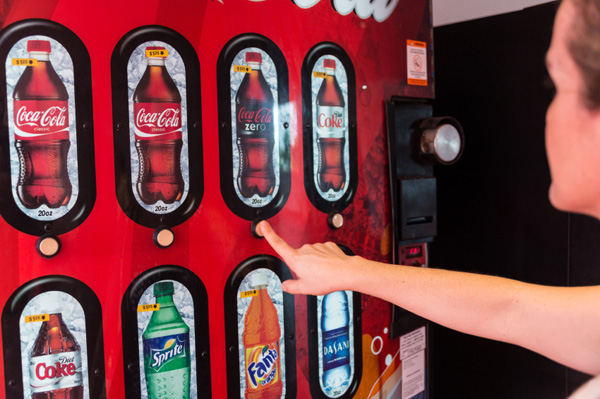
While overall, snacking has increased, “there has been a significant increase in the amount of calories consumed through beverages,” said Mattes. Beverages are estimated to account for 50 percent of all calories consumed through snacking.
According to Mattes, many Americans don’t equate beverage intake with calorie intake so they are less likely to count these calories or make up for the excess by cutting back elsewhere in their diets.
Read Full Post >