What do you do for others that you do not do for yourself? Do you clean more deeply when visitors are coming? Even though most people enjoy the results of a put together home, many are a bit more lax when just the family will see the contents. Do you only use the soft towels when you have guests? Do you get something fast and less healthy when it is just you? Are you more likely to cook with the freshest ingredients when you have a dinner guest? How would your family dinner be different if Jillian Michaels was coming for a visit? Are you more likely to go to exercise every day when your high school reunion is approaching?

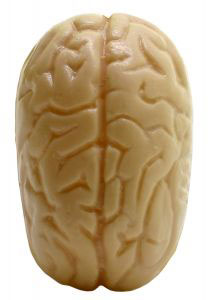
A new study just released in the Journal of Human Brain Mapping showed that obese individuals have eight percent less brain tissue than normal-weight individuals and their brains look 16 years older than the brains of individuals who are at normal weights. In addition, the brains of overweight individuals looked eight years older than those of leaner individuals.
Lead researchers of the study call this “severe brain degeneration” a great risk for degenerative diseases like Alzheimer’s, in addition to other diseases that affect the brain.

If Time magazine dedicates an entire cover story to it, then it must be big.
New research about the benefits of exercise is running counter to the conventional health wisdom we have been taught thus far. While exercise burns calories, which is necessary for weight loss, it also makes us hungry. And what do we do when we are hungry? We eat. And if we know we just clocked a few miles on the treadmill, what do we do then? We give ourselves free license to devour a plate of pasta or chicken quesadillas, and maybe even a piece of tiramisu for those extra crunches we kicked out. The problem is not that we’re eating, but rather the hunger that comes from exercise may be leading us to consume more calories than what we just burned off. This therefore negates our good intentions of creating a calorie deficit in order to lose weight.
The question that health researchers are now asking is, “Is exercise really needed for weight loss?”
The answer may surprise you.

As if obesity doesn’t come with enough collateral health damage – heart disease, diabetes, cancer, to name a few – now the obese may be more susceptible to the H1N1 swine flu virus.
Researchers in the U.S., including Dr. Lena Napolitano of the University of Michigan Medical Center, studied 10 patients admitted to the university’s intensive care unit with severe acute respiratory distress syndrome caused by infection with H1N1.
“Of the 10 patients, nine were obese (body mass index more than 30), including seven who were extremely obese (BMI more than 40),” the experts wrote in the report published in the Centers for Disease Control and Prevention’s weekly report on death and disease.

While worries over the economy and the wars we are conducting around the world dominate our consciousness, we continue to lose a battle on a different front. American waistlines are continuing the dangerous trend of expansion.
Two-thirds of Americans are overweight or obese, and there’s no end in sight to this dangerous trend. According to the Centers for Disease Control, in 2007 25.6 percent of Americans were obese. But in 2008, it crept up to 26.1 percent.