





Diets in Review - Find the Right Diet for You

Health News


A Convincing Argument For Fake Chicken

There are many reasons to be a vegetarian. Some do it purely for health, others maintain a meat-free diet because they feel that it protects animals from suffering. Regardless of the reasons, most vegetarians catch a lot of flak for their choices. A recent look into the world of poultry production and the options in a plant-based diet, may have even the most cynical among us ordering up faux chicken for our next meal.

New York Times, Op-Ed columnist Mark Bittman recently took an objective look into the world of fake meat, and poultry production in the U.S. He first looked at the facts about the chicken industry. The stats are a little unsettling. The U.S. raises and kills almost eight billion chickens a year. The growth is so rapid among industry chickens that the Veterinary Record has said that most of the chickens have bone disease and are in chronic pain. For a reflection, the University of Arkansas did a study and reported that if humans grew as fast as industry chickens, they would weigh nearly 350 pounds by age 2.

In addition to the animals being roughly manipulated, Bittman was clear to point out the other effects of raising meat in this manner. Not all are impacted by what some would call cruelty to animals, but the other factors effect many humans. When chickens are raised so quickly, producers are having difficulty dealing with the waste. Manure, waste water, and post-slaughter residue are all in excess and aren’t being disposed of efficiently at all facilities.


Read Full Post >


Ag-Gag Bills Will Keep Food Preparation Methods Secret

Pink slime has been making headlines a lot lately. As most consumers are learning the truth about the food they’re putting in their mouths, the government is apparently getting nervous.

If you haven’t read the truth about this product called pink slime that is making up the majority of the meat served in this country, you should really inform yourself.

Microbiologist Carl Custer gives an excellent definition of pink slime. Custer explains how the substance is primarily connective tissue and gristle, the texture is simply manipulated mechanically and the flavor altered chemically to fool you into thinking it’s meat.

“It’s not meat. We call it Soylent Pink,” Custer said, who has worked with the Food Safety Inspection Service for 35 years.


Read Full Post >


Obesity Might Involve More Than Calories In, Calories Out

by Arleigh Aldrich

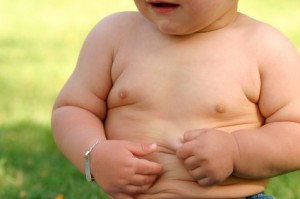
More and more studies are surfacing with the argument that it’s not just how much we eat that is fueling obesity, but what we’re eating. For years, scientists and nutritionists have adhered to the “calories in, calories out” model, in which one loses weight by burning more calories than they intake. Now researchers are asking if pollutants that make their way into our food affect that model.

The culprits on trial are called “obesogens,” a new term coined to describe organic pollutants such as pesticides for crops and slimicides for water purification. Here’s the question: If I consume a diet with ingredients exposed to obesogens containing X amount of calories, will it cause me to gain more weight than if my diet didn’t contain those pollutants?

Bruce Blumberg, professor of developmental and cell biology and pharmaceutical sciences at the University of California, says yes. Blumberg coined the term obesogens and claims they have an effect on how the body responds to calories and stores fat. In his study, one group of rats was fed a diet which contained the pollutants tributyltin and triphenyltin, and the other fed a diet with the same amount of calories, sans the pollutants. He found the rats who were fed the pollutants were found to have larger and higher quantities of fat cells.


Read Full Post >


USDA Adds Nutrition Labels to Raw Meat

March marks the start of nutrition labels for raw meat and poultry. The new USDA rule states that nutrition information must be made available for most ground meat and ground poultry and for popular cuts of the two.

Previously, the USDA only required nutrition labels on meat that had added ingredients like stuffing or a marinade sauce. Now, all ground meat and poultry must carry a label. Along with ground meat 40 popular cuts will also be required to post a label either on the product or on a nearby chart. Some of those cuts include beef porterhouse steaks, chicken breasts, and pork chops.

The labels will provide the calorie and fat content of the meat. If the product shows a percentage of lean meat, it must also include the percentage of fat.

The labels do not have to include amount of trans fat though. This is not a requirement as the USDA estimated that nearly 80 percent of all nutrition labels list trans fat voluntarily.

There is an exception to the new labeling rule. Small meat grinding businesses are exempt. As long as the business provides lean and fat content information and makes no other nutrition claims on the package, they do not have to provide the other content in a label.

Read Full Post >


Starbucks Trades in Java for Juice in 2012

Starbucks has closed a $30 million dollar deal with Evolution Fresh to launch a chain of juice bars this year. Starbucks Corp purchased the California-based juice maker with plans to move into the health and wellness market by offering fresh, healthy juices and snacks completely seperate from the coffee shops we are used to on every street corner.

Chief Executive Officer Howard Schultz hopes that buying Evolution Fresh, sold in a few health retailers including Whole Foods, will lend credibility to the bars for their health-conscious consumers. Evolution Fresh, which was started by the founder of Naked Juice, uses a heat-free, high-pressure pasteurization process they claim retains more nutrients compared with using conventional heat pasteurization.

Starbucks has been quiet about how many bars they plan to open and the name of the chain, but do say they hope to open the first around the middle of this year. It is also unknown is they will keep their famous mermaid logo, which recently dropped the word “coffee” from its design.


Read Full Post >