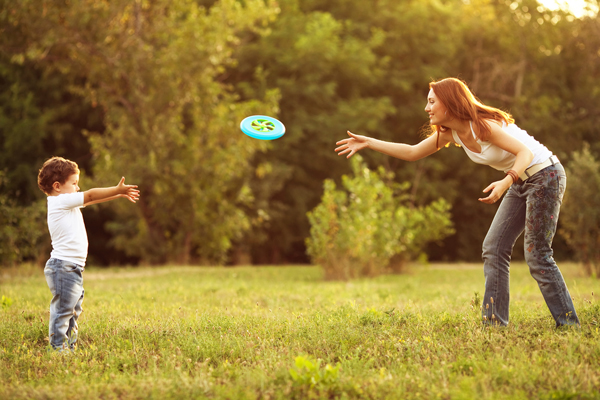
Make sure to stop and smell the roses and play with the kids.
I think that all too often so many of us get so wrapped up in what we are doing and creating that we forget what’s right in front of us. It’s so important to remember to make sure that we are not so focused on making a living that we forget to make a life. I need this reminder so often that I have a plaque that says it on my entertainment center at home. It’s great to be focused, as long as that focus is also directed to finding balance.
Fromtraveling around the country and hearing thousands of stories about people’s set backs and successes the common denominator between the two was finding that balance. (more…)
The simple choices we make day in and day out—such as when to exercise or what time to hit the sack—can have a huge effect on how many calories we burn, and thus, how much weight we lose. Read on to learn how to get the most out of your day.
Start your day with a healthy breakfast. Eating breakfast within an hour of waking will help jump-start your metabolism and sets the stage for a day of healthy eating. Get bonus points by pumping up the protein at your morning meal: Research from the University of Missourishowed that the more protein you consume at breakfast, the fewer cravings for processed foods you’ll have throughout the day. Even better? People who have a protein-packed breakfast (which increases levels of leptin, the hormone that triggers feelings of fullness) eat an average of 200 calories less during the day. (more…)
Too busy to get busy? There are some pretty impressive health benefits associated with regular rolls in the hay that make it well worth incorporating sex into your life as frequently as possible. It turns out, getting lucky can help you get healthy! We’ll explain how.
It’s heart-healthy. A Scottish study found that couples who had sex more often over a two-week period did their heart a favor by lowering blood-pressure levels. Blood pressure was monitored during stressful situations, and those who got it on regularly showed their heart didn’t have to work extra hard to move blood around their bodies.
It’s a stress-buster. When your brain registers that you’re having an orgasm, it releases the hormone oxytocin (also called the “love hormone”), which has been shown to have a role in reducing stress. And even just physical contact, without doing the actual deed, provides benefits; A study out of Northwestern University showed that couples who kiss and hug are far less tense and have more elevated moods than those who don’t. (more…)
“A journey of a thousand miles begins with a single step.” – Chinese philosopher Laozi
When I was eliminated from the Biggest Loser, I started working out at home with a friend of mine who was a firefighter, JoEllen. The first night I met her at the gym she gave me a necklace that had this simple, yet powerful truth written on it. I continued to wear it and think about it throughout my journey.
This saying runs through my mind every time I start a new adventure and question my abilities. However, it makes me wonder, how is this truth that was first voiced in BC time so relevant today? I feel like they must have been referring to the actual journey instead of the philosophical journey of life. Then I think there is NO way they could be referring to the physical journey because then it would not be relevant today. (more…)
Award winning fitness guru Patricia Friberg has shared a hot new beach workout for the home stretch of summer. The Beach Ball Workout strengthens the glutes, abs, thighs and arms, and all you need is a beach ball—a beach doesn’t hurt either.
You’ve gotta mix up your fitness regimen if you want to avoid the workout doldrums. So seek out a sunny spot and try this great new workout from Patricia.
Beach Ball Lateral Squat
Benefits: Tones the bottom, inner thigh, legs and waistline. This is a one stop shop for exercises.
Set up: Wide stance with legs, holding the ball in the hands. Draw the abdominals inward and upward.
Step 1: Hinge at the right hip and bend your right knee. Take the ball down to the ground by your right foot. Firm the right glute and keep your abdominals drawing in.
Step 2: With the strength of your right leg, push into the ground to straighten the leg and lift the ball up and side bend to the left. 12 reps each leg. (more…)
I’ve read a lot of diet books in my time. I worked at a bookstore in college so I had access to every one of them. I started my own fitness journey with two great books – Body for Life by Bill Phillips and Weight Training for Dummies. Body for Life taught me how to manage portions and eat a more balanced diet. (I was the vegetarian who didn’t eat vegetables and certainly lacked in protein as well.) Weight Training for Dummies taught me how to get off the treadmill and use those mysterious dumbbells.
You don’t have to work at a bookstore to know that there arethousands of diet and fitness bookspublished annually. While each one claims to have THE ANSWER and their way is THE WAY to fitness, they actually all say pretty much the same thing:
Eat less (doing this by either cutting out entire food groups or with a specific meal plan/food combinations/nutrient timing).
Eat better (give up sugar, wheat, animal products, dairy, processed foods or some combination of these).
Exercise (although not always).
I do believe you can learn just about anything from a book, but I have a better use for your book budget and precious reading time when it comes to fitness. The top five books I recommend to my clients are not about nutrition or exercise but they will help you live a fitter life. (more…)
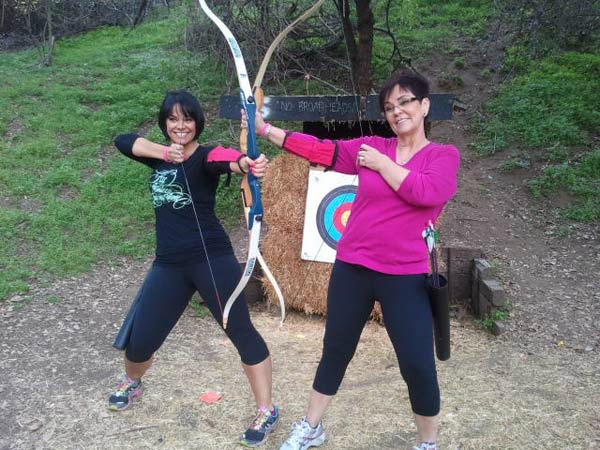
This season on Live Big With Ali Vincent, airing Saturdays at 5:30 p/4:30 c, it’s all about surprises but also with every surprise destination it seems as if my mom, Bette-Sue and I are in competition. Don’t get me wrong, I like a little healthy competition every now and then but I don’t always like making everything about winning because when winning is involved, that means losing is involved.
With that same thought process sometimes competition is exactly what’s needed to give me that extra little push to keep me on track. I operate well in competitive situations when physical challenges are involved, if it’s not direct. What do I mean by this? I mean that I don’t particularly like head-to-head games because I don’t like the feeling that arises within me on trying to “beat” the competition. I don’t like the feeling of beating someone else in order to win.
So when I say I operate well in competitive situations I mean, I like competition that involves everyone doing his or her best. Is there still someone that wins and someone that loses? YES. However for me it feels different and I actually end up doing better if I know others are striving for the same goal. It gives me the drive when I don’t feel like waking up or putting in the extra effort when I know everyone is going to have his or her results looked at the same time.
When I was younger I was very good at my sport and often won my bracket. I also on several occasions would over hear the other girls talking about “beating” me at all cost, I felt separate and I hated it. However somehow these experiences led me to live my life, as an adult who did not participate in activities I didn’t know I could win. It got to the point that I just quit participating period. This didn’t serve me or allow me to create the life I wanted to live.
In my life it has proved very beneficial to understand this about myself. It has allowed me to understand why I let myself hold back or participate in head to head competitions. This knowledge allows me to just put those feelings aside and choose consciously, to allow it to beFUN and keep sensitive feelings aside.
Tune in this week to see how competition sometimes comes between my mom and me and sometimes brings us closer. Maybe you will start thinking about how you respond to competitive situations and I hope that if you it holds you back in any way, you stop, evaluate and find a way to still participate!
Daryl Conant, exercise physiologist and author of Buff Daddy, has shared his Ab Inferno workout with DietsInReview, and this one makes you really feel the burn. Using only ab mallets and a lumbar pad, Daryl employs simple body contortions to strengthen all the muscles in your core.
Considering Daryl’s impressive resume, this workout is one you should adopt immediately. A former U.S. Olympic Committee strength coach, Daryl is a bodybuilder with two bachelor’s degrees and a master’s in education with an emphasis on exercise science. (more…)
The people-pleasers and overachievers among us are always told that we need to get better at saying no—but sometimes deciding what you say no to is more challenging than actually saying the word. Check out these suggestions for taking back your time in a smart and efficient way.
Say No (Thank You) To…
…Excess meal prep and cleanup. Try lining your pans with foil for easy cleaning, or buy pre-cut veggies and fruits for various meals to limit preparation time. Love gadgets? From immersion blenders to hand choppers to slow cookers, there are myriad ways to save time and sanity in almost every step of the meal-prep process.
…Daily TV time. Save up your must-see shows and watch a few together, bypassing commercials. Why? It condenses your TV-watching time while opening up other time slots. It also helps build anticipation—you’ll feel rewarded for the time you’ve earned. (more…)
This week started out with a bang! I found myself on the red carpet promoting and celebrating the premiere of the third season of my show, Live Big With Ali Vincent on the Live Well network. I never imagined that my quest to find balance through health and fitness would guide me in this direction, but boy am I grateful. The premiere party was attended by celebrities and powers that be in the industry, however it felt more like a party for my Biggest Loser friends and Live Big guests.
We had low calorie Vita Frute cocktails by Veev and the Executive Chef Marius Blin of the Sofitel Los Angeles prepared AMAZING appetizers from the restaurant’s D’Lite menu. Everyone loved that they could enjoy the evening without worrying about breaking the calorie bank. Immediately after the party I was off on a plane to start the promotional tour leading up to the premiere the very next morning.
I find that during exciting times in life it’s really easy to get tempted and distracted from what then might seem like less exciting mundane routines. Live Big With Ali Vincent this season is all about being prepared for the unknown, being challenged by experiencing whatever life throws your way and finding healthy weights to navigate along the way. (more…)
Next time you see someone walking and running in different intervals, don’t assume they are a beginner runner. Jeff Galloway’s method recommends run/walk intervals for all runners, even veteran marathoners, because walk breaks speed up recovery and minimize muscle overuse. Walking, when used in alternating intervals, distributes the workload between more muscles. I have found, from personal experience and in working with clients, that this method increases performance, minimizes muscle breakdown over long miles and wards off injury.
This method is highly effective for people just starting to run (even highly active people) because it:
1) Increases cardiovascular stamina, allowing you to exercise for longer than if you were to go out and only run.
2) Builds up your cardiovascular endurance without injury or discouragement.
3) Allows your body, especially your joints, to acclimate to your new endeavor.
Published content is provided from businesses that have been compensated by this website. This can potentially affect the appearance of the stated products. Not all companies or products are represented, but efforts are made to offer full transparency. Any and all published editorial content is offered without any sort of influence.