







Diets in Review - Find the Right Diet for You

grocery shopping


Challenge: Buy 30 Days of Groceries at Whole Foods on a Poverty-Level Budget

Have you ever pictured yourself doing a happy dance in the grocery store because you could afford oranges? No? Me neither, but that’s what happened during my 30-day challenge to feed my family of three at or near the poverty level. There were also moments of frustration and a few tears shed. Here’s how it all started …

I was roaming around a section of the USDA website where they keep track of over 8,000 families and what they spend every month for groceries. This helps them set four different budget levels: Thrifty (near the poverty level), Low, Medium, and Liberal.  Amounts are broken down by gender and age; kids and the elderly account for less money than 20-something guys, for instance. 

If you think this is a futile exercise and a waste of taxpayer money, you’d be wrong. If you’re going through a divorce, it’s likely that the courts will assess child support at the “Low” level, no matter your income. The food that our servicemen and women are served is budgeted at the Liberal level. So this monthly assessment by the government has a bigger effect than you might realize.

When I looked at the numbers, I realized my family was living at the “Low” level, but that wasn’t taking into account how often we eat out (two to three meals per week between lunches and dinner). The amount we spend does reflect us eating a lot of organic foods. Plus, we can sometimes be too wasteful; I cringe some weeks at what we throw away. It’s not just a waste of money, but a waste of resources for the planet.

Could our family live at the Thrifty level? What would it take? And what if I tried doing this while only shopping at Whole Foods, aka “Whole Paycheck”? And then what if I also threw a dinner party for eight as the very last meal?

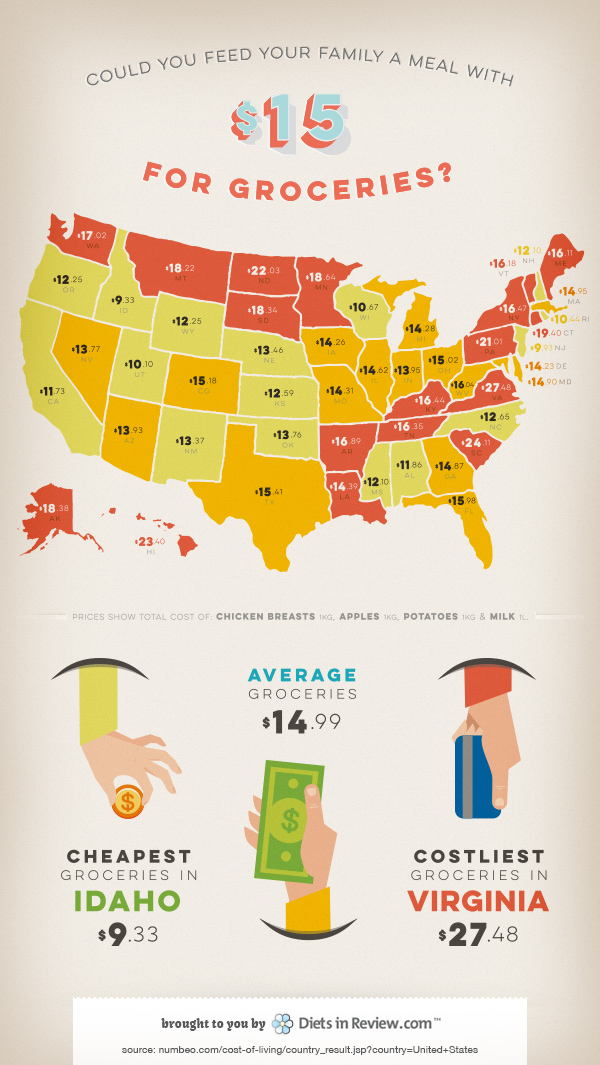
I contacted Whole Foods and suggested a bet. If I could feed my family of three for 30 days exclusively from items purchased at Whole Foods for $491.10 they would reimburse me for my food. If I didn’t make it, they’d owe me nothing. The budget worked out to $16.31 cents per day total for all three of us. In case you’re wondering, here’s what we bought for the month.

Whole Foods said yes, my family was gung ho, and we were off on January 1st, shopping for over 90 minutes, trying to figure out what we could afford.   
Read Full Post >


5 Tips to Coupon Smart and Save on Healthy Meals

Most everyone can agree that they want to eat healthy. Of course, there are exceptions to this but, in general, it can be assumed that eating healthy and feeling great are goals most people have for themselves. Yet, purchasing healthy foods isn’t always the cheapest. In fact, if you aren’t careful, you can end up spending a lot of money on health foods that either go bad before you get a chance to eat them, or later find that you don’t enjoy them at all and end up being unable to finish them.

Luckily, there are many ways to save a buck in the grocery store. In fact, money saving has almost become its own sport in America with couponing becoming more popular year after year. In fact, US consumers have redeemed 3.5 billion in coupons and saved approximately 4.6 billion in 2011 alone. This is a 12% increase since 2010; however, are these savings helping people eat their best or just save money?

Although couponing and eating healthy may seem like two totally separate topics, they actually work very well together. Of course, you have to know how to best use your coupons and be able to identify what foods are worth the savings.


Read Full Post >


“What’s for Dinner” Never Answered so Easily than with FoodOnTheTable.com

For years I’ve espoused the many benefits of weekly meal planning. I rave to anyone (and even brag a little) about how it ensures we have home cooked meals most nights, how it keeps our grocery budget in check, eliminates a lot of food waste, and leaves little room for excuses about time. I can’t remember the last time I heard “What’s for dinner;” if I do, I point to the calendar on the refrigerator door.

From pen and paper to iPhone apps, there are numerous ways to adopt a meal planning habit in your house. Food On The Table is one digital tool that helps families plan meals almost effortlessly. The cooking, well, that will require a bit more muscle. I spent some time this week “playing” with the app and site, and asked Josie Maurer at YumYucky.com to take a look with me as well. She’s an equally health-conscious and busy mom who hasn’t quite adopted the meal planning strategy that I have. However, I think FoodOnTheTable.com changed her mind.


At FoodOnTheTable.com, or through their Android or iPhone app, you can make a weekly meal plan that is family-friendly (read: the kids will like it), keeps you organized, and reduces strain on your grocery bill. The app is free, as is a base subscription on the site; however, for more bells and whistles a monthly subscription is offered.

The site and app are both designed well. In fact, Josie and I agreed on her note that “It’s very interactive and highly visual, which encourages easy to understand navigation.”
Read Full Post >


Convenience Sushi at Walgreens Flagship Store Not Selling Chicago Residents

Today, Walgreens opened the doors to a “flagship” store in Chicago’s Loop neighborhood that touts healthier offerings, including made-to-order smoothies, self-serve frozen yogurt, sushi and juice bars, and a barista selling exclusive State & Randolph brand coffee.

The new Walgreens store will feature a clinic and an upscale cosmetics department that will provide makeovers and manicures. It will also sell wine and spirits and feature a cigar humidor.

While many Chicago residents are pleased to see the ubiquitous corner drug store expand its offerings to help them live a healthier lifestyle, some are also skeptical that retail giant will maintain a high standard of quality across all channels.

These new additions do not come as a surprise to frequent Walgreens customers who have seen fresh salads and groceries appear in stores across the U.S. The chain also offers blood pressure screenings, blood glucose and cholesterol screenings, free flu shots in low-income areas and has recently sponsored a number of national and local athletic events.

“I love when a store or brand expands its core business to healthy alternatives,” said Chicago resident and business owner Molly Lynch. “However, I think Walgreens is overextending itself by offering sushi. There are multiple reasons why sushi eaters (myself included) should be mindful when eating this delicious food. Health concerns abound and sushi should be served where it belongs: in sushi restaurants, preferably the ones that passed health codes.”
Read Full Post >


Eat Healthy While Still Saving Money

Diana Johnson (@DianasaurDishes on Twitter) is a recipe developer, cooking instructor and food blogger who loves teaching people how easy and affordable healthy cooking can be. Visit DianasaurDishes.com for her delicious, easy and healthy recipes on a shoestring budget!

I work on a regular basis with low income families who are trying to change their eating habits. The biggest barrier they seem to have in common is not a lack of desire for healthy eating, but the feeling that healthy food is more expensive and therefore unattainable. Here are a few of my favorite tips for saving money on groceries in the quest for a healthy diet.

Utilize your freezer.
A freezer is one of the greatest tools you have. In fact, if you have room for a standalone freezer they’re easily found on Craigslist and can save you a lot of money in the long run. Fruits and vegetables are more affordable in season, but that doesn’t mean you can’t enjoy a variety of produce year round. Freezing is one of the least expensive methods of preserving. You can also create cheap recipes like soups and stews in bulk and freeze them in smaller portions for fast and easy dinners.


Read Full Post >