


Diets in Review - Find the Right Diet for You

food


World’s First Pizza Museum to Serve Food with a Conscience

Pizza is everywhere in our culture, whether we realize it or not. It’s the one food that most people can agree that they like, and a favorite of millions.

It can be found at chic restaurants as well as gas stations, and is eaten hot, cold, and even for breakfast. So isn’t it hard to believe there is no museum dedicated to the preservation of all things pizza? Well, not until now. One man, Brian Dwyer, is about to change that with the opening of a Philadelphia pizza museum and restaurant, Pizza Brain, in August.

What interests us as much as a whole building dedicated to pizza memorabilia, however, is how Dwyer and his friends plan to operate their restaurant. Besides wanting to be thought of as a family restaurant where everyone is welcome to affordable, familiar pizza, Pizza Brain is also committed to working in a “socially, ethically, and environmentally responsible fashion,” according to their website.
Read Full Post >


How to Cook with Arugula

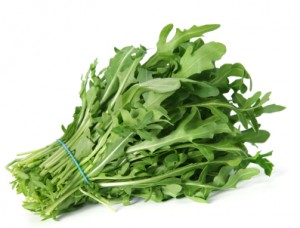
Arugula is most commonly known as a salad green. But had you ever cooked with it? If not then get ready, because digging into this nutrient-rich green and showing you all the versatile ways it can be used so it can become a healthy staple in your kitchen in no time.

What is it? When I think arugula, I think leafy green with a peppery taste. And that’s true. But more accurately, it’s a cruciferous veggie that’s been dubbed a superior salad green. Arugula is in the same family as broccoli, brussels sprouts and kale. And compared to iceberg lettuce, arugula – also known as rocket or rucola -  has 70% more calcium, 50% more magnesium, 60% more beta-carotene, and 60% more Vitamin A. Now that’s one seriously nutrient-packed green.

Health benefits: Arugula is an excellent source of folate, a B Vitamin that supports the health of red blood cells and helps with energy production. A 2-cup serving contains plenty of Vitamin K and Vitamin A, and is a plant-based source of iron, making it an incredibly healthy nutrient option for vegans.
Read Full Post >


How to Cook with Jicama

Ever felt afraid of cooking with unfamiliar ingredients, like jicama? Well fear not because we’re digging into the health benefits of this versatile food, and showing you several cooking techniques and recipes so it can become a healthy staple in your kitchen in no time.

What is it? 

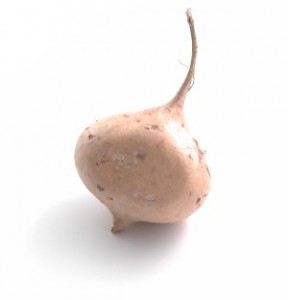
Jicama (pronounced HEE-KA-MUH) is a round, bumpy root vegetable that’s actually in the legume family. It can be recognized by its brown, paper-like skin and white starchy flesh. It’s similar in texture to an apple or celery and takes on the flavor of the dishes it’s added to incredibly well, much like water chestnuts in Asian food. Jicama is also commonly referred to as a yam bean or Mexican turnip or potato.

Health Benefits:

Jicama has fewer carbohydrates than a potato, making it a great option for those watching their weight. And it’s also high in fiber, vitamin C, potassium, and contains a lot of water to help you stay hydrated.
Read Full Post >


How to Cook with Quinoa

Ever felt afraid of cooking with unfamiliar ingredients, like quinoa? Well fear no more because we’re diving into the health and nutrition benefits of this versatile grain, and showing you several cooking techniques and recipes so it can become a healthy staple in your kitchen in no time.

What is Quinoa?

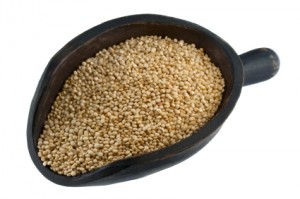
Quinoa is a small, whole grain substitute that’s completely gluten-free. It takes on a rice-like texture when cooked and comes in a variety of colors – including red, gray, green and white – depending on where it’s grown. It’s been speculated that quinoa has been around for nearly 5,000 years and was first cultivated in the Andes throughout Peru, Bolivia and Chile. And although it’s commonly thought of as a grain, the individual beads are actually the plant’s tiny seeds.

Health Benefits:

Quinoa is extremely healthy. It’s low in sodium and high in calcium, and a high-quality protein containing all nine essential amino acids. It’s also rich in phosphorus, magnesium, potassium, iron, copper, manganese and zinc. And it’s widely praised as a great option for those trying to consume less meat without missing out on protein.

Nutritional Statistics:

One cup of cooked quinoa contains roughly 220 calories, 3.5 grams of fat, 39 grams of carbohydrates, 3.5 grams of fiber, and 8 grams of protein.
Read Full Post >


The State of Food and Obesity in the U.S.

Obesity rates and other related statistics are rolled out every year, sometimes even more frequently, with each seeming worse than the last. The U.S. is on a fast train that’s heading towards a brick wall, unless something can be done to put on the brakes, and better yet, put it in reverse!

The overriding question that has to be on everyone’s mind is how did we get here and why does it seem we are helpless when it comes to making better food and lifestyle choices?

There is no doubt that a major component to our growing obesity problem is that we are less active than ever before. We live in a technology-based world where more and more of us sit in front of computers and televisions (remember when you didn’t have 300 channels and the entire world’s information at your fingertips?). Even careers in manual labor fields that provide some form of physical exercise have become more automated.
Read Full Post >