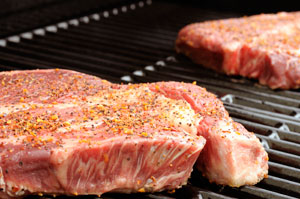


When I go to the grocery store and buy steak, I assume that what I’m buying is a prime cut piece of meat. However, a new report shows that consumers are being misled about the quality of their meats and even lied to about what it is that they are actually buying.
It’s an industry secret that meat markets and grocery stores do not want us to know about. Unfortunately, the meats that we buy at our local delis might be several smaller pieces of meat that have been glued together using meat glue.
Wait, meat glue? What is that?! Meat glue is transglutaminase, a family of enzymes that when applied to separate pieces of meat have a reaction that bonds the meat pieces together, forming one solid piece of meat. Meat scraps are sprinkled with meat glue, rolled up in Saran wrap, and refrigerated for six hours. After the six hours, the meat is unrolled and a new piece of meat is revealed.
Read Full Post >
Thanksgiving and the winter holidays are a special time for families to gather around the table to give thanks and celebrate. It’s also a time of year when inexperienced and new cooks attempt new recipes and food preparation methods. Sometimes improper handling of foods can lead to food borne illness and food poisoning.
“Food poisoning is highly preventable,” said Dr. Richard Geller, executive medical director of California Poison Control System. “By following simple storage, handling and cooking suggestions, families can stay healthy and enjoy Thanksgiving dinner, as well as the many other celebrations taking place this time of year.”
Read Full Post >
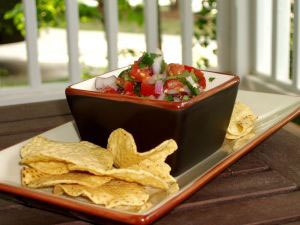
Two of my favorite snack foods, salsa and guacamole, have had a not-so-safe recent history of being linked to food poisoning. During the period of 1998 to 2008, the two tortilla dips have been the source of one of every 25 foodborne illness outbreaks connected to restaurants.
This period more than doubled the rate of the previous 10 years.
According to the Centers for Disease Control, between 1984 and 1997, salsa and guacamole accounted for about 1.5 percent of all food poisonings started from restaurants. From 1998 and 2008, that figure almost reached four percent. According to researchers, 5,560 people got sick, and 145 people ended up in the hospital. Three deaths were attributed to the salsa and guacamole outbreaks. Here is how the illnesses broke down:
Read Full Post >
Are you prone to airsickness? Well, this news won’t help your traveling woes any: According to recently released government documents, meals served on many major airlines are made in unsanitary and unsafe conditions that could lead to illness.
Over the last two years, inspectors with the Food and Drug Administration (FDA) have cited various catering facilities that prepare airline food for suspected health and sanitation violations.
Read Full Post >
It seems like every six months or so we get a new food poisoning/contamination scare. Bird flu, e.coli, salmonella, the list of invisible invaders is long. What can you do to keep your family safe and healthy?
In an effort to soothe our fears, new regulations are being put into place that will require identifying a food’s country of origin via labels. It’s an attempt to keep consumers informed. If you know about an outbreak originating from a certain country, it will be much easier to avoid those foods.
“It’s vitally important to ensure that products coming in from other countries as well as ones growing here are quickly identified in an outbreak,” says Caroline Smith DeWaal, Director of Food and Safety Center for Science in the Public Interest.
In big business, Newton’s famous law of physics applies. That is, for every action there is an equal and opposite reaction. So with this push, comes a push back from the food industry.
“The industry has fought labeling tooth and nail because if you have labeling… people could decide whether they wanted to eat this food or not,” says Michael Pollan, author of In Defense of Food.
For more on the subject, check out the ABC News website.