



The following is a compilation of some of the most common misconceptions about yoga I come across, and my responses to them.
“I can’t even touch my toes, how am I supposed to do yoga?”
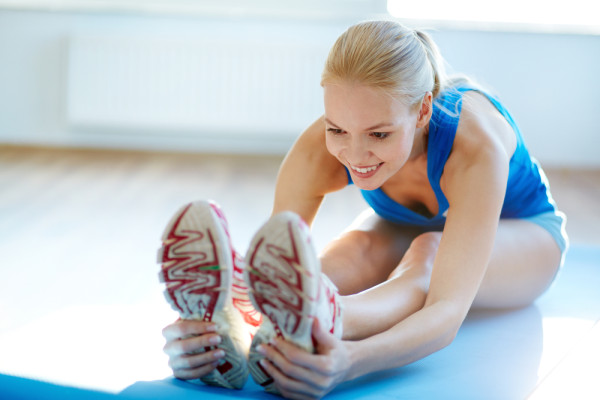
This is a very popular fear and misconception that keeps people from trying yoga for the first time. While flexibility is important to perform certain poses, no teacher expects a new student to be super limber. Flexibility comes with time and practice; it is not a requirement to walk in the door.
“Yoga is too hard.”
Some styles of yoga are very challenging, however other styles such as Hatha, Yin and Restorative Yoga are gentle, and offer a great starting point to build up strength and stamina for harder classes.
“Just sitting there and breathing is not my thing, I need something more active.”
If you want a hard workout that challenges every single muscle group and more, seek an Ashtanga, Power Vinyasa or Bikram Yoga class. These classes are not for the timid and do require a moderate to high level of fitness to attend.
Read Full Post >
Standing for eight hours while hovering over a counter with a butcher knife in one hand and a sauté pan in the other can put the kibosh on the kebobs.
Chefs, prep cooks and other kitchen workers will find the following yoga poses helpful in maintaining vitality so their energy doesn’t sink like a tired soufflé.
Poses to Practice in the Kitchen
For a tight lower back, place both hands shoulder width apart on the edge of a clean and solid counter. Step back about a leg length in distance from the counter and fold forward from your hips so that your spine is parallel to the floor with both arms straight. Hold this stretch for up to one minute while breathing deeply. Repeat as often as you can throughout your work shift.
Read Full Post >
I see it quite often. Women drag their reluctant husbands to yoga only to find them wilting in a puddle of sweat. At the end of class, while the women glow and prance nimbly out of the studio, the men, hobbling to the door, are left feeling defeated.
Men are typically so much stronger than women, yet some struggle gravely in yoga. So why is this?
Flexibility vs. Strength
While men might be stronger overall, women tend to be more flexible. Many yoga poses require less brawn and more give to finesse. Often, men are programmed to muscle through physical challenges, relying on rote strength and manliness to get the job done. In yoga, women take the path of least resistance, using their litheness as an advantage.
When the bones of the body are correctly aligned in a yoga pose, little effort is needed to maintain the pose. However, bones can only be aligned properly if the muscles surrounding them are limber enough to permit it. Tight muscles tend to pull bones out of alignment, therefore causing one to use more energy to hold the pose for an extended amount of time. And since yoga poses are often held for durations of up to three minutes, wasting energy due to improper alignment can sap anyone’s strength in a hurry.
Read Full Post >
It is hard to believe something so delightful and enjoyable has so many good benefits. Stretching, breathing and bending feels great, plus it alleviates many health issues naturally, without the use of modern medicine.
Yoga has been practiced as far back as 5,000 years for the purpose of attaining enlightenment. Today yoga is a widely popular way to reduce stress, increase flexibility and build strength, yet the cosmic element still exists. For some reason, when we practice yoga, we feel happy and content. It doesn’t need an explanation, just the mere enjoyment of rolling out the mat is enough to want to stick with it.
The following is a list of some of the greatest benefits a regular yoga practice provides, for all levels of abilities.
Flexibility
We do not have to be flexible to do yoga; we gain flexibility by doing yoga. With a consistent practice, those tight hamstrings lose their grip on our hips and, as a result, free up tension in our lower backs. A healthy lower back is an asset when we get older and yoga supports this.
Read Full Post >
In 1997, certified Pilates instructor Jonathan Urla combined yoga postures and Pilates exercises and named it Yogilates. Louise Solomon created her own blend of both and termed it Yogalates. Whatever you call it, hybrid classes like these are very popular in health clubs and studios across the country.
Yogilates and other hybrid yoga and Pilates workouts are designed for the purpose of gaining the benefits of core work from Pilates while mixing in the breath and flexibility training of yoga. Just as a yoga practice may not target all of the core muscles, a Pilates class may overlook certain stretches that promote a balanced and healthy body. Combining the two introduces a dynamic experience of connecting the breath with a new level of mind and body fitness.
Read Full Post >