Diets in Review - Find the Right Diet for You

environment


Freegan Diet Food Safety Tips from Registered Dietitians

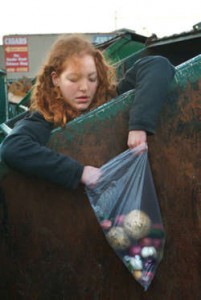
They call themselves freegans: people who live almost entirely on what others throw away, from furniture right down to the food they put in their bodies. Freegans reject the idea of a capitalist system and take pride in their limited participation in a conventional economy.

According to Freegan.Info, freegans live based on “sharing resources, minimizing the detrimental impact of our consumption and reducing and recovering waste and independence from the profit-driven economy.”

While trash touring or dumpster diving may not sound like reliable methods for sourcing food and nutrition, freegans rarely go hungry, as the Environmental Protection Agency states that Americans dump approximately 38 million tons of garbage daily.

One commenter on a Huffington Post article about a week in the life of a freegan said “While I personally can not see myself dumpster diving, I have seen the waste that restaurants, bakeries and grocery stores discard…it’s good food that can provide meals to the poor or unfortunat­e.”


Read Full Post >


Best Milk Containers for the Environment

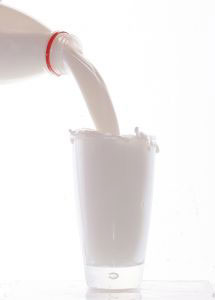
Many times in grocery stores when you are at the check-out counter, you will be asked paper or plastic. That question now extends to your milk purchase, as milk comes in a variety of containers and travel varied distances to get your local store.

In a research study performed by Pablo Paster, an environmental consultant for Treehugger.com, one of my favorite eco-friendly websites, the environmental impact was measured for a quart of milk. The 4 types of containers tested were cardboard, plastic, glass and TetraPak, which is a method used to allow milk to be stored unrefrigerated prior to opening.

Included in the measurement was how the milk container was manufactured, transported and stored.
Read Full Post >


Start the Week with Meatless Monday

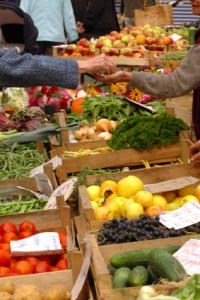
Farmers marketMany times when I was asked why I became a vegetarian, or pescatarian (vegetarian who eats fish), my answer was twofold. One of the first reasons was due to the treatment of animals, which in a recent film I watched were actually termed “animal cities” and that term was not meant as one of endearment. The quality of life our animals have, from cows to chickens to pigs, is horrendous. Whether being kept in pens or tight quarters where slight movements are difficult or never seeing sunlight, I could not fathom taking part in allowing this to continue so I stopped giving those stock yards and farmers my money.
Read Full Post >


Logos That Really Mean “Green” or Organic Foods

More and more products are coming out touting that they are less harmful to the environment or are earthy friendly, but in order to use this type of labeling the product must be manufactured with minimal energy and packaging should be made of recycled materials (think the paper grocery bags at Whole Foods supermarkets). Not all manufacturers follow the full guidelines that entitle this “green” messaging, so by referencing the logos listed below you can ensure that the products and produce you purchase are in fact “green”:

USDA organic logo For products to use the USDA labeling it must contain at least 95% organic ingredients that have not had any chemicals, fertilizers, pesticides or genetically modified organisms used.
Read Full Post >


Healthy Earth Day Round-Up

In honor of Earth Day, we encourage you to do something healthy for the planet and yourself today. Often, you can accomplish both of those goals in one effort. Here is a round-up of the Earth-friendly tips and articles found at DietsInReview.com.earth-day

Exercise to Save the Environment

Scientists have designed a leg brace that can harness power from your walking as a power source in place of the current less environmentally friendly methods.

Go Green with Your Diet

Learn some simple easy tricks that not only help the environment, but also help you increase your healthy food intake.

An Argument for Organic — The Cleanest and Dirtiest Produce Items

Due to the amount of pesticides and fertilizers used on large domestic and imported crops, not to mention the effects this has on the environment, choosing local, organic produce is becoming more popular.
Read Full Post >