







If you’re a runner, you know that there is quite a hype over relay racing as of late. If you’re not a runner, you’re probably going to want to start after you learn what fun people are having with all the great relay events across the nation. One event in particular is really grabbing the attention of all types of runners. Elites and newbies alike are flocking to the Ragnar series of relay races.
Ragnar relay races are 200 mile overnight relay races completed by a team of 6-12 runners. The first Ragnar was hosted in Utah in 2004 with 280 participants. This year there are 15 events scheduled nationwide with more than 76,000 runners participating. Clearly, this race has something special if it keeps growing and selling out every year.
The races take their names from a ninth century Norse Viking named Ragnar. The founders, Dan Hill and Tanner Bell, named the races Ragnar due to the viking’s adventure-seeking and conquering personality. They simply state, “run one of our races, and you’ll understand.”
Read Full Post >
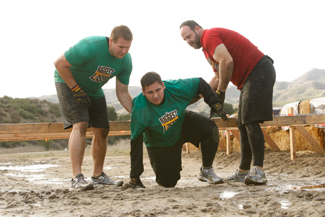
So, you think running is a little boring and you need some flair to spice it up? The incredibly popular Tough Mudder events do more than spice up running, they are definitively hardcore. You’ll see one of these increasingly popular endurance races on tonight’s Biggest Loser. The three remaining contestants for season 13 are joined by the winners from seasons 10, 11, and 12, Patrick, Olivia, and John.
All Tough Mudder events, billed as “the toughest event on the planet,” are 10-12 mile obstacle courses designed by British Special Forces. The organization states that the courses are designed to test one’s “all around strength, stamina, mental grit, and camaraderie.” These events are a far cry from road racing, or even trail racing. Tough Mudder has three pillars that it stands upon:
1. Because running is boring.
2. Mudders (participants) do not take themselves too seriously.
3. You cannot complete a Tough Mudder course alone.
All participants have to agree to the Tough Mudder Pledge before entering the event.
As a Tough Mudder I Pledge That…
- I understand that Tough Mudder is not a race but a challenge.
- I put teamwork and camaraderie before my course time.
- I do not whine- Kids whine.
- I help my fellow Mudders complete the course.
- I overcome all fears.
Read Full Post >
If you’ve ever trained for a foot race, chances are you’ve used some sort of training guide. And chances are that guide has had certain days assigned as “tempo run” days. It’s possible that this term just gets overlooked, and runners never fully learn about tempo running.
For experienced and new runners alike, the tempo run assignment can be a confusing thing. What does it mean to run a tempo run? Why do I have to do it? Is there really any benefit in doing it? These are all valid questions that even I, a seasoned runner, ask. Instead of asking the questions out into the void, or spending hours weeding through all the opinions online, I went to a trusted source: a running coach.
Scott Hill is a talented runner who coaches for The Leukemia and Lymphoma Society’s Team in Training organization. He’s coached many runners through marathons and ultra marathons along with being a phenomenal endurance racer himself.
Read Full Post >
Runners are pretty simple creatures. We typically only want one thing: to run faster. If you’ve spent any time with a runner you’ll typically find that they’re stubborn- I mean determined- people. That trait serves them well in the sport.
However, being one of the most determined people on the planet, I can safely say that all the will in the world won’t make me faster. If any runner wants to be faster, they have to train to be faster. One of the best ways to do that is by doing fartleks. Yes, fartleks. Funny name, but powerful speed training.
Fartlek is the Swedish word for “speed play.” Fartleks are a type of interval training for runners. It was developed in 1937 by Swedish coach, Gosta Holmer. Holmer developed this training for his cross country teams who had a terrible record. The effective speed plays focus on running faster than race pace to train. Fartleks were so successful that they have been widely adopted and used since.
Read Full Post >
There are lots of “rules” when it comes to running. “You have to stretch.” “You have to wear proper shoes.” “You have to cross train.”
I’ve heard all of these and more. I’ve also heard every one of these rules debunked at one point or another. It can be confusing at times to know exactly what we are supposed to do to ensure optimal running performance and health.
Recently another long standing “rule” of running was challenged in the news. The New York Times reported that the 10% rule was put under the microscope to see if its tenure still holds true or if it ever deserved its position as valid advice in the first place.
The 10% rule states that a runner should not increase their mileage more than 10% each week. The idea is that this gradual increase will prevent the body from succumbing to injury. This rule was put to the test, and studies found that it didn’t hold up: Just as many runners sustained injuries who followed the rule as those who did not.
So, what does this mean? Can a runner start out at a 10 mile total one week, and then jump up to 30 the next week? Will this increased distance and stress play no role in promoting an injury?
Read Full Post >