Are you one of the 14 million Americans who takes dietary supplements? If you are taking supplements to help you lose weight, please do your homework first. According to this story in the New England Journal of Medicine, you may be getting way more than you paid for.
“A police offer who had been encouraged by his doctor decided to try a weight-loss supplement to help him shed his extra pounds. But instead of losing weight, he lost his job. His diet pills, which were imported from Brazil and sold in the United States, contained vitamin E, centella, senna, and cascara, among other “natural” ingredients. Not included on the label was the amphetamine detected in his urine drug screen. The now-unemployed sergeant is not alone. Such contaminated supplements represent an emerging risk to public health.”
The bottom line is you really have to be careful with what you trust as “safe.” In August 2009, the U.S. Food and Drug Administration (FDA) found more than 140 supplements that contained undeclared active pharmaceutical ingredients. DRUGS! These represent only a fraction of the contaminated supplements on the market.

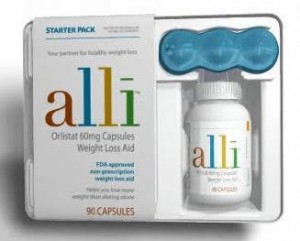
New research shows concern that two popular weight loss drugs, Alli and Xenical, may cause liver damage. On Monday, August 24, 2009, the Food and Drug Administration (FDA) began investigating recent reports that these drugs may be causing liver damage in those who take them.
To date, there have been 30 reported cases of liver damage by those who take Alli, the only non-prescription weight loss drug the FDA has approved, and Xenical, its prescription counterpart. Of the 30 reports, 27 individuals have been hospitalized and six of them have experienced liver failure.
Both drugs are marketed by British drugmaker GlaxoSmithKline PLC, but Xenical is manufactured by pharmaceutical giant Roche.

In a clinical study that has left researchers baffled, the new weight loss drug Contrave exceeded the U.S. Food and Drug Administration’s requirements to prove a weight loss drug’s efficacy. Contrave is actually a combination of two different drugs: bupropion and naltrexone, which are used to fight depression and smoking addiction respectively. This combination of pharmaceuticals is often prescribed in the treatment of alcohol and opiate addiction.
Its method for working its power impacts the brain’s craving and reward system. It is here that it unleashes its ability to block the craving drive that leads to overeating and binge-eating.

At the beginning of the month, our senior editor Brandi Koskie blogged about the Hydroxycut recall. Here’s a quick recap, and where it may (or should) lead with regards to future health legislation:
Is the Food & Drug Administration protecting consumers from dangerous and fraudulent claims by supplement makers, or are they simply reacting after the fact when it’s too late? That’s what the advocacy group called the Reality Coalition thinks. And there’s some merit to that claim. The group argues that the Dietary Supplement Health and Education Act (DSHEA), does little to protect consumers from unsafe supplements like Hydroxycut until it’s too late.

Following the death of a 19-year-old male and 23 reports of liver damage, the FDA has stepped in to warn consumers to discontinue use of the popular diet pill Hydroxycut. Hydroxycut manufacturer Iovate Health Sciences has agreed to recall 14 products from the market as “an abundance of caution.”
From the FDA press release — The FDA has received 23 reports of serious health problems ranging from jaundice and elevated liver enzymes, an indicator of potential liver injury, to liver damage requiring liver transplant. One death due to liver failure has been reported to the FDA. Other health problems reported include seizures; cardiovascular disorders; and rhabdomyolysis, a type of muscle damage that can lead to other serious health problems such as kidney failure.
