





Carolyn Dean, MD, ND is a health pioneer with over 25 years of experience with women’s health issues. She’s authored 22 books including “Future Health Now Encyclopedia”, “The Complete Natural Guide to Women’s Health, “Hormone Balance”, “Menopause Naturally”, “The Yeast Connection and Women’s Health”, “IBS for Dummies” and “The Magnesium Miracle”. She is the medical director for the Nutritional Magnesium Association. For more info you can access a Free 32-page guide to the benefits of magnesium written by Dr. Dean at the non-profit www.nutritionalmagnesium.org.
Hormones have an important role to play in every woman’s health and well-being. When hormone levels fluctuate, this can cause weight gain and affect your ability to lose weight as well as affect mood, sexual desire, fertility and ovulation.
The female hormones estrogen and progesterone are produced by the female body in specific ratios every month. An imbalance of either can cause menopause and all the symptoms associated with it. These hormones are influenced by certain factors such as nutrition, diet, lifestyle, exercise, stress, emotions, age and ovulation. When estrogen and progesterone dance to the tune of stress and chemical disruption, they can fluctuate wildly and then gradually decline as we age.
Aging brings its own “blessings”—wisdom and memories—but also the possibility of weight gain and declining organ function—thyroid and adrenals, especially.
Read Full Post >
It’s no secret that people are often searching for the next diet miracle. From two-day diet pills to 24-hour diets, people are constantly searching for quick fixes to aid their weight loss efforts.
With summer swimsuit season fast-approaching, Dr. Mehmet Oz, a cardiothoracic surgeon and host of the daily medical talk show, The Dr. Oz Show, has presented a new way for people to drop pounds: with African Mango extract.
According to Dr. Oz, African Mango extract comes from a mango fruit that is grown naturally in African rainforests. African Mango, which is said to be one of the only weight management agents found in nature, is also rumored to have properties that help regulate cholesterol.
Read Full Post >
The experimental pill anacetrapib may help boost levels of “good” HDL cholesterol, and has been found to be safe in preliminary clinical studies. WebMD reports that researchers were surprised by how well the new drug performed. “Our jaws dropped when we saw the 138% increase in HDL [over placebo]. And our jaws dropped even more when LDL went down by 40%,” compared with placebo, says study leader Christopher P. Cannon, MD.
The study followed over 1,600 heart disease patients who were taking statin drugs. Anacetrapib did not appear to raise the risk of heart attacks or death related to heart disease, a major stumbling block for a similar drug, torcetrapib. However, studies of that drug also suggest that better HDL levels do not necessarily decrease heart disease.
Read Full Post >
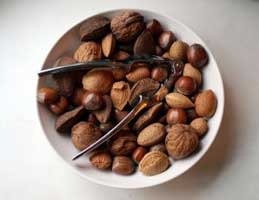
You’ve probably all heard about the health benefits of eating a Mediterranean diet, right? This diet that’s high in nuts, fish, legumes, fruits and vegetables, has been shown to even prevent type II diabetes and lower heart disease risk. According to new research, this popular diet can also help reduce cholesterol levels.
A recent study published in the Canadian Medical Association Journal found that when researchers added monounsaturated fats (MUFAs, for short) to a low-cholesterol diet for patients with mild to moderate elevated cholesterol levels, the participants had an increase in their HDL (good cholesterol) and a decrease in their LDL (bad cholesterol) levels. MUFAs are found in nuts such as peanuts, walnuts, almonds and pistachios. MUFAs are also high in olive oil, canola oil and avocados (holy guacamole!).
Read Full Post >
VO2 max (V-volume per time, O2-oxygen, max-maximum) is typically defined as the maximum capacity of an individual’s body to process oxygen during exercise. This number is useful because it is the most reliable way to determine the fitness level of the individual. By knowing your VO2 max, you can not only compare your fitness level to “standards”, but you can also objectively assess your progress while improving your current overall level of endurance and fitness.
Knowing your VO2 max is also great for setting goals and motivation. Most recreational exercisers really don’t need to know their VO2 max; although I recommend knowing it along with your weight, cholesterol, blood pressure, body fat, and BMI (Body Mass Index). By knowing these numbers, you are able to self- diagnose your current overall state of health and well-being (extremely important if you are over the age of 45). The more oxygen your muscles use, the more efficiently your body works, allowing you to do more work, with less stress on your body. VO2 max is one of those rare health numbers you want to go up, not down.
Read Full Post >