






The Centers for Disease Control compiled a list of the top sources of sodium in the American diet, and the list is likely to surprise you. Nine out of ten Americans consume too much salt on a daily basis, but the culprit isn’t salty snacks like pretzels or chips. In fact, you may be eating the two biggest sources of sodium in your lunch today: bread and cold cuts appear as the top two.
Mary Cogswell, one of the reports authors, explains that breads and rolls don’t necessarily contain more salt than other foods, but that people tend to eat more of them. However, you can cut your sodium intake by looking for breads that contain less than 150 milligrams per slice. Similarly, look for low-sodium deli meats and try to avoid salami, bologna and pimento.
Other items on the list include pizza, processed poultry, pasta dishes and soups. Salty snacks appeared at the tenth item on the CDC’s list, accounting for 3.1 percent of all sodium consumption. Like bread and other products, you can cut a significant amount of sodium from your diet by comparing the nutrition labels on the back of packages. The difference in sodium between one brand of potato chips an another can be as much as 150 milligrams.
Read Full Post >
Cigarette packages will soon display larger, more graphic warning labels. The announcement was made this morning, according to a press release sent by the CDC. The more prominent labels will feature photos illustrating the harmful effects of smoking. This is the first change in cigarette warning labels in the U.S. in 25 years.
Starting in September of 2012, the new labels will be required to cover the top half of both the front and rear of cigarette packages. There are nine different images total, selected from an initial group of 35. They feature messages such as “WARNING: Cigarettes can cause cancer” and “WARNING: Tobacco smoke can harm your children.” By October 22, 2012 cigarette manufacturers will no longer be permitted to distribute cigarettes for sale in the U.S. without the warning labels.
Read Full Post >
Remember the days when you’d walk in a restaurant and they’d ask you whether you’d like to sit in the smoking or non-smoking section? Or when you’d come out from having a drink at happy hour just reeking of cigarette smoke? Seems weird to us now since the effects of second-hand smoke have become so well known, and many businesses (or municipalities) have gone smoke-free, but it used to be commonplace to have your meal — or to sit at your office desk — alongside a smoker. In fact, it’s only been in the last 10 years that the majority of Americans have been able to breathe smoke-free in public.
According to the Centers for Disease Control and Prevention (CDC), little by little over the past decade the smoke-free trend has grown, changing the way we think about smoking, along with saving lives and money spent in health care costs annually. From 2000 to 2010, 25 states and the District of Columbia enacted state-wide smoke-free laws. Additionally, a number of states are considering doing the same or are planning to strengthen its existing smoke-free laws to better protect its citizens from second-hand smoke. If this smoke-free national trend continues at its current pace, this week’s Morbidity and Mortality Weekly Report by the CDC reports that all U.S. states will be smoke-free by 2020. That’s less than nine years away!
Read Full Post >
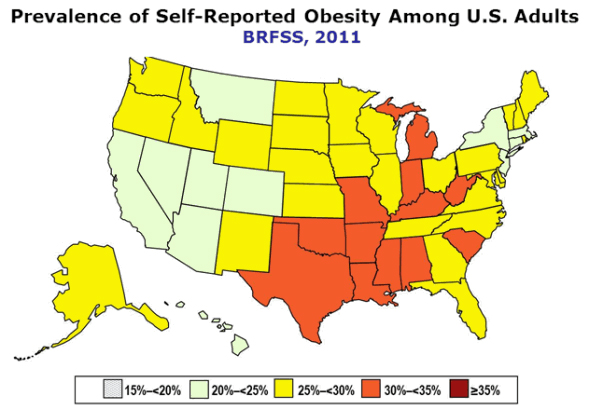
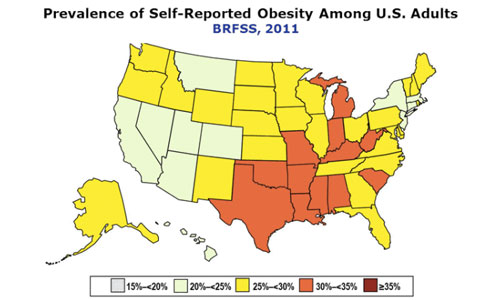
The Centers for Disease Control and Prevention (CDC) recently released its 2009 data on obesity in the United States, and the results are quite startling. In fact, during the past 20 years that the CDC has tracked it, there has been a dramatic increase in the prevalence of obesity with only Colorado and the District of Columbia coming in at a total population obesity rate of less than 20 percent.
Obesity is defined as having a body mass index (BMI) of 30 or greater, which is calculated based on a person’s weight and height. Although BMI can be misleading for those who are highly athletic or muscular, the CDC uses this number because it provides a reasonable and generalized indicator of body fatness and weight categories that may lead to health problems. It is well documented that obesity is a major risk factor for a number of health issues, including cardiovascular disease, certain types of cancer and type 2 diabetes.
Read Full Post >
The U.S. Centers for Disease Control and Prevention released statistics this year showing that not only is the number of people suffering from diabetes on the rise, but so is the number of cases of prediabetes, which is much harder to detect. The figures show that the number of cases of diabetes has grown from 23.6 million in 2008 to 26 million in 2010. In the same two years, the number of adults with pre-diabetic conditions has jumped from 57 million to 79 million. The large jump may in part be attributed to better detection technology in the form of the new hemoglobin A1c test, but the rise is also indicative of the problems with the way the vast majority of Americans eat.
One of the difficulties of the prediabetic condition, which is typified by high blood sugar levels, is that the condition is not associated with many symptoms. Most people don’t know if they are prediabetic until they get a blood test.
Read Full Post >