



By Michelle Schoffro Cook for Care2.com
Colon cancer is one of the most preventable types of cancers. Making some simple dietary and lifestyle changes can cut your risk in half. Here’s how:
1. Eat more vegetables. We know we should eat more veggies. Research shows that eating more vegetables can cut a person’s risk of colon cancer in half. Eat a daily salad, a homemade vegetable soup, or add steamed or sauteed veggies to your main dish. Better yet, make vegetables the main course and meat the side dish.
2. Avoid foods high in saturated fats and nitrates. That includes processed luncheon meats, bacon, cold cuts, hot dogs, and sausage. The saturated fat is linked to inflammation while the nitrates they contain are known carcinogens.
3. Choose chicken (or turkey or Brazil nuts). According to a study published in the American Journal of Gastroenterology, eating lean chicken several times a week decreases a person’s chances of developing precancerous polyps in the colon by 21 percent and the risk of malignant tumors by 39 percent. Researchers believe the mineral selenium may be to thank. Looking for vegetarian sources of selenium? Choose Brazil nuts, which are one of the best sources of this mineral. Brown rice and walnuts are also good sources.
Read Full Post >
By Michelle Schoffro Cook for Care2.com
Minerals are essential in cancer prevention. Here are 5 of the top cancer-prevention minerals:
1. Calcium: A proven protector against colon cancer, this mineral is integral for maintaining the health of bones and teeth, blood clotting, and cellular metabolism. Excellent sources of calcium include: nuts and seeds, carrot juice, dark green vegetables, salmon and sardines.
2. Iodine: This mineral is found in sea vegetables like kelp, dulse, and Celtic sea salt. It helps protect the body from breast cancer and is required for energy and the growth and repair of healthy tissues.
3. Magnesium: This mineral protects against cancer in general, maintains the pH balance of the blood, as well as aids the formation of your body’s genetic material RNA and DNA. While damaged genetic material can put you at risk for cancer, magnesium helps with the repair work. It is found in many foods, including: nuts, fish, brown rice, whole grains, and green vegetables.
Read Full Post >
October is National Breast Cancer Awareness Month. During this month, there is an added push to make people aware of this devastating disease and help them learn all they can as we all fight to end it forever. As research is being done everyday, we can’t wait to hear when the eventual cure is found. Until then, prevention and education are our strongest weapons.
We’ve collected many useful pieces to help educate and inform as we all work to find a cure.
Diet and Breast Cancer
There are many studies connecting the relationship between diet and cancer, specifically breast cancer. The research is yielding new findings all the time. Staying aware is often key in cure and prevention.
Weight Loss and Breast Cancer
Obesity has been linked to cancer in some studies. Learn how a healthy body weight can be a powerful cancer prevention method. Also read how the consumption of high fat foods can play a role in cancer connections.
Breast Cancer Prevention Diet
Dr. Bob Arnot, NBC News chief medical correspondent, has written a book outlining studies that point to certain lifestyle choices including diet, that may prevent breast cancer.
Read Full Post >
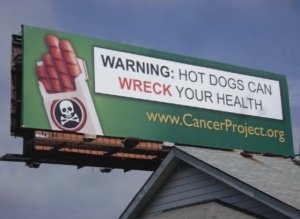
It’s no surprise why there are warning labels on cigarettes and other tobacco products. The research shows that they cause cancer. No one contests that point. But what about other products? When there is research pointing out a true risk, should there be a warning on those items too? The Physicians Committee for Responsible Medicine thinks so and you may be surprised what product they’re currently comparing to cigarettes: hot dogs.
The Physicians Committee for Responsible Medicine, a Washington, D.C. group that promotes preventive medicine and a vegan diet, has recently launched an ad campaign likening hot dogs to cigarettes. The group’s intention is to make consumers aware of a link between colorectal cancer and hot dogs. Based off research, the committee believes that hot dogs and other processed meats should come with a warning label, just like cigarettes.
The medical committee has done their research and has very valid points for their arguments. Studies from the World Cancer Research Fund and American Institute for Cancer Research have made a clear connection between processed meats and colorectal cancer. The research shows that a single 50-gram serving of processed meat a day increases the risk of colorectal cancer, on average, by 21 percent. A typical hot dog contains 50 grams of processed meat. Other meats that are highly processed are deli meats, ham, sausage, bacon and pepperoni.
Read Full Post >
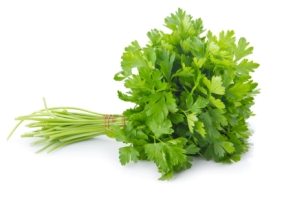
A lot of people consider parsley to be no more than an annoying garnish on your dinner plate, but a recent study from researchers at the University of Missouri reported recently that the seemingly innocuous herb may contain properties that prevent certain breast cancer cells from spreading or growing.
In this study, researchers exposed rats with a certain type of breast cancer to a common compound called apigenin, which is found in parsley, along with other plant products. They found the rats that were exposed to this compound developed fewer tumors and experienced a delay in tumor formation.
According to FoxNews.com, apigenin is most prevalent in parsley and celery, but can also be found in apples, oranges, nuts and other plant products. Researchers believe these findings could impact women with breast cancer as well as women on certain hormone replacement therapies.
Read Full Post >