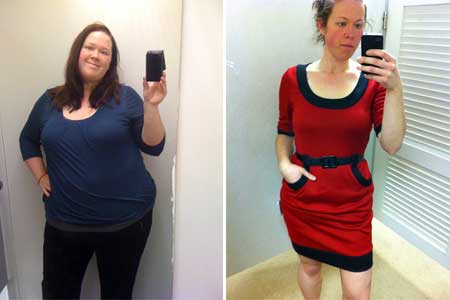
Anda T. writes about her weight loss struggles, victories and every day life at www.leavingfatville.com. She also runs www.greatclothingexchange.com in her spare time when not chasing a toddler, cooking, cleaning, working and trying to take over the world.
I had no idea how little I knew about nutrition until I started to count calories. Sure, I had a general concept that 2000 calories was acceptable for a day of food. But, really getting down to the nitty gritty, I had no idea how much of each type of food I should have been eating.
I saw no problem with eating a salad. And I’m sure you won’t either, if you’re thinking of just a small green salad. That was not my salad. My salad was iceberg lettuce (no nutritive value whatsoever), cheese, tomatoes, cucumbers (a few good things), sunflower seeds and gobs and gobs of ranch dressing. That was healthy to me. That was my effort of eating light.
That was not eating light. That was eating a 500 calorie salad with little or no protein, vitamins, or good, healthy fats to show for it. It wasn’t until I started to track my food did I start to see the calories add up, and the weight go right along with it. I had no idea what were healthy fats and what were bad fats. (Luckily, I had stayed away from trans fats as a byproduct of a lack of a gallbladder, but I still couldn’t point one out if you asked me.)
Read Full Post >
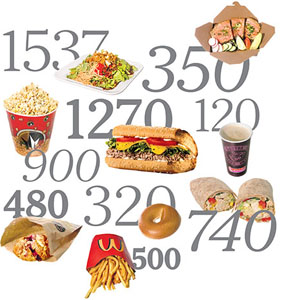
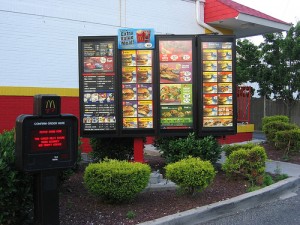
In an effort to meet consumer expectations and comply with new state regulations, most restaurants and fast food joints have begun listing calorie counts on their menus. This information is used by consumers to make educated and well thought-out decisions about their meals. It’s supposed to help fight obesity by allowing the health-conscious population to enjoy eating out without entirely giving up on their nutritional goals.
A study was recently published in the Journal of American Medical Association that exposes the truth about restaurant menus. According to CBS News, nearly one in every five restaurant menus contains inaccurate calorie counts. In most instances, the laboratory results revealed a measly 10 calorie difference. However, some menu items (close to 20 percent) contained more than 100 calories over what the menu claimed, with one dish setting the record for inaccuracy at being 1,000 calories off.
Read Full Post >
If ignorance is bliss, many restaurants are scrambling to adjust their menus before the law states that their patrons can be ignorant no more.
The Food and Drug Administration is expected to require any chain restaurant with over 20 locations to post calorie counts on their menus by the end of 2011. Even though this rule is pending, it is already leading to some very positive changes in the food industry.
While many restaurant goers probably knew the loaded nacho platter, cheesy pasta, or battered chicken dish they ordered was high in calories before, it’s possible that seeing just how high the totals get will influence their decision in the future. If consumers see that the one meal they’re ordering contains more than half of their day’s calorie requirements, restaurant owners are assuming their sales will decrease.
Currently, many chains are quickly attempting to rework their menus. Many favorite items are being lightened up so that they contain fewer calories. Some establishments are attempting to balance the menus more by offering more healthy items along with high calorie fan favorites.
Read Full Post >
I love cooking my own meals. There are many benefits to cooking at home: it’s cheaper than eating out, you can alter ingredients to suit your tastes and dietary needs, and you can control your portion sizes more easily.
However, there is a downside: it can be difficult to know the nutrition information for the meals that you are cooking. You could spend hours searching for the nutrition information for every ingredient you use to cook with, combining the totals for each ingredient in each recipe, and then dividing the totals by portions. Honestly, that sounds like a lot of work to me. So, you can imagine how excited I was to discover Foodily.com.
Foodily.com is a cool new recipe search website that offers recipes from popular websites such as All Recipes, The Pioneer Woman, Martha Stewart, and many more. Users can search the entire database for recipes that they want to cook based on ingredients, keywords, and even ingredients that they do not want to cook with. You can also filter your results by recipes that originally appeared on a blog, ones that contain high levels of fiber, are low in fat, or are considered to be low carb. Now, you can search many Internet recipe website at one location to find one that meets your dietary needs or satisfy that late night craving. Think of it as the Google for recipes.
Read Full Post >
In the course of writing for this blog, I find myself looking up the calorie content and nutrition information on a variety of food products, from the exquisitely healthy to the very unhealthy. I use a number of free online tools to find this information, and it occurred to me that our readers could benefit from a quick run-down of the different sites out there and the resources they offer.
First and foremost, all of these sites will tell you a reasonable portion size for almost any given food and its corresponding calories. You can search both name-brand products and generic types of foods. They will also give you a “Nutrition Facts” panel such as you would find on a food package, that include varying degrees of detail. Many of these sites will also give you some sort of composite grade or score, which makes it easier to compare the nutritional quality of foods. A few of these sites also offer a visual tool to accompany this information.
Read Full Post >