The best part of the pizza? That very first bite of the pointy triangle end.
The best part of a cinnamon roll? The ooey-gooiest center.
The best part of the muffin? The top. Duh!

My completely made up statistic that 99.5 percent of people would rather eat the top of the muffin exclusively, rather than what a friend of mine calls “the stump,” is the reason an entire pan has been created to let you accomplish such baked good sorcery. There’s no waste; just bake the part people actually want to eat!
I know it’s warming up outside and the last thing you want to think about doing is firing up the oven. But berries are in season! So, you kind of have to. Rules and what not.
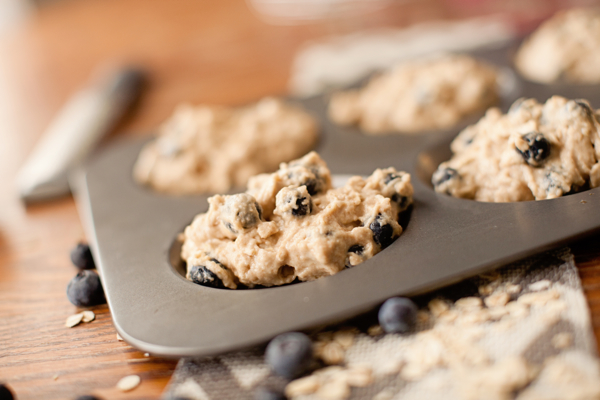
Blueberries are one of those can’t-fail foods, at least from a mom perspective. I don’t care what my four-year-old’s mood is, what she is or isn’t liking that week, or where we are — blueberries always get a yes. They are one of the original super foods, so it’s a no brainer to add them to pancakes, salads, smoothies, or just devour a fist-full every chance you get. One of the few, rare “blue” foods that occur in nature, those juicy little beads of sweetness can stand on their own with a healthy dose of fiber, a bit of protein, potassium, vitamin c, anthocyanins, antioxidants, and a host of other good-for-you goodness.
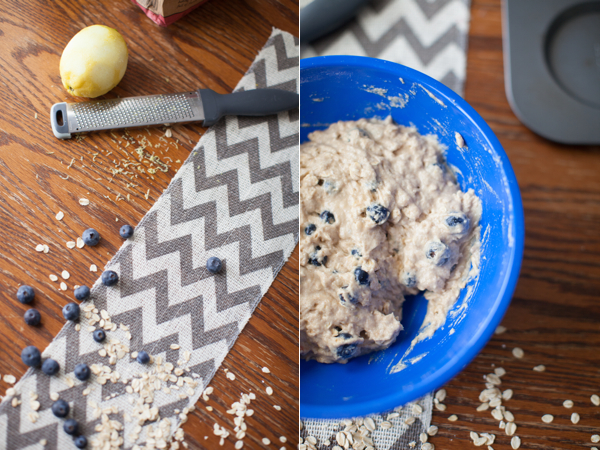
So when I tell you this recipe calls for blueberries, do not be shy. Dump ’em in! The more the berrier, right?
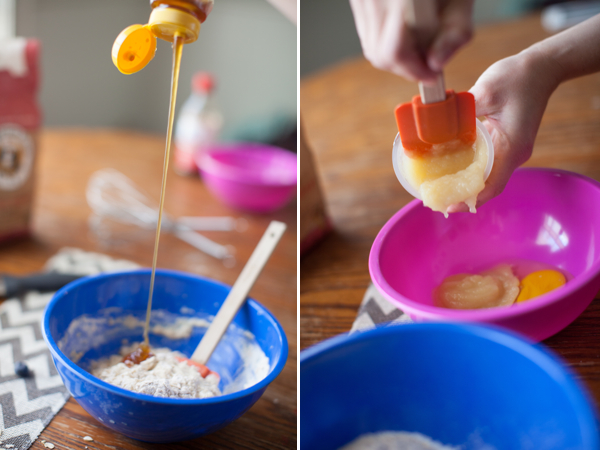
You’ll notice we don’t add any sugar to this recipe. A generous, drizzly pour of honey with some natural applesauce really take on the heavy responsibility of sweetening these muffins. It’s not a two-man job though, the lemon juice, vanilla yogurt, and of course the blueberries, all carry their own weight in that department, too.
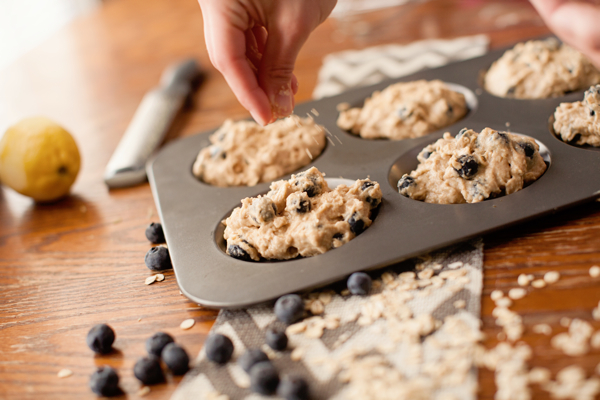
However, just before baking, I do sprinkle the tops with just a pinch of raw turbinado sugar. This gives the muffin that glazy top that you’d ordinarily create with a streusel topping, but without gobs of butter and white sugar.
I use half-and half all-purpose and whole wheat flours. This gives me the bulk of fiber in a better flour with the texture we’ve all become accustomed to with white flours. To make up the difference, I add just a bit of uncooked oats for more fiber and a denser bite.
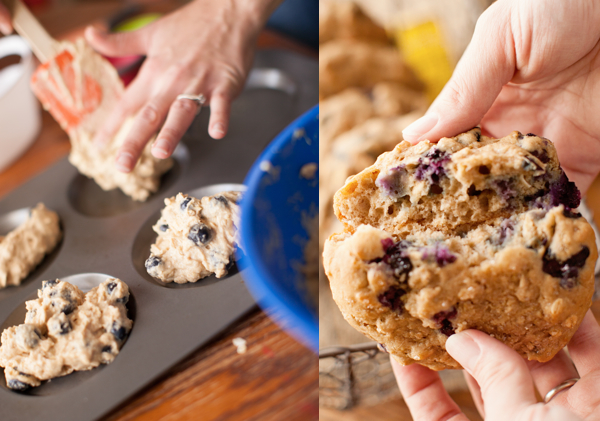
After it’s all whisked and folded together, scoop that batter into a pre-formed muffin top pan. Roughly 20 minutes later, you’ll have a pile of muffin tops that are just jam-packed with blueberries! You’ll want to save them all for yourself, but they’re so darn cute that sharing will seem like a reasonable option, too.
Blueberry Muffin Tops
makes 6
INGREDIENTS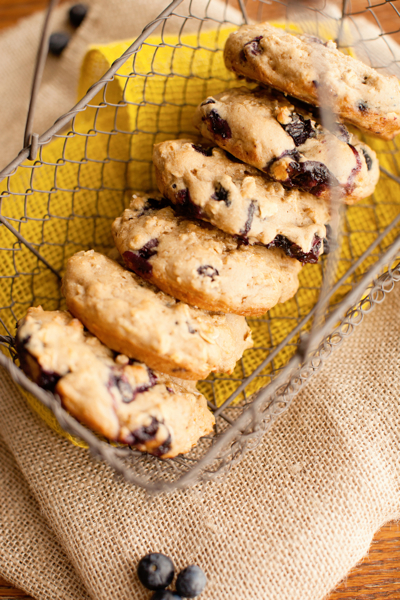
3/4 cup all-purpose flour
3/4 cup whole wheat flour
1/2 cup old fashioned oats
1 tsp baking soda
2 tsp baking powder
3 Tbsp honey
1 egg
1/4 cup natural applesauce
2 Tbsp lemon juice
zest of 1 lemon
1 tsp vanilla extract
6 oz. vanilla Greek yogurt
1 cup fresh blueberries
1 Tbsp. raw turbinado sugar, optional
INSTRUCTIONS
1. Preheat oven to 350 degrees F.
2. Mix dry ingredients in one bowl.
3. In a second bowl, beat the egg with the other wet ingredients.
4. Fold the wet ingredients in to the dry, then gently add the blueberries.
5. Lightly mist the pan with cooking spray, then add the batter. If you choose, sprinkle the tops with raw turbinado sugar.
6. Bake about 15 to 20 minutes, or until a toothpick inserted comes out clean.
ALSO TRY THIS!
Turkey Burger Sliders with Blueberry Balsamic Reduction
S’More Cupcakes with Chocolate Cream Cheese Frosting
Carrot Cake Muffins Recipe is In Season!
Recipe by Brandi Koskie; photos by Kacy Meinecke