
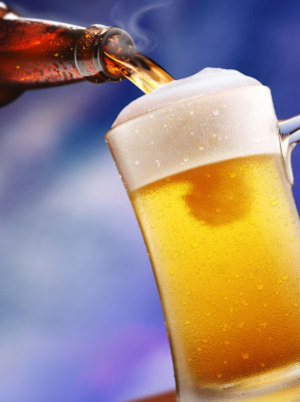
When you hear “Oktoberfest“, what comes to mind? If you are anything like me, it’s beer. Beer can be a caloric bomb, though, next bringing to mind the term “beer belly”.
Beer doesn’t contain fat; however, it does have tons of carbohydrates, protein and alcohol- and that’s it. Beer is the epitome of empty calories, giving you all the calories with no vitamins, minerals or redeeming health qualities whatsoever. A gram of carbohydrates has 4 calories, a gram of protein 4 calories, and a gram of alcohol has a little over 7 calories. This is why different beers can have higher calorie counts in relation to their alcohol content.
To keep things in perspective, I found this information online at realbeer.com: “A five-ounce glass of wine contains about 125 calories; one ounce of distilled spirits, 90 proof, 75 calories. Beyond the world of alcohol: an eight-ounce glass of milk has 160 calories, one ounce of potato chips 160 calories, a banana split 550 calories, and a Burger King Whopper 650 calories. Oh yeah, just six French fries have 12 grams of fat (about as many calories as a light beer).”
Read Full Post >

Image via Telegraph UK
Inventor Mark Zable said it took him three years to come up with a method to fry beer, but he has finally succeeded. The result of his effort is a ravioli-like squares of pretzel dough that are filled with beer and fried. “Nobody has been able to fry a liquid before. It tastes like you took a bite of hot pretzel dough and then took a drink of beer,” Zable says. Fried Coke does exist, but it is really a solid dough that’s Coke-flavored.
The deep-fried beer will officially be unveiled at an upcoming fried-food competition in Texas. Five of the squares will sell for $5.00. The Texas Alcoholic commission ruled that you must be over the age of 21 to taste it.
Read Full Post >
It’s common knowledge that red wine boasts heart-health benefits with its ample supply of the antioxidant, resveratrol. But beer is competing with vino lovers for its health benefits.
As you head into the fridge and twist off the cap of your favorite brew, read on to find out what you need to look for in a beer to enjoy all of the health benefits of the country’s most popular alcoholic beverage.
Heart benefits
Beer contains the same heart-protective benefits as red wine. In fact, a very large study done by Kaiser Permanente survey showed that male beer drinkers had a lower risk of coronary artery disease than men who drank red wine, white wine or spirits. The heart-healthy benefits may come from beer’s stock of B-vitamins and folates. Both of these nutrients keep homocysteine blood levels in check. High levels of the chemical have been linked to increased risk of heart disease.
In addition, the massive Nurses Health study showed that women who drank one beer a day had less risk for hypertension or high blood pressure than women who drank wine or hard alcohol.
Read Full Post >
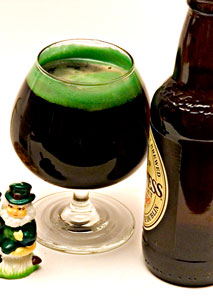
We all know that St. Patrick’s Day is more like “national drink some beer day.” But, what is the holiday really all about? St. Patrick, not of Irish descent, is known for establishing monasteries, churches, and schools all over the country. He used these aids to help him convert the Gaelic Irish to Christianity. He used the three-leafed shamrock to help represent the combination of the Father, Son, and Holy Spirit. St. Patrick died on March 17, thus this day has been commemorated as St. Patrick’s Day ever since.
Why is alcohol associated with St. Patrick’s Day? This is a generalization and a huge stereotype. In Ireland, people drink as a social past time as they do here in America. As it rains quite a bit in Ireland, so the tradition is to hit the local pub for a pint or two. Seems to me that people in America hit the local bar whether it’s rain or shine! So, with that being said, you might as well indulge in some healthy choices of beer if you are going to partake in this festive holiday. Below is a list of the healthiest choices of beer, both foreign and domestic.
Read Full Post >
To protect against foreign bacteria that can cause traveler’s diarrhea, the doctor suggested that while I recently traveled in Africa, I drink mainly soda. (Beer was also approved, but it is not something I drink. Water was only OK if I personally broke the seal on the bottle, which cannot be guaranteed at restaurants with wait-staff.) I had given up soda, but figured this might be the only health reason to drink soda. I was a bit concerned that I might start craving it or have difficulty turning it down again once I returned to American soil.
It felt odd to order Fanta at the first restaurant. My reaction to soda was not a thrill of return or a desire for more. It felt sugary and heavy. After just a day, I was experiencing nausea, bloating, and low energy. I felt unhealthy. What I was craving was a shower and 64 ounces of water!
Read Full Post >