


To protect against foreign bacteria that can cause traveler’s diarrhea, the doctor suggested that while I recently traveled in Africa, I drink mainly soda. (Beer was also approved, but it is not something I drink. Water was only OK if I personally broke the seal on the bottle, which cannot be guaranteed at restaurants with wait-staff.) I had given up soda, but figured this might be the only health reason to drink soda. I was a bit concerned that I might start craving it or have difficulty turning it down again once I returned to American soil.
It felt odd to order Fanta at the first restaurant. My reaction to soda was not a thrill of return or a desire for more. It felt sugary and heavy. After just a day, I was experiencing nausea, bloating, and low energy. I felt unhealthy. What I was craving was a shower and 64 ounces of water!

While we’ve always been told to bone-up on our calcium intake to strengthen our bones, there may be an unlikely helper – moderate alcohol drinking.
A new study published in The American Journal of Clinical Nutrition says that one or two drinks a day can improve your bone density. The study looked at the effect moderate drinking has on older men and women. It included 1,182 men, 1,289 post-menopausal women, and 248 pre-menopausal women, from as young as 29, to 86.
The lead researcher, Dr. Katherine Tucker of Tufts University, says that it’s not the alcohol (of course), but the high silicone content and resveratrol in beer and wine that benefit our bones. Liquor has less of a positive effect.

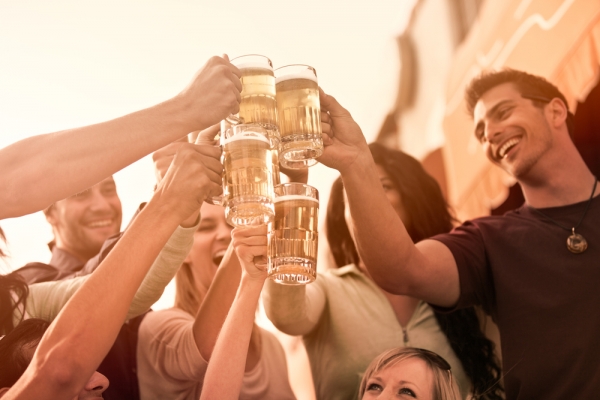
Beer or no beer? A study of 25 college students was performed a few years back and found that beer may have some positive influences on the body after a long tough workout. The students were split into two groups and asked to exercise in 104 degree weather. One group was given beer and the other group was given water to help them recover. The study was conducted for several months and according to the professors and scientists in charge, the students that were given beer appeared to be better hydrated than those given water. They believe that beer helps you retain liquid better than water and the carbohydrates in the beer help replace lost calories.
On the other hand, most of us exercise to lose weight and drinking beer after exercising pretty much defeats the purpose. (The average light beer has 103 calories, 5.7g carbs and 14mg sodium.) Why put empty calories back in your body after trying to burn them? I recommend drinking plenty of water while exercising and then eating a healthy meal or snack after the bout of exercise to help replenish the body. If you have any questions, please feel free to leave a comment and I will get back to as soon as possible.
Can beer be engineered into a health food? Could this be the best news in the history of mankind?

Researchers at Rice University in Houston are working on a beer that could fight cancer and heart disease. Taylor Stevenson, a member of the six-student research team at Rice, said they are using genetic engineering to create a beer that includes resveratrol, the disease-fighting chemical that’s been found in red wine. Resveratrol is also a natural component of grapes and pomegranates