


Diets in Review - Find the Right Diet for You

back pain


Treat Back Pain by Staying Active

Two women walking ourdoors for fitnessBy Elena Rover for Fitness Magazine

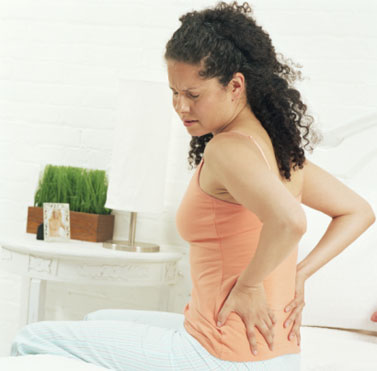
There’s nothing like all-consuming back pain to make you want to become one with the couch. If you’ve been there, you know what we mean. If not, consider yourself lucky: It’s pretty easy to push your back’s intricately entwined bones, muscles, tendons, and ligaments out of their comfort zone. “We see a lot of women in their 20s and 30s coming in with back pain because they’ve returned to a sport out of condition or suddenly upped their exercise intensity,” says Daveed Frazier, MD, an assistant clinical professor of orthopedic surgery at Columbia University College of Physicians and Surgeons in New York City. “Our bodies just aren’t designed to absorb the abuse we give them.”

When pain strikes, your initial response might be to rest. “But even just a few days of lying idle can lead to deconditioning and further harm,” says Roger Chou, MD, director of clinical guidelines development for the American Pain Society (APS). “Staying active helps keep the muscles and tendons loose and strong.” In fact, the thinking about back pain has shifted so much that the APS and the American College of Physicians recently released new treatment guidelines. Read on for the latest in pain prevention.


Read Full Post >


Yoga Poses to Help Restore Your Back on Thanksgiving Day

Planning on standing at the kitchen counter for hours preparing the Thanksgiving meal? Or perhaps you will be sitting in front of the television for hours while someone else prepares the Thanksgiving meal. Either way, your back is going to take a beating. The following gentle yoga inspired poses and stretches will help smooth out the kinks and restore your spine for a second helping of holiday fun.

Kitchen Counter Stretch

Place both hands on the edge of your kitchen counter. Take one big step back and fold forward from your hips, keeping both arms straight. Reach your hips back as you lower your chest in between your arms. Take five deep breaths and then stand up. Repeat as often as needed between mashing up the potatoes and stirring the turkey gravy.


Read Full Post >


5 Common and Painful Running Mistakes You May be Making

Running isn’t easy. At times it hurts. When the pain is more than the typical sore muscles and fatigue, there’s a problem. Thankfully there are answers. More often than not, the problems stem from the runner and not the activity itself.

I’ve had my share of pains through out my running career and thankfully I’ve had the help of a physical therapist to work through them and find their cause.

Like so many other therapists, assistant professor of physical therapy and director of the running clinic at Washington University in St. Louis, Gregory Holtzman, is helping runners overcome the technique problems that may be hurting them. In an article from MSNBC, we learned that Holtzman evaluates and records runners in his clinic to pin-point the issues that they are struggling with. He finds that there are five common issues that runners are diagnosed with in relation to their struggles.


Read Full Post >


Back Exercises You Can do at Home

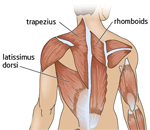
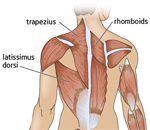
Back exercises are often over-looked due to the popularity of abdominal exercises. Below is a list of back exercises that can be performed at home or anywhere that you feel inclined to exercise. The exercises mainly target the lower back, but also help improve core stability, balance, and coordination.

Core stability is defined as the ability of the muscles of the trunk to stabilize the spine during movement. Dozens of muscles help stabilize the core and most are isolated in the exercises below. Balance is defined as the state of equilibrium and the following exercises help improve  the strength and endurance levels of your muscles that help make balance possible. Coordination is defined as the skillful and effective interaction of movements. In order to maximize coordination, you must challenge the body by performing coordination based exercises and movements that allow the body to work and move more efficiently. Each exercise below targets a slightly different part of the back and helps improve coordination.


Read Full Post >


Use Isometric Core Exercises to Avoid Back and Neck Strain

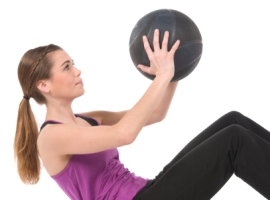
What is the difference between isometric core exercises and crunches? First off, isometric (iso meaning same, and metric meaning distance) exercises are those in which the joint angle or muscle length do not change during the movement, or, in other words, the body is held in a non-moving or stable position to help isolate the targeted muscle group.  This type of movement is great for improving muscular strength and endurance without placing too much stress on the body.

Crunches are great for core strength and  endurance, as well, and isolates the abdominals extremely well, but places unnecessary stress on the neck and back. For most, this is no big deal, and the body can handle the stress, but for some with injuries or general weakness, those movement can cause pain, and even injury.
Read Full Post >