




Diets in Review - Find the Right Diet for You

anxiety


Go Ahead Talk: Some Gossip Can Offer Health Benefits

Many of us are bashing Paula Deen for her diet choices, raking Mitt Romney over the coals for acting like every other politician, or clamoring over reasons why Jillian Michaels decided to leave The Doctors. You might be shaking your head if you are one of the rare Americans who doesn’t really care who has diabetes, or who lied to the media, or who is keeping their personal decisions private. But, according to scientists from the University of California in Berkeley, gossip may be good for our health.

Gossip is defined as idle talk or rumor about the personal or private affairs of others. Gossip is also referred to as tattling or reporting someone who was caught in the act of doing something wrong. Often times we tell ourselves to leave it be, because our grandmother told us that if we don’t have anything nice to say about others we should just not say anything at all.

The scientists of UC Berkeley set up several trials with volunteers to test the mental and physical effects of gossiping. Subjects were asked to watch two people playing a game, one of which who cheated. Subjects then had the decision to either let the next player know he or she was going to be playing with a cheater, or just let it pass. Results indicated that voicing the incidence of wrongdoings by others actually made them feel better by lowering their heart rates and calming their anxiety about the matter.


Read Full Post >


Understanding Food Hoarding as a Symptom of Anxiety

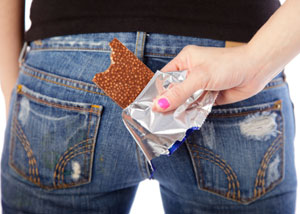
Hoarding food is something that I talk about frequently in adoption preparation classes. It is common and to be expected that children who have not always had enough and not had parents to look out for their best interests would want to hide food for later. Parents need to be vigilant to clean out pockets so chocolate bars do not go through the wash, and clean up rooms to avoid rodents, insects, and rotting food. In cases of adoption, I encourage parents to be calm, avoid commenting on the behavior, and patiently wait for it to extinguish itself, which it will in the majority of cases.

There is less written about food hoarding in adults, although there is some written about older adults who hoard food, particularly those that have lived through the Great Depression. Primarily, hoarding food is a sign of anxiety surrounding the availability of food and sometimes it is a compulsion, something that one feels driven to do to ease anxiety. There is a slightly higher percentage of females than males that hoard food, and often the hoarder lives alone and is mostly socially isolated. Nearly three out of every four adults that hoard food do not believe that it is a problem.

Hoarding food is also a lesser discussed symptom of an eating disorder as well. It is most understood as a symptom of bulimia when a sufferer stashes away binge food items. Food hoarding can also be a symptom of anorexia, however. In the throes of anorexia, sufferers can become obsessed with food despite the fact that they will not allow themselves to ingest it. It can be comforting to anorexia sufferers to have food items available, especially if their body has transition into a starvation mode.


Read Full Post >


Time Magazine Confuses Healthy Stress with Anxiety

The TIME Magazine cover article from December 5, 2011, by Alice Park titled The Two Faces of Anxiety has raised a bit of a ruckus online. Mostly, bloggers have questioned the choice to make Why Anxiety Is Good For You the cover art in the United States, while a graphic image of the Egyptian revolution was published in Europe, Asia, and the South Pacific editions. It has been questioned whether TIME believes Americans do not care about world events or are simply that self-focused. It seems to me that the editors of TIME simply believe “anxiety” is a buzzword that will sell in America, and apparently more than an uprising in Egypt. This seemed even more likely after watching the interview the senior editor of TIME did with CNN to discuss the problem of anxiety that they claim 18 percent of American adults suffer from.


Read Full Post >


Beginner’s Guide to Meditation

To meditate is to disengage from a seemingly ever-present mental chatterbox and reflect on just one pure thought. If you think this sounds easy, stop reading this article for a moment and witness your thoughts. Are they jumping from subject to subject? Are you thinking in fragmented thoughts? Do thoughts randomly pop into your head for no apparent reason? If you’ve answered yes to any of these questions, the following information will be helpful to you.

To Practice

Sit in a comfortable position, free from external distractions. Close your eyes and focus on one single thought, whether it is a word, image or repetitive sound.

Concentrate fully to keep your focus on this one thought without interruption. If you make it even just 30 seconds without any other thoughts entering your mind, you are doing remarkably well.

What to Expect

If at first you don’t succeed, simply try again. Meditation requires a tremendous amount of effort and repetition to master but yields great benefits, so be patient. It is not uncommon to want to just ditch the practice all together, as it can be extremely difficult to focus and concentrate. When your thoughts go willy-nilly, take a break and then try again later.


Read Full Post >


Exercise to Boost Your Mental Health

A new study shows that those who do even a small amount of exercise have better mental health than those who do not.

An article in the New York Times examined a National Institute of Mental Health study that now gives better insight as to why physical activity leads to happier, less anxious people. Although it is commonly known that exercise releases mood-boosting endorphins, many do not know why it occurs or the physical processes of the brain during a workout.

Researchers at the NIMH experimented on both aggressive and even-tempered male mice to find the answers. The dominant male mice got their own private cages, and when they were integrated with the others, they used several intimidation techniques against the defenseless mice. After two weeks of living with their aggressive neighbors, the skittish mice were severely nervous and stressed.

But another group of even-tempered mice were not as intimidated by the aggressive mice. This experimental group had been given an exercise wheel and an exploratory tube in their cage. Although the mice were submissive toward the more aggressive male rodents, they did not appear to be nervous.


Read Full Post >