Mineral Basics: Your Complete Guide to Iron
Although iron is classified as a trace mineral, it’s essential for overall health. Many of the body’s functions rely on iron and if you get too little, your body can’t function properly. On the flip side, getting too much can also be detrimental to your health.
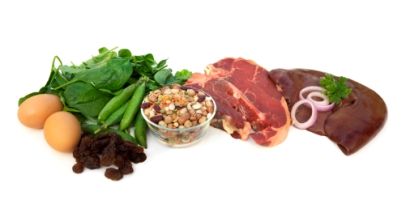
There are two main types of iron; heme and non-heme. Heme iron is the type found in meat, poultry and fish. Non-heme, on the other hand, can be found in both plant and animal sources. The biggest difference between the two types is how well the body absorbs them. Heme iron is much more easily absorbed by the body than non-heme iron, yet most of our dietary supply comes from non-heme sources. Enriched breads and cereals, lentils, legumes, dark leafy greens, and some dried fruits are foods rich in this type of iron. Although the iron found in these foods is typically harder to absorb, your can improve your body’s absorption rate by pairing your non-heme-rich food sources with a food high in heme iron, vitamin C, citric or lactic acid, and certain sugars.
Most of the body’s iron is found within two proteins: hemoglobin and myoglobin. Hemoglobin is found in the body’s red blood cells while myoglobin is found in the muscle cells. In both, iron helps accept, carry, and release oxygen to the cells of the body. In addition, iron keeps your immune system strong and helps your body produce energy.


