
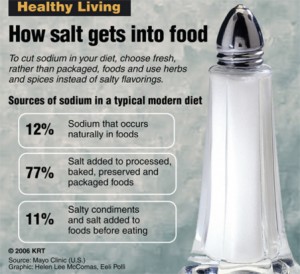
 The average person is supposed to consume no more than 2,400 milligrams of salt/sodium per day (or 1 tsp.). For those with high blood pressure, it’s about 1,500 milligrams. Most of us are consuming two-to-three times this amount each day. You’ll be hard-pressed to find a packaged or processed food, or a restaurant menu item that is low in salt. Food manufacturers are making an effort to include more reduced-sodium items, but even those still have astonishing quanities.
Avoid the risk of stroke and heart disease by following these simple tips for reducing salt in a low-sodium diet:
- Eat Fresh Foods. Cook your own meals, use fresh produce, use fresh meats and seafood, and rinse canned foods before serving.
- Read Labels. Carefully read labels and buy items that indicate no- or low-sodium. Beware of sodium agents like monosodium glutamate (MSG) and baking soda or powder.
- Skip the Instructions. Replace salt in recipes with any other spice or herb.
Excellent advice. People who have to add a lot of salt to their food for taste often have a zinc deficiency. It can take time to get used food without salt but you can eventually taste the real flavor of the food.
What good advise. I have always felt the need to add salt to many, if not all of my food.
I totally have my blood pressure and salt addiction under control since starting my Freshology program. All the food they prepare is seasoned to perfection. I have lost 10 lbs and I don’t feel bloated.
I agree that our diet is loaded with too much salt. If you have to eat out in restaurants, ask them to be light on salt when you make your order, they might not follow you instruction but there is no harm in asking. And if you find that the restaurant follows your request, you know to go back to that restaurant!